Engagement Archive · Battles for the Jiangnan and Jiangbei Encampments
The Qing army planted one great encampment at Xiaolingwei east of Tianjing and another on the outskirts of Yangzhou, besieging the city for seven years; the Taiping Army struck twice and shattered them twice--after the first rupture came Tianjing's self-destruction, and after the second the Green Standard's direct line never recovered.
Engagement Data
| Item | Details |
|---|---|
| Time | 1853.3 – 1860.5, a siege of roughly seven years; two breakout operations (1856, 1858–60) |
| Place | Tianjing (Jinling), the Xiaolingwei line east of the city / outskirts of Yangzhou / Zhenjiang, Pukou, Danyang, Hangzhou |
| War | Taiping and Nian Rebellions (for the broader situation, see *War Overview · Taiping Heavenly Kingdom*) |
| Besieging side | Qing forces: Jiangnan Encampment (Imperial Commissioner Xiang Rong, later Hechun; Commander-in-Chief Zhang Guoliang), Jiangbei Encampment (Imperial Commissioner Qishan, later Tuoming'a and Dexing'a) |
| Breakout side | Taiping Army (1856: Qin Rigang, Shi Dakai, Chen Yucheng, Li Xiucheng, and others; 1858–60: Chen Yucheng, Li Xiucheng, and others) |
| Result | 1856.4 first destruction of the Jiangbei Encampment; 1856.6 first destruction of the Jiangnan Encampment; 1858.9 second destruction of the Jiangbei Encampment (never restored afterward); 1860.5 second destruction of the Jiangnan Encampment, ending the encampment system |
Belligerents
| Item | Besieging side (Qing forces) | Breakout side (Taiping Army) |
|---|---|---|
| Strength | The Jiangnan Encampment was first established with a little over ten thousand men, rising at its height to several tens of thousands (figures vary sharply by statistical basis in different works; accounts vary); the Jiangbei Encampment had a little over ten thousand men (accounts vary) | Several tens of thousands across the relief operations; the five-pronged attack of 1860 was said to number more than one hundred thousand (accounts vary) |
| Branches | Primarily Green Standard troops, mixed with Eight Banners and locally recruited yong militia; on the Yangtze there were naval forces and hired flotillas aiding suppression (the designation "red-flag lorchas" remains unverified) | Combined land-and-water operations, with field corps under various kings and strong mobility |
| Firearms | Matchlocks, heavy matchlocks, Pishan cannon, with cold weapons mixed in | Contemporary firearms; in the later phase, small quantities of foreign rifles were purchased through Shanghai and other channels (scale disputed) |
| Supply | Depended on coordinated pay contributions from several southeastern provinces and on lijin transit taxes; pay was in arrears year-round, and troops and militia extracted supplies from local garrisons | Tianjing's grain route depended on upstream Anhui and Jiangxi; siege pressure first appeared in food supply |
Terrain and Conditions
(For the broader situation of the 1850s--Qing finances, the rise of the Xiang Army, and the movement of the foreign powers--see *War Overview · Taiping Heavenly Kingdom*.)
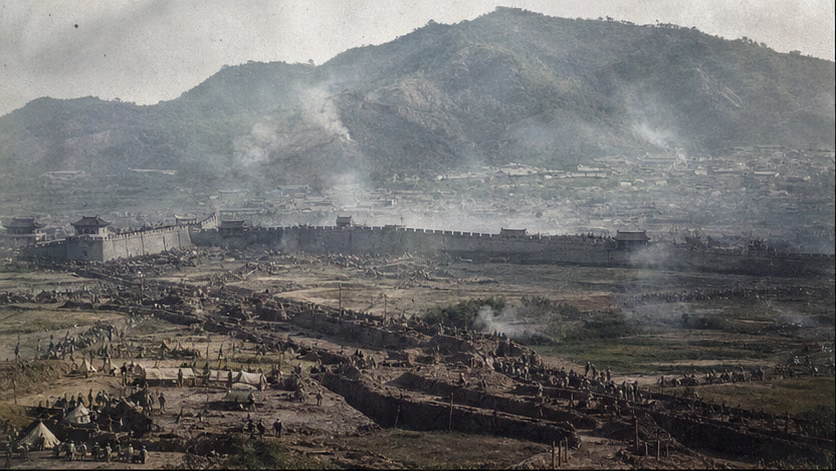
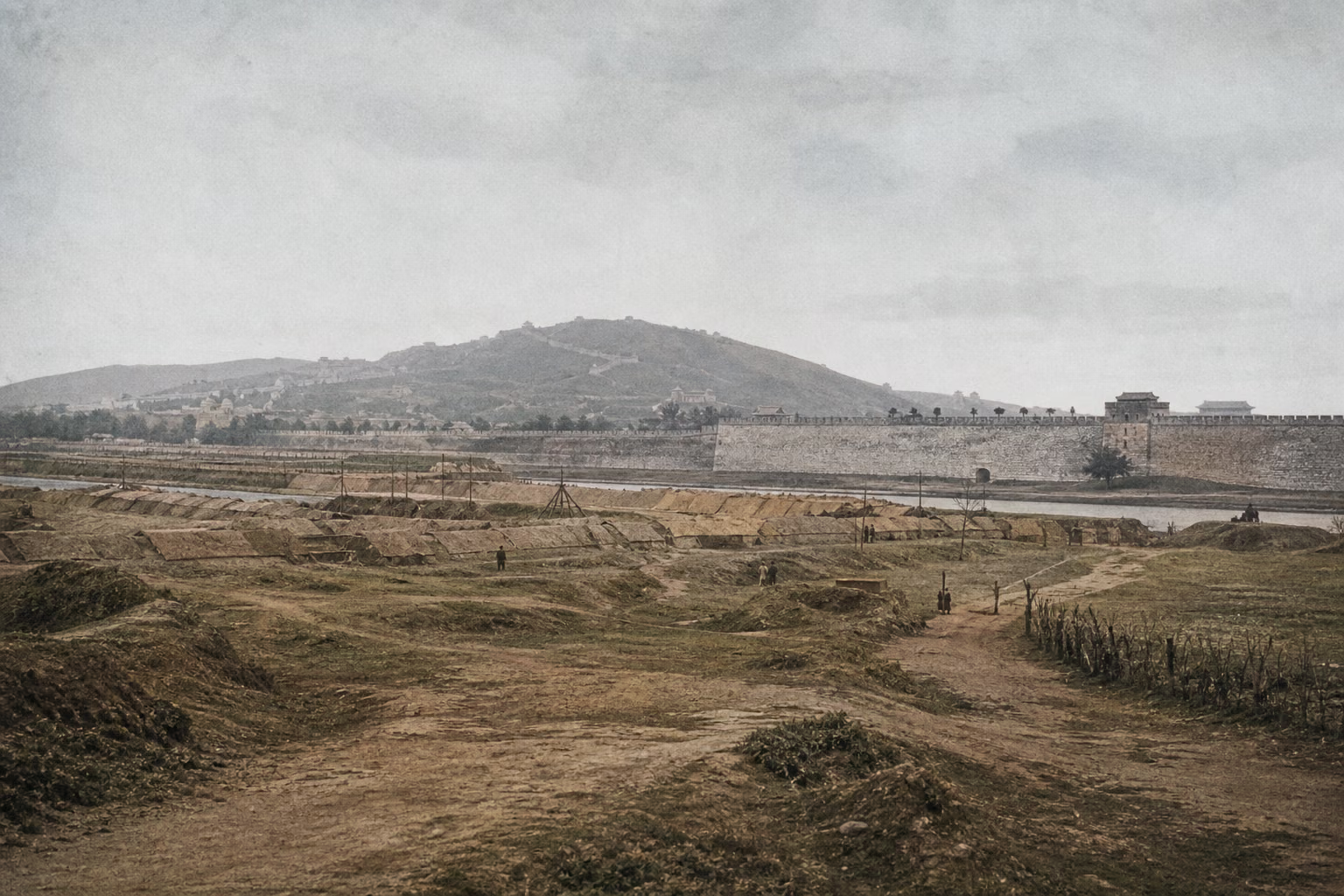
Jinling: In 1853.3 the Taiping Army took Nanjing and renamed it Tianjing. The Ming city wall ran for more than ninety li, making it the largest great city under heaven at the time (li measurements vary; accounts vary); on Purple Mountain east of the city stood the fortresses of Tianbao City and Dibao City. The Jiangnan Encampment was established at Xiaolingwei, beside the Ming Xiaoling Mausoleum on the southern foot of Purple Mountain, several li from the city--the imperial commissioner's headquarters stood just "beside the bed" of his opponent.
Yangzhou: The hub of the Lianghuai salt transport and the throat of grain transport. In 1853.4 the Taiping Army briefly took Yangzhou (date unverified), and it soon became the confrontation line of the Jiangbei Encampment; through seven years of seesaw fighting, the city walls, streets, and markets were repeatedly ruined.
Zhenjiang: Tianjing's downstream gate, where the Yangtze and the Grand Canal meet; opposite Guazhou across the river, it locked the canal's entrance into the Yangtze. The Taiping Army held Zhenjiang from 1853 until the end of 1857 (date of abandonment; accounts vary), making it the hardest link in the entire siege chain.
Why It Was Fought
Once the Nian rose in Huaibei, it became a fifteen-year line in the north; back on the Yangtze, the war changed shape in the spring of 1853. In March, the Taiping Army took Jiangning and fixed its capital at Tianjing, bringing its advance into Jiangnan to a close. Xiang Rong, who had followed them all the way from Guangxi for two years, did not stop: in the same month as the capital was fixed he reached the east of the city and made camp at Xiaolingwei (exact date of encampment; accounts vary)--on the southern foot of Purple Mountain, beside the Ming Xiaoling Mausoleum, several li from the city, with the imperial commissioner's headquarters pushed up beside his opponent's bed. The Taiping Army detached a force northward to take Yangzhou (1853.4, unverified), and the Qing court ordered Qishan to command forces north of the Yangtze and raise another encampment on Yangzhou's outskirts.
Where the two encampments were pinned down had been calculated. By making Tianjing its capital, the Taiping Army had put the court's richest southeastern fiscal region beside its mouth: the taxes of Suzhou and Changzhou, the salt profits of Lianghuai, and the tribute grain of the Grand Canal all lay east and north of the city. Xiaolingwei controlled the road east from Tianjing toward Suzhou and Changzhou; Yangzhou controlled the road to the northern crossing of the canal; Zhenjiang and Guazhou held the crossroads where the Yangtze met the Grand Canal. This was the duty of the two encampments: hold these two roads and wait for an opportunity to attack together.
They spoke of a joint assault, but there were not enough troops. The two encampments were first established with a little over ten thousand men each (figures vary sharply by statistical basis in different works; accounts vary), while Tianjing's walls ran more than ninety li and were known as the greatest city under heaven at the time (li measurements vary; accounts vary), with two additional fortresses, Tianbao City and Dibao City, on Purple Mountain. That number of troops could not storm such a city; it could only pin down two roads. The Qing court had no second option: most of the Green Standard's remaining field-capable base was here, while the Xiang Army had only just begun to form in Hunan. The Taiping Army likewise had no spare hand: two months after fixing the capital, the Northern Expedition set out; in June the Western Expedition went upstream along the river. The main forces were all on the outer lines, and below Tianjing the posture was defensive.
The court's determination hung on the title of imperial commissioner: Xiang Rong was to command Jiangnan, Qishan Jiangbei, and the edicts contained only the word "take." Afterward severe decrees came down repeatedly urging assault, each court dispatch heavier in wording than the last. Xiang Rong's memorials had only two entries in their accounts: troops and pay. With city walls more than ninety li around, a little over 10,000 men could not fill a siege line; they were enough only to block key points and attack when a gap appeared (original wording of the memorial unverified). The disagreement between the front and the center remained unclosed for seven years.
The boundary of pay was harder than that of troops. In the third year of the war, the Board of Revenue's silver reserves were insufficient for the capital's annual use (amount of silver reserves unverified), coordinated pay was often intercepted by the provinces themselves, pay arrears at the encampments were counted in months, and troops and militia preyed on the places where they were stationed. In 1853, Lei Yixian, assisting with military affairs north of the Yangtze, set up an office at Xiannumiao in Yangzhou and levied a "lijuan" contribution of one percent by value on rice firms and shops. It was an emergency measure to raise funds for the Jiangbei Encampment; over the next half-century it grew into the Qing court's largest new source of taxation.
The resolve inside Tianjing survives only in outline in the other side's intelligence. *Compiled Reports on Rebel Conditions* records that before the capital was fixed, some in the army had proposed driving straight north to take Yanjing, while Yang Xiuqing resolved to hold Jinling as the base (from a Qing intelligence compilation; basis unverified). If true, this was the other path not taken at the moment of fixing the capital, and the grounds for rejecting it can no longer be checked. The later order in which the Northern Expedition and Western Expedition preceded any relief of the close siege indicates that Tianjing, from the moment the capital was fixed, was treated as a base that could endure siege (this is inferred from the sequence of military operations; unverified). Whether there was debate inside the city over siege strategy during the seven years is not found in the records.
So neither side could eat the other: assaults, grain raids, and exchanges of spies continued through seven years of siege. Yet for every day the two encampments remained unbroken, Tianjing's grain route and eastern outlet hung in another's hands. The siege was never background; it was the thing itself that both sides had to solve.
Course of the Engagement
| Phase | Time | Key points |
|---|---|---|
| Encampments established and siege begun | 1853.3–1856, early | Xiang Rong established camp at Xiaolingwei (Jiangnan Encampment), and Qishan established camp on the outskirts of Yangzhou (Jiangbei Encampment); assaults, grain raids, and exchanges of spies continued, but neither side could eat the other |
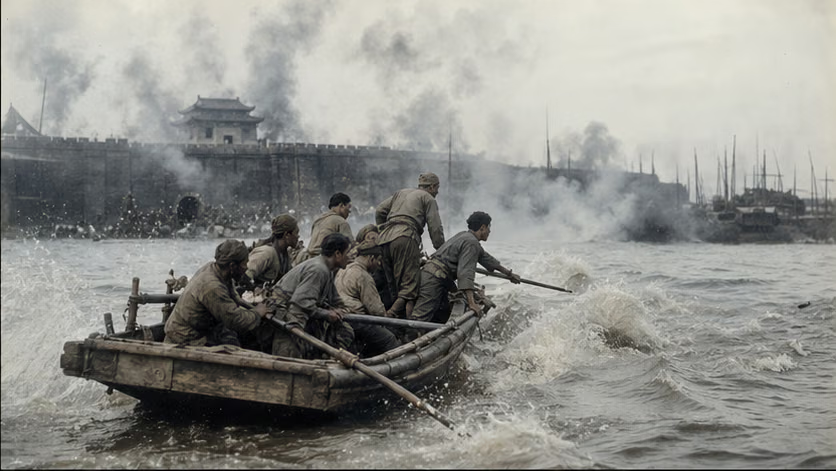
| Relief of Zhenjiang and first destruction of Jiangbei | 1856.2–4 | Chen Yucheng, Li Xiucheng, and others relieved Zhenjiang; Chen Yucheng took a small boat under fire into the city to coordinate an inside-outside attack; in April the Jiangbei Encampment was broken, Tuoming'a was dismissed (Dexing'a succeeded him), and the Taiping Army retook Yangzhou before soon abandoning it (date of abandonment unverified) |
| First destruction of Jiangnan | 1856.6 | Yang Xiuqing ordered Qin Rigang, Shi Dakai, and other forces to attack Xiaolingwei together; in June the Jiangnan Encampment was broken; Xiang Rong fled in defeat to Danyang and soon died (two accounts, death by illness or suicide, disputed) |
| Siege rebuilt | 1858–1860, early | Hechun became imperial commissioner and Zhang Guoliang commander-in-chief, rebuilding the Jiangnan Encampment and digging several tens of li of long trenches to trap Tianjing (trench length and the title "Ten-Thousand-Li Great Wall" unverified); 1857.12 Zhenjiang fell (dates; accounts vary) |
| Second destruction of Jiangbei | 1858.8–9 | After the Zongyang conference (August, unverified), Chen Yucheng and Li Xiucheng fought at Wuyi–Pukou; in September they again broke the Jiangbei Encampment, and Dexing'a was dismissed; the Jiangbei Encampment was then abolished and never reestablished |
| Second destruction of Jiangnan | 1860.2–5 | Li Xiucheng "besieged Wei to save Zhao": he set out in February, made a surprise attack on 3.19 and broke Hangzhou's outer city (dates; accounts vary), drawing Hechun to detach troops to relieve it; he then returned and joined Chen Yucheng and others in a five-pronged attack (list of routes unverified), breaking the Jiangnan Encampment on 5.6 (date unverified) |
Casualties and Losses
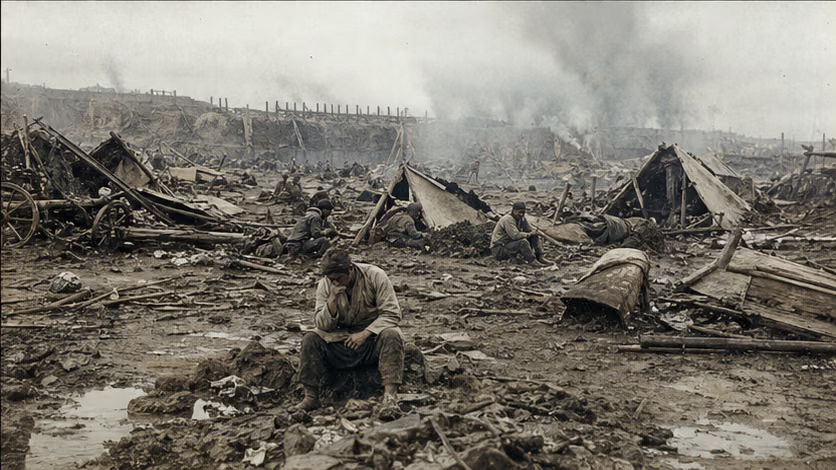
- Qing casualties in the battles that broke the encampments differ greatly between Qing memorials and Taiping accounts; the specific figures remain unverified. In 1860 the encampment collapsed, and several tens of thousands of regular troops scattered like birds and beasts (figures for routed troops vary by statistical basis; accounts vary).
- Commander-in-Chief Zhang Guoliang retreated to Danyang and drowned while crossing a river (dates; accounts vary); Imperial Commissioner Hechun fled from the collapse and died at Xushuguan (two accounts, suicide or illness, disputed).
- Civilians: Yangzhou, Zhenjiang, and Danyang repeatedly suffered war damage; troops and militia of the Jiangnan Encampment harassed civilians year-round and set up barriers to extract lijin, a grievance recorded in Qing notebooks (specific wording and evidence unverified).
- ※ Qing side: after entering Zhejiang, Zhang Yuliang's relief force for Hangzhou plundered along the route, and Hangzhou residents complained that "the soldiers were worse than the rebels" (Qing record; original wording unverified).
- ※ Taiping side: in the course of breaking out and moving east, the Taiping coerced civilians into following them, and after taking Yangzhou and other cities carried out killing and plunder; Qing documents and local gazetteers record many such cases (details unverified; note that many contain Qing terminology and exaggeration).
Aftermath
- After the first destruction in 1856: the Taiping Heavenly Kingdom reached its military peak, and within three months the Tianjing Incident broke out--Yang Xiuqing was killed, Wei Changhui was soon executed, and Shi Dakai left in 1857 (details of the incident belong in *War Overview · Taiping Heavenly Kingdom*). Peak and self-destruction stood right next to each other; this is the heaviest contrast in the article.
- After the second destruction in 1860: the Taiping Army immediately launched its eastern expedition to Suzhou and Changzhou (for details, see *Eastern Expedition to Suzhou–Changzhou and the Battles for Shanghai*), and southern Jiangsu changed hands.
- The Jiangnan Encampment was the Qing court's last heavy field group directly descended from the Green Standard. After its destruction, the Southeast had only the Xiang Army left to use, and Zeng Guofan was appointed Governor-General of Liangjiang and charged with military affairs that year (exact sequence of appointment unverified). From this point on, both the battlefield's main force and central military authority changed hands.
Accounts of Those Present
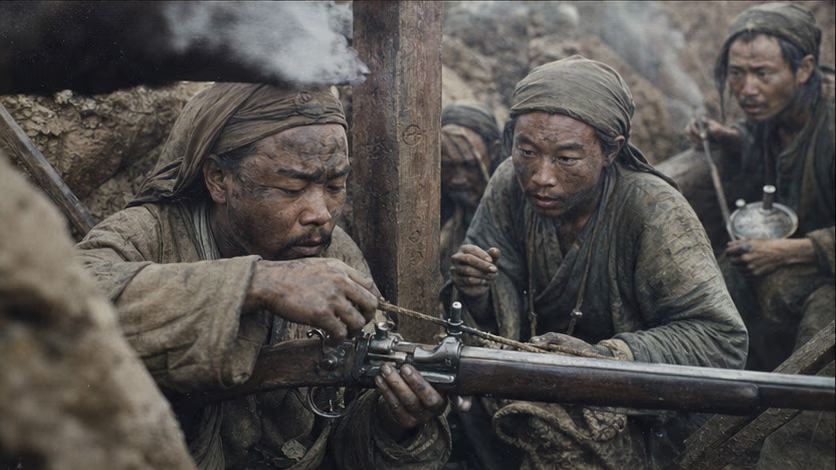
- Chen Yucheng's small boat: In 1856 Zhenjiang was under siege, with communication cut between inside and outside. Chen Yucheng took a single small boat through cannon fire into Zhenjiang to set the date for a pincer attack--Li Xiucheng's autobiographical account preserves this scene (details should follow the original manuscript; unverified).
- Xiang Rong's death: After fleeing in defeat to Danyang, he either fell ill from grief and anger or, according to another account, killed himself; both accounts exist in Qing records. The first destruction of the encampment directly cost the commander his life.
- Zhang Guoliang: Originally named Zhang Jiaxiang, he came from the Tiandihui, surrendered to the Qing, and was celebrated as the bravest of the Green Standard; after defeat at Danyang he drowned while crossing a river, and later notebooks preserve many popular tales about him (including *Notes from Jiangnan Chunmeng'an*), with truth and invention mixed together, unverified.
- The execution of "besieging Wei to save Zhao": Li Xiucheng used light troops to rush day and night toward Hangzhou (several thousand troops, disputed), broke the city, did not linger, withdrew as soon as he heard relief troops were coming, and returned to join the attack--a textbook drawing-away of the enemy, won entirely in time.
- Trade beside the encampments: After seven years of siege, markets had actually grown near the encampments, with private trade between soldiers and civilians, and even between the two armies (see Qing notebooks; source unverified)--a strange everyday life ground out by long siege.
The Ground
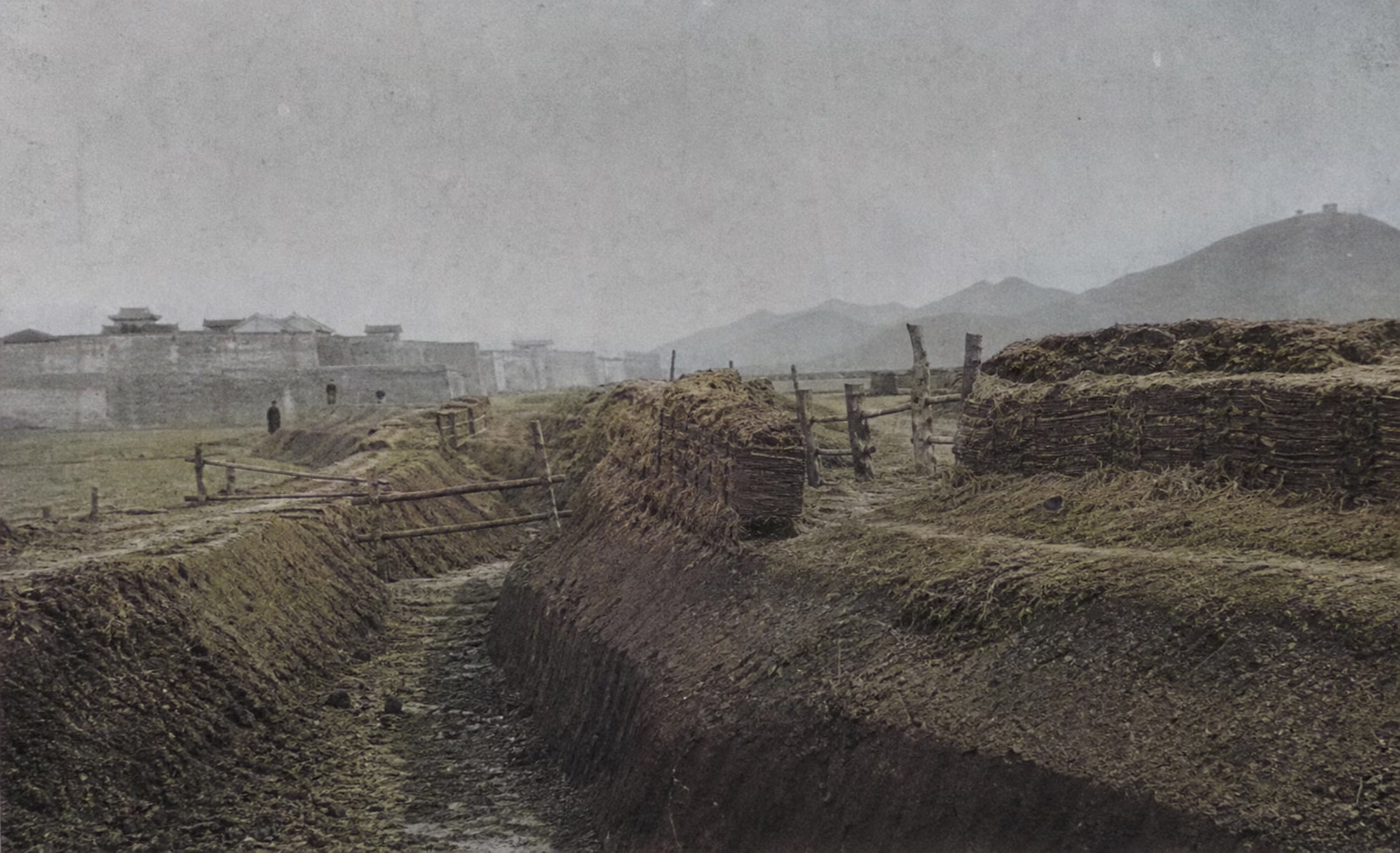
- Tianjing's walls ran more than ninety li, with inner and outer city, Purple Mountain's commanding heights, and the fortresses of Tianbao City and Dibao City: the defending side had very great depth, while the besieging side could only rely on trenches and walls to lock the eastern and southern faces.
- The Xiaolingwei–Chunhuazhen line: the core position of the Jiangnan Encampment, a cluster of camps and earthworks on the uplands at the southern foot of Purple Mountain.
- Zhenjiang–Guazhou: the crossroads of the Yangtze and the Grand Canal; whoever held it strangled tribute grain transport.
- Wuyi–Pukou: the Jiangpu corridor, the route from the Chuzhou direction to the opposite bank of Tianjing, and the battlefield where the Jiangbei Encampment was broken the second time.
- Long trenches: Hechun dug several tens of li of trenches around the city; trench, earthwork, and checkpoint formed a static siege space. Breaking the trench line depended on simultaneous feints from several directions and concentration at one point.
How Each Side Records It
- Qing records at the time: memorials and official books called the Taiping "rebels" and "long-haired rebels" (Qing terminology, as in *Strategy for Pacifying the Yue Bandits*); Xiang Rong's and Hechun's memorial drafts recorded the siege in terms such as "attack and suppress" and "defend and block," while the breaking of encampments was reported as "exhaustion of strength" and "martyrdom."
- The Taiping Heavenly Kingdom's own records: it had no official war history, and very few edicts and documents survive. The two destructions of the encampments left no systematic Taiping battle reports; the main first-hand narrative is Li Xiucheng's statement after his capture, composed in captivity and then edited, cut, and printed by Zeng Guofan (facsimile publication of the original manuscript came very late; sequence unverified)--this layer of source has a special nature.
- Changes in later narratives: Qing official histories set the frame as the disorder of the "long-haired rebels"; the Republic recast it as a forerunner of revolution, with Sun Yat-sen calling himself "the second Hong Xiuquan" (source unverified); in the 1950s it was canonized as a peasant-uprising narrative (the Luo Ergang system); contemporary historiography has reexamined it again--reassessing atrocities on both sides and even the "uprising" frame itself, while the military evaluation of the breakout operations has remained relatively stable.
Disputes and Sensitivities
- The causes of death of the two imperial commissioners, Xiang Rong and Hechun, each have illness and suicide accounts; Qing records contradict one another, and any quotation must mark its source.
- Causes assigned to the Jiangnan Encampment's two destructions across eight years coexist: Green Standard corruption and pay arrears, Taiping mobile advantage, and the Xiang Army watching from across the river; each has evidence and blind spots.
- Records of atrocities on both sides almost all come from the opponent's documents. The ※ notes are only a starting point; details still need to be checked one by one.
- The problem of cuts and edits in Li Xiucheng's autobiographical account: wherever the account is cited, the facsimile of the original manuscript should be the basis, and passages involving the strategy for breaking the encampments especially need comparison.
- Casualty and troop-strength figures in Taiping Heavenly Kingdom sources are generally unreliable; this article prefers omission to overclaiming.
Sources and Open Questions
Known main sources:
- Li Xiucheng's autobiographical account (facsimile of the original manuscript; main narrative of the breakout operations)
- *Strategy for Pacifying the Yue Bandits*, Xiang Rong's memorial drafts, Hechun's memorials (Qing terminology)
- Luo Ergang, *History of the Taiping Heavenly Kingdom*; Mao Jiaqi, ed., *General History of the Taiping Heavenly Kingdom*; Jian Youwen, *Comprehensive History of the Taiping Heavenly Kingdom*
- Qing notebooks: Zhang Dejian, *Compiled Reports on Rebel Conditions* (Qing intelligence compilation); Du Wenlan, *Brief Account of the Pacification of the Yue Bandits*; Wang Kun, *Jiwo Canzhui*, and others (selection unverified)
Open questions: exact date when Xiang Rong established camp at Xiaolingwei; Qishan's year of death and the succession sequence of imperial commissioners in Jiangbei; different works' statistical bases for the strength of the two encampments; the course of the 1856 retaking of Yangzhou; sources for the two accounts of Xiang Rong's death; dates of Zhenjiang's abandonment and fall; length of the long trenches and source of the title "Ten-Thousand-Li Great Wall"; date and participant list of the Zongyang conference; troop strength in the 1860 raid on Hangzhou, dates of taking and withdrawing from the city, and list of the five attacking routes; exact date of the second destruction of the Jiangnan Encampment (5.6 disputed); date and details of Zhang Guoliang's drowning; cause and place of Hechun's death (Xushuguan); sequence of Zeng Guofan's appointment as Governor-General of Liangjiang; sequence of publication of the facsimile of Li Xiucheng's original manuscript; source for Sun Yat-sen's phrase "the second Hong Xiuquan"; original wording for Zhang Yuliang's force's plundering; case-by-case examples of coercion and killing or plunder by both sides; notebook source for market trade beside the encampments; original edicts appointing Xiang Rong and Qishan as imperial commissioners and the successive severe edicts urging attack; original wording of Xiang Rong's memorial on "blocking key points and attacking when a gap appeared"; amount of silver in the Board of Revenue in the third year of Xianfeng; original regulations for Lei Yixian's Xiannumiao lijin collection and the full course of raising funds for the Jiangbei Encampment; original basis for the proposal recorded in *Compiled Reports on Rebel Conditions* to take Yanjing in the north; memorial records of the number of months of pay arrears in the two encampments; Tianjing's position as indicated by the operational sequence in which the Northern and Western Expeditions preceded relief of the close siege (structural inference).
All images on this site are AI-generated depictions. They are not historical photographs, not primary sources, and do not depict any real individual.