Engagement Archive · Advance into Jiangnan
A force that rose from a mountain village in Guangxi crossed five provinces in two years, reached the Yangtze, took Jinling and made it its capital -- the course of the late Qing's largest civil war was fixed along this line of advance.
Engagement Data
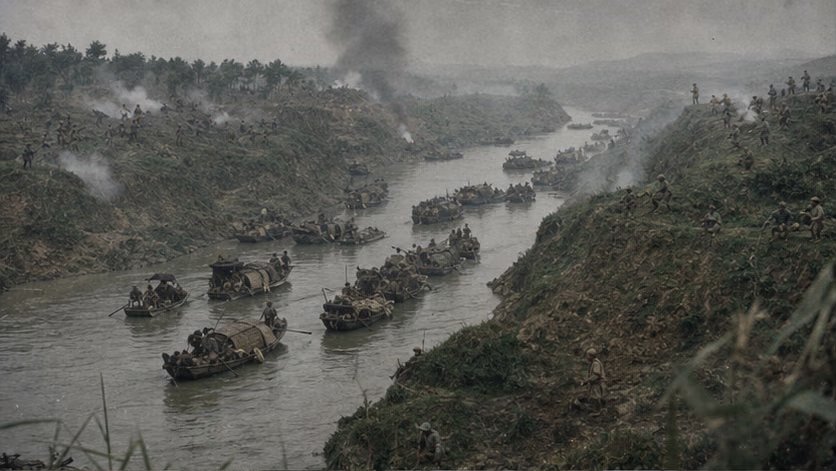
| Item | Details |
|---|---|
| Time | 1851.1.11 (Jintian Uprising) – 1853.3 (capital fixed at Jiangning), about two years and two months |
| Place | Jintian Village, Guiping, Guangxi -> Yong'an Prefecture -> Hunan-Guangxi border (Quanzhou, Suoyi Ferry) -> Hunan (Daozhou, Chenzhou, Changsha, Yuezhou) -> Wuchang -> lower Yangtze (Jiujiang, Anqing, Wuhu, Jiangning) |
| Belongs to | Taiping and Nian Rebellions · Jintian Uprising and fixing the capital at Tianjing phase |
| Advancing side | Taiping Army (Heavenly King Hong Xiuquan; Eastern King Yang Xiuqing, Western King Xiao Chaogui, Southern King Feng Yunshan, Northern King Wei Changhui, Assistant King Shi Dakai) |
| Pursuing and blocking side | Qing forces: mainly the Green Standard and Eight Banners, with local militia as well (Jiang Zhongyuan's Chu Braves, among others); imperial commissioners, governors-general, and governors replaced commanders layer after layer, while Xiang Rong's force followed eastward from Guangxi all the way behind them |
| Result | 1853.3.19–20 Jiangning was taken, then made the capital and renamed Tianjing; the Qing court lost control over the lower Yangtze |
Belligerents
| Item | Advancing side | Pursuing and blocking side |
|---|---|---|
| Strength | About 20,000 at the Jintian rising (including family members; bases of counting differ, figure disputed); around 10,000 after the breakout from Yong'an (accounts differ); the army expanded along the route into Hunan, and was claimed at several tens of thousands when it left Hunan; when moving east toward Jiangning, it was claimed at 500,000 (claimed figure; actual number unverified) | At any single point they could often assemble no more than several thousand to a little over 10,000; Green Standard and Eight Banner forces in the provinces were split among patrol posts and garrisons, then hastily drawn together when fighting came; local militia such as the Chu Braves numbered several thousand |
| Firearms | In the early phase mainly swords and spears, with limited heavy matchlocks and locally made cannon; after taking Yuezhou and Wuchang they gained large numbers of boats, guns, and ordnance, and only then built a river navy of scale (the Yuezhou captures are traditionally said to have included old cannon stored by Wu Sangui, disputed) | Standard matchlocks, heavy matchlocks, and city-defense artillery; better equipped, but scattered among cities and extremely poor in mobility |
| Mobility | Light and rapid advance, bypassing fortified cities and moving toward empty points; after losses on the water at Suoyi Ferry, they abandoned boats and went ashore while still keeping high speed | Cross-province troop transfers commonly took months; pursuing units (Xiang Rong's force) were always following behind and rarely succeeded in blocking the route |
| Command | The kings each commanded a route, while Yang Xiuqing held overall orders; marching and preaching were one system, and miners, boatmen, and secret-society members were absorbed along the way | Imperial commissioners changed repeatedly (Li Xingyuan, Zhou Tianjue, Ulan Tai, Saishang'a, Xu Guangjin, Lu Jianying... sequence unverified), and commanders were not under a unified chain of command |
Terrain and Conditions
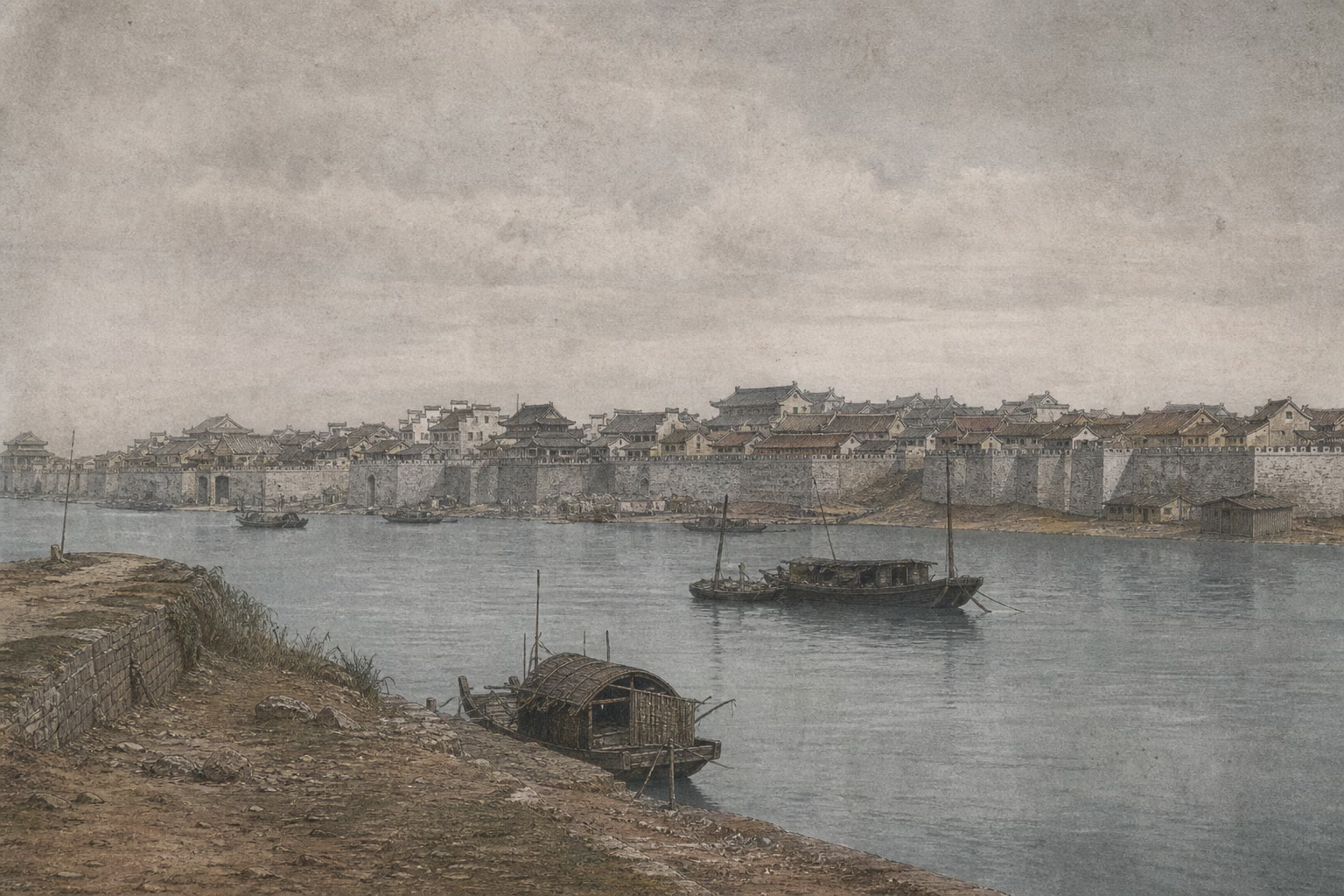
(For the larger situation -- the fiscal, demographic, and popular-uprising structure after the Opium War -- see Taiping Heavenly Kingdom: Overview.)
Guangxi: After the Opium War, unemployment and armed clan fighting overlapped. Around the Zijin Mountains, "newcomers" (Hakka) and locals had accumulated enmities, and the God Worshipping Society spread through mining sites and mountain villages. Before the uprising it already had tens of thousands of believers (figure disputed). Jintian was not an isolated village rising; it was an already organized network in motion.
Hunan: When the Taiping Army entered Hunan, uprisings linked to the Heaven and Earth Society were breaking out one after another. Miners from Daozhou and Chenzhou joined in batches, and the force doubled here (specific number unverified). Hunan militia also stepped onto the main stage from this point -- Jiang Zhongyuan's Chu Braves were the first sound of it.
Along the Yangtze: The Qing Yangtze navy had been long at peace, and the defenses were hollow; the cities and market towns along the river were wealthy but weakly defended, and this was the stretch where the Taiping Army filled out both its navy and its grain and pay.
Why It Was Fought
The previous war had ended at the Battle of Zhenjiang: in the summer of 1842, British troops cut the grain-transport route, and three weeks later the Qing court signed the Treaty of Nanjing under the walls of Nanjing. The cannon fire stopped on the river, but the account fell into the villages: indemnities were apportioned layer by layer, dear silver and cheap copper cash intensified, and taxpaying farming households lost more and more each time they exchanged copper cash for silver; disasters struck Guangdong and Guangxi year after year, and Heaven and Earth Society-linked popular uprisings rose one after another. In the eight or nine years before the Jintian Uprising, the soil was steeped layer by layer in this way.
The Zijin Mountain area of Guiping, Guangxi, was the corner of this soil least within official reach: patrol soldiers were thin, unemployed charcoal burners and miners gathered in mining sites and mountain villages, and "newcomers" (Hakka) had armed feuds with locals. Hong Xiuquan repeatedly failed the examinations, and, drawing on Christian missionary books, created the God Worshipping Society anew (for doctrinal origins and the details of the society's founding, see Taiping Heavenly Kingdom: Overview); Feng Yunshan preached for several years in the Zijin Mountains and organized these people into a congregational network, with tens of thousands before the uprising (figure disputed). The later sound at Jintian was not a lone village raising the pole; it was this net drawing tight.
After 1847, conflicts between the believers and the authorities and local militia grew more intense; by 1850, the Qing court transferred troops to "suppress and handle" them, and believers scattered across the counties gathered at Jintian for camp assembly. On January 11, 1851 -- traditionally said to have been chosen as Hong Xiuquan's birthday (dates vary by account) -- the Jintian Uprising began.
Neither side had a settled calculation at the start. On the uprising side, the initial objective was not clear; where the force should go, the force itself did not know. Only when institutions were built and kings enfeoffed at Yong'an did a political power take embryonic shape. On the suppression side, Green Standard and Eight Banner forces were divided among patrol posts and garrisons, and at a single point they could often assemble no more than several thousand to a little over 10,000; imperial commissioners changed repeatedly, commanders were not under one another's authority, and layer after layer advanced to "suppress" without success -- at that time Guangxi was full of popular uprisings, and the Jintian camp assembly was at first only one force among them.
The account on the suppression side needs to be calculated for the court. Two years of "suppression" in Guangxi drew troops from several provinces and consumed military pay counted in the millions (actual appropriations unverified); the Board of Revenue was strained, relying on donations and advances to keep going, while guest Green Standard troops sent to Guangxi were not acclimated and were unwilling to fight to the death. Saishang'a supervised the army as a Grand Secretary, but after long campaigning without results, he was dismissed and arrested for investigation after the breakout from Yong'an (sequence unverified). The court's intelligence was always separated by a layer of memorials: the front reported "suppression," the capital counted "victories," and between the Jintian camp assembly as "one force" among popular uprisings everywhere and its becoming a mortal threat to the dynasty lay a difference of more than ten months.
Direction grew out on the road: after the setback at Suoyi Ferry, the army abandoned boats, took the land route, and turned into Hunan; miners and secret-society members from Daozhou and Chenzhou joined in batches; after taking Yuezhou it gained boats and cannon, and after taking Wuchang it gained a fleet, so moving straight down the river toward Jinling became a real option. From Jintian to Jiangning, 5,000 li: this objective was not fixed at the starting point, but walked into being along the way.
The material rule on the advancing side was the opposite: having no rear also meant having no burden of a rear -- grain was taken from official granaries and treasuries, entered into the Sacred Treasury, and the army ate as it moved; the premise of light, rapid advance was that it could not stop, because once it stopped the grain would be cut off (this judgment is inferred from the manner of marching, unverified). The only recorded dispute over route on this road came at the endpoint: with the army at Jiangning, the two proposals of "going north to strike straight at Yanjing" and "fixing the capital at Jinling" both existed; Yang Xiuqing favored fixing the capital, and the decision was made with one stroke (the process of debate and participants unverified). Before this, who pressed for the decisions to withdraw the siege of Changsha and abandon boats to enter Hunan is not clearly recorded (unverified) -- one army was blindfolded by memorials, the other was driven onward by marching, and the resolve of both sides was set on intelligence short in weight.
Course of the Engagement
| Stage | Time | Key points |
|---|---|---|
| Jintian camp assembly and maneuvering around Guiping | 1851.1–8 | Jintian Uprising; fighting shifted around Guiping and Pingnan, while Qing forces advanced layer after layer to "suppress" without success |
| Institution-building at Yong'an | 1851.9–1852.4 | Held Yong'an Prefecture, enfeoffed the five kings (Eastern, Western, Southern, Northern, Assistant), fixed the official system; besieged for about half a year |
| Breakout from Yong'an and northward advance | 1852.4–6 | Broke out and badly hurt the pursuing Qing troops; besieged Guilin for more than a month without taking it, then turned toward Quanzhou |
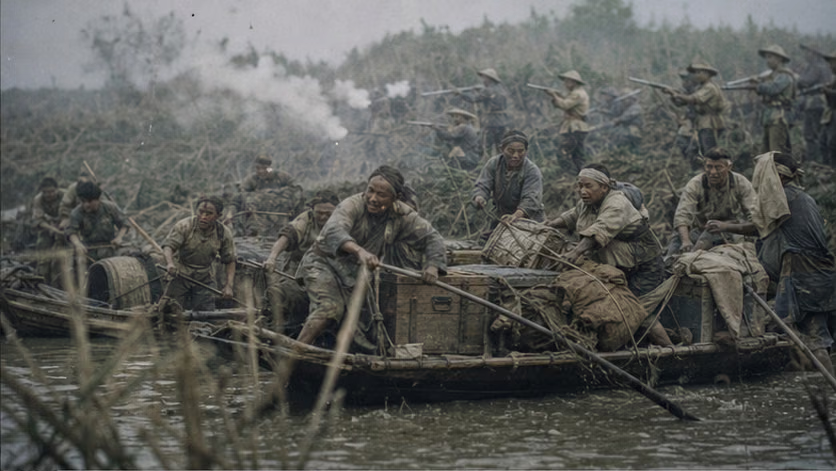
| Quanzhou--Suoyi Ferry | 1852.6 | Below Quanzhou's walls Feng Yunshan was struck by cannon fire and died of severe wounds (whether he died from the Quanzhou shelling or the Suoyi Ferry ambush, two accounts stand side by side, unverified); the Taiping Army moved north by water and was ambushed by Jiang Zhongyuan's Chu Braves at Suoyi Ferry, suffering heavy losses of boats and baggage, then changed to the land route into Hunan. ※ Qing records say that after breaking Quanzhou, the Taiping Army massacred the city in revenge (Qing records; number unverified) |
| Expansion in Hunan | 1852.6–9 | Took Daozhou, Chenzhou, and other places in succession; miners and secret-society members joined in large numbers, and the force multiplied |
| Battle of Changsha | 1852.9–11 | Xiao Chaogui led a detached force in a raid on Changsha and was killed by cannon fire during the assault around Tianxin Pavilion (details unverified); the main force continued the attack for more than eighty days without taking the city, then withdrew the siege and moved north |
| Taking Yuezhou and Wuchang | 1852.12–1853.1 | At Yuezhou they gained boats, artillery, and ordnance; on 1853.1.12 they took Wuchang (dates vary by account) -- the first provincial capital taken by the Taiping Army |
| Moving east down the Yangtze | 1853.2–3 | The claimed 500,000 floated east down the river, taking Jiujiang, Anqing, and Wuhu in succession; on 3.19–20 they took Jiangning, and Governor-General of Liangjiang Lu Jianying and Jiangning General Xianghou died there. ※ After the city was broken, the soldiers and civilians of the Banner camp and Manchu city were massacred almost to the last (headcounts vary by basis and account) |
| Capital fixed | 1853.3 | Jiangning was fixed as Tianjing |
Casualties and Losses
- Advancing side: two of the founding kings were lost -- Southern King Feng Yunshan (1852.6, around Suoyi Ferry) and Western King Xiao Chaogui (1852.9, below Changsha's walls); at Suoyi Ferry the river force lost more than half its boats and baggage (specific figures unverified). There is no reliable aggregate count of deaths along the route.
- Pursuing and blocking side: there is no aggregate account of Green Standard and Eight Banner casualties across the fighting; the defenders of Wuchang and Jiangning were nearly annihilated; the death lists of governors-general, generals, provincial commanders, and regional commanders remain to be checked article by article.
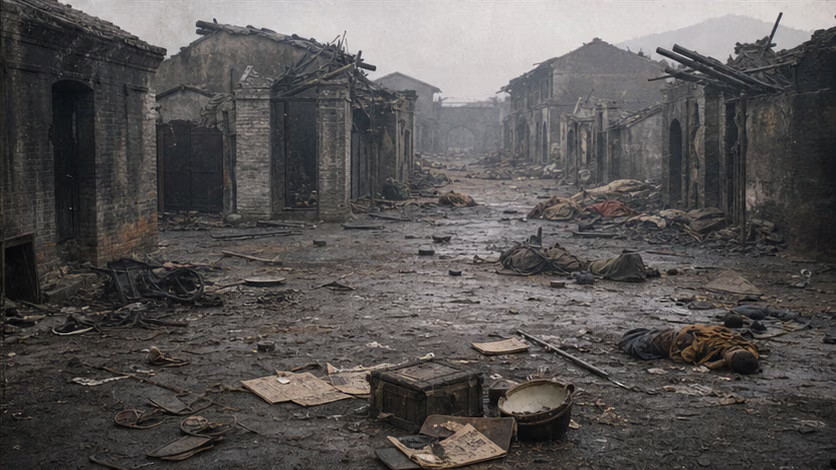
- Civilians: records of plunder and killing after cities fell exist for all the cities along the route, on both the Qing and Taiping sides (check city by city) -- Quanzhou, Wuchang, and Jiangning were the heaviest. ※ The massacre of the Jiangning Manchu city was the advancing side's largest atrocity against civilians (Banner-camp soldiers and civilians); Qing records say the Taiping Army massacred Quanzhou (Qing records, unverified); records of Qing troops and militia killing innocents and permitting plunder in "suppression" along the route also appear scattered through the sources (record unverified). There is no total statistic for civilian casualties.
Aftermath
- The Taiping Heavenly Kingdom held Jinling as its capital and soon divided its forces for the Northern Expedition and Western Expedition -- the structure of the civil war took shape from this point, and from then on it was a fourteen-year war.
- The Qing court's regular state troops (Green Standard and Eight Banners) proved unreliable at this stage, and militia forces came to the front: beyond Jiang Zhongyuan's Chu Braves, Zeng Guofan's training of Xiang Braves (1853, Changsha) was already growing on the same vine.
- Xiang Rong's force followed the Taiping Army east all the way and encamped outside Jiangning (his establishment of the Jiangnan Encampment is treated in another article; here it is passed over in one stroke).
- The fiscal heartland of the lower Yangtze changed hands, the Qing court's lifelines of grain transport and salt revenue were cut, and the chain reaction in wartime finance lasted until the war ended.
Accounts of Those Present
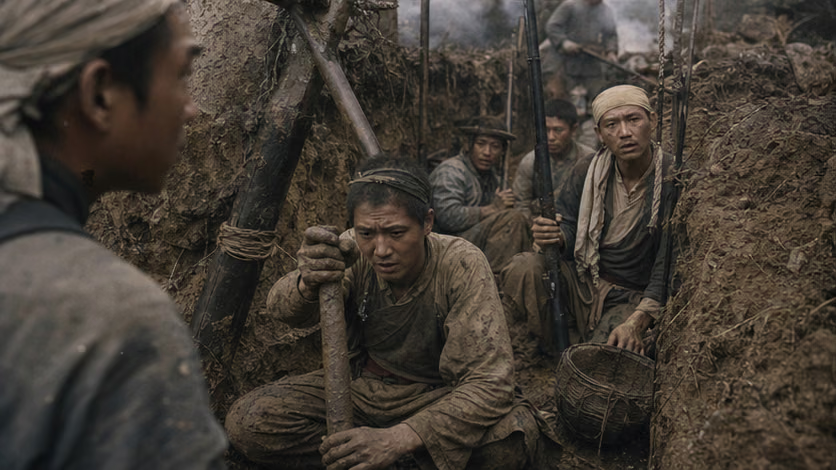
- The river at Suoyi Ferry: the Taiping Army's old base of 20,000 people was on the boats, and in one night it sank to the river bottom -- the Southern King died around this engagement. From then on they abandoned boats and went ashore, turning from "water" to "land," and instead walked out a faster road.
- The detached force below Changsha's walls: Xiao Chaogui took only several thousand men in a raid on the provincial capital and died under cannon fire at the city wall. When the main force arrived and attacked for more than eighty days, gunpowder ran out and tunnels advanced and retreated several times, yet still the city was not taken -- Changsha was the only large city on this line of advance that they failed to take.
- The cannon at Yuezhou: the ordnance gained after breaking Yuezhou is traditionally said to have included cannon once stored by Wu Sangui, reloaded after 170 years buried underground (this story is widely circulated but thinly sourced, unverified).
- 500,000 people down the river: after Wuchang was taken, coerced followers and new adherents were counted in the hundreds of thousands, and boats covered the river as they moved east. By this point, more than half of this force consisted of people newly attached along the route -- scale had arrived, and so had a mixed foundation.
- The dispute over fixing the capital: after the army reached Jiangning, the two proposals of "going north to strike straight at Yanjing" and "fixing the capital at Jinling" both existed; Yang Xiuqing favored fixing the capital, and the decision was made with one stroke (the specific process of debate and participants unverified). The weight of this decision would take fourteen years to become clear.
The Ground
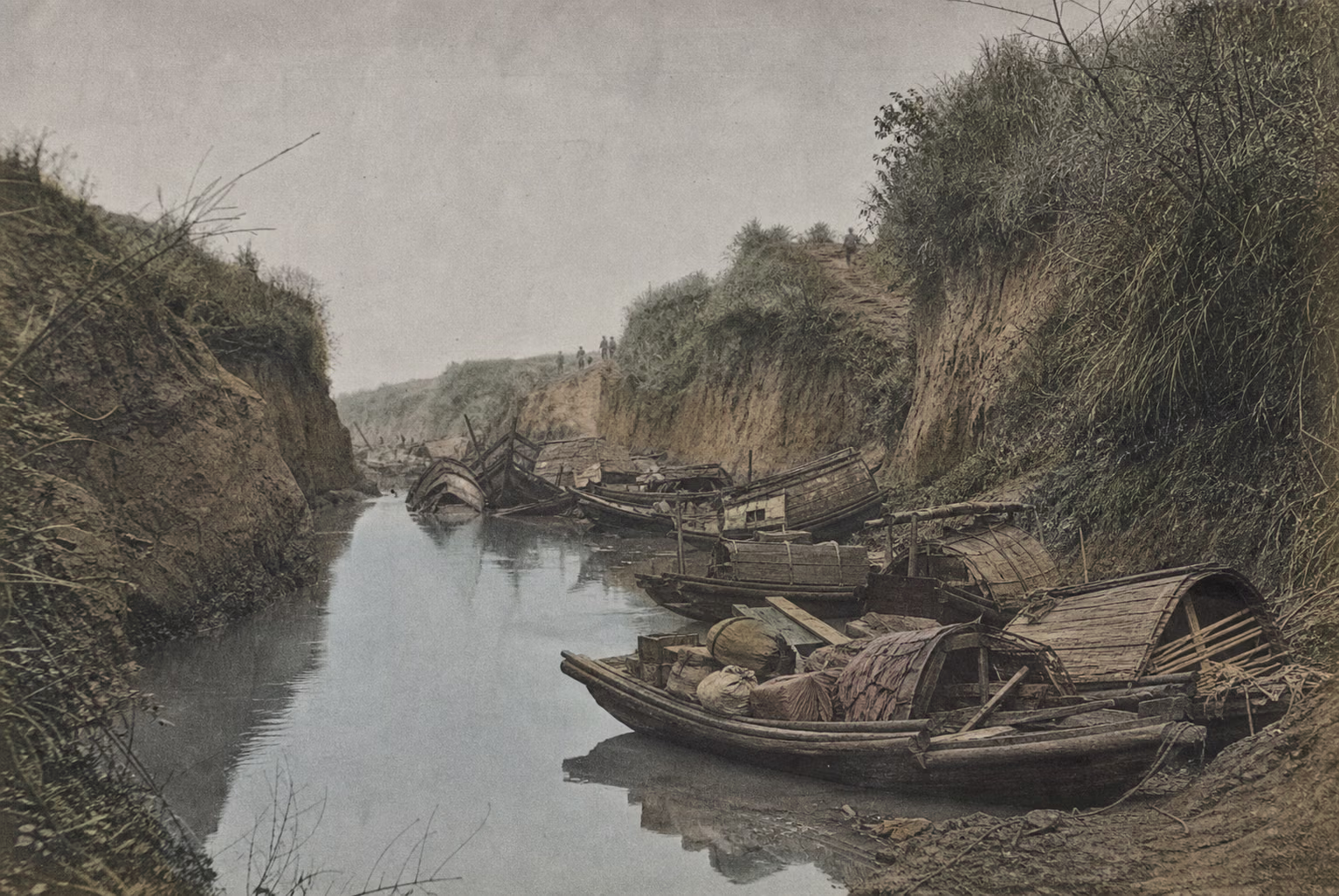
- The main line was a 5,000-li axis of advance: Guangxi mountains -> southern Hunan hills -> Xiang River -> Yangtze; its spatial grammar gradually shifted from mountain encounters to river mobility and siege warfare.
- Three key nodes: Suoyi Ferry (river ambush, narrow water, high banks on both sides), Changsha (Xiang River + fortified city, the underground space of tunnel blasting and counter-blasting), Jiangning (Ming walls + Manchu city, one of the largest city-defense systems in the country at the time).
- The river is the protagonist of the second half of the story: below Wuchang, the navy determined marching speed and also determined which cities could be held.
- The Manchu city, as a city within the city, became an independent, sealed space of massacre and last defense after Jiangning was broken.
How Each Side Records It
- Qing side at the time: official books and memorials called them "long-haired rebels" and "Yue bandits" (Qing terms); Suoyi Ferry and Changsha were two rare stretches of "victory reports"; Jiangning's fall was an earthquake of the "heaven collapsing" order in memorials and Beijing officials' diaries, while private literati notes often recorded the misery of the Manchu city.
- The Taiping Heavenly Kingdom's own record: very few edicts and documents survive, and contemporary self-accounts are scarce; the known contemporary documents are mostly fragments of pacification proclamations and prohibitions (catalog unverified). The narrative of this stage depends chiefly on later retrospective accounts (such as the recollection passages in Li Xiucheng's Autobiographical Account, written in 1864).
- Changes in later narratives: Qing official histories called them "long-haired rebels" without exception; late Qing and early Republican revolutionaries connected the Jintian Uprising into the revolutionary genealogy (Sun Yat-sen called himself "the second Hong Xiuquan," source unverified); in the 1950s it was canonized as a "peasant uprising," and the anniversary of the Jintian Uprising entered the textbook system; after the 1980s, historiography reexamined it, reassessing the doctrine of the God Worshipping Society, records of atrocities, and the characterization of "peasant revolution," and the narrative divided again.
Disputes and Sensitivities
- The dispute over the Suoyi Ferry engagement: whether the ambush actually took place, how large it was, and whether Feng Yunshan ultimately died at Quanzhou or Suoyi Ferry have generated debate at the level of whole specialist monographs (main literature unverified).
- Source problems in atrocity records: the vast majority of records of massacres along the route come from Qing documents and enemy retrospective accounts; any isolated single item is marked by basis and not adopted as a conclusion.
- The characterization as a "peasant uprising" and contemporary reexamination coexist; terms of characterization do not enter the main text, and are explained only in this section and in "How Each Side Records It."
- The massacre of the Jiangning Manchu city has long been muted in contemporary public narrative. This article records it on the same terms as Qing atrocities.
Sources and Open Questions
Known main sources:
- Li Xiucheng's Autobiographical Account (recounted in 1864, including memories of this stage)
- Compilation on Rebel Conditions (Qing intelligence compilation, chiefly compiled by Zhang Dejian -- Qing terminology is kept in the original title)
- Jian Youwen, Comprehensive History of the Taiping Heavenly Kingdom; Luo Ergang, History of the Taiping Heavenly Kingdom (two later comprehensive histories with different bases)
- Jiang Zhongyuan's collected writings; Zeng Guofan's early memorial drafts (perspective of the pursuing and blocking side)
Open questions: Jintian camp-assembly numbers and the date of the uprising (Hong Xiuquan birthday account); troop strength after the breakout from Yong'an; original sources for the two accounts of where Feng Yunshan died; original Qing records of the Suoyi Ferry ambush; specific source texts for the Quanzhou massacre records; the location (around Tianxin Pavilion) and course of Xiao Chaogui's death by cannon fire; exact date of taking Wuchang (1853.1.12 account); source for the old Wu Sangui cannon obtained at Yuezhou; original source for the claimed 500,000 moving east toward Jiangning; figures and bases for the massacre of the Jiangning Manchu city; participants and process in the dispute over fixing the capital; catalog of surviving contemporary Taiping pacification proclamations and prohibitions; source for Sun Yat-sen's phrase "the second Hong Xiuquan"; item-by-item sources for Qing troops and militia killing innocents and permitting plunder along the route; military-pay appropriations and sources for the Guangxi suppression campaign; sequence of Saishang'a's dismissal and arrest; records of how the Sacred Treasury system operated during the advance; decision-maker for withdrawing the siege of Changsha and turning into Hunan; evidentiary basis for the inference that "they could not stop; once they stopped the grain would be cut off."
All images on this site are AI-generated depictions. They are not historical photographs, not primary sources, and do not depict any real individual.