Engagement Archive · First Phase Offensive (Unsan)
The Chinese People's Volunteer Army's first battle after secretly crossing the river met the South Korean army at Onjong and the U.S. elite at Unsan--the first encounter in the history of the Chinese and U.S. armies was won; then the Chinese forces deliberately halted and withdrew, turning the victory itself into smoke for the next, larger victory.
Engagement Data
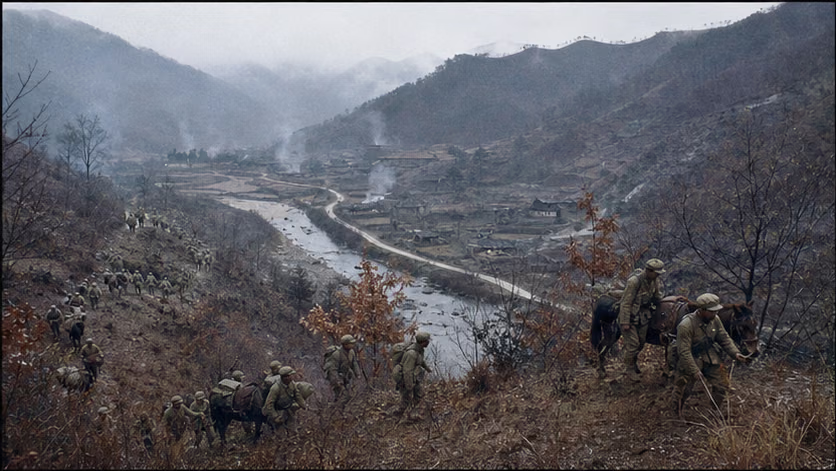
| Item | Content |
|---|---|
| Time | 1950.10.25 – 11.5 |
| Place | Northwestern Korea: the Onjong, Unsan, and Huichon line (mountain country north of the Chongchon River) |
| Part of | War to Resist U.S. Aggression and Aid Korea · first phase offensive of the mobile-warfare stage |
| Chinese People's Volunteer Army | 13th Corps (Commander Deng Hua and others; Peng Dehuai served as commander and political commissar of the Chinese People's Volunteer Army): Thirty-Eighth, Thirty-Ninth, Fortieth, and Forty-Second Armies, among others; the first entry into Korea numbered about 250,000 (later rising successively to around 300,000, with figures varying by account) |
| United Nations Command | U.S. Eighth Army (Walker) on the western line and U.S. X Corps on the eastern line; immediately opposite were the South Korean First, Sixth, and Eighth Divisions, the U.S. First Cavalry Division, U.S. 24th Division, British 27th Brigade, and others |
| Result | The Chinese People's Volunteer Army drove the "United Nations Command" back from the Yalu River to south of the Chongchon River; on 11.5 it voluntarily stopped the offensive and withdrew its main force into concealment |
Belligerents
| Item | Chinese People's Volunteer Army | United Nations Command |
|---|---|---|
| Strength | The first entry into Korea comprised 4 armies plus 3 artillery divisions, about 250,000 men; follow-on units continued crossing the river during the engagement | About 130,000 on the front line (western line), with several hundred thousand across the eastern and western lines combined (figures vary by account) |
| Firepower | Mainly infantry light weapons, with a small quantity of miscellaneous Japanese-made and Nationalist-made artillery; no air force and no tanks | A complete firepower system: tanks, heavy artillery, and absolute air superiority |
| Supply | Several days' rations and ammunition carried by the troops, moved forward by human and animal labor--the logistical iron rule of the "week-long offensive" was already present from this engagement onward | Modern logistics, but the northward front had lengthened and mountain roads were restrictive |
| Key gap | March and concealment: moving by night and resting at dawn, with strict camouflage; the entry into Korea by hundreds of thousands of men was essentially not exposed under U.S. aerial reconnaissance (the degree to which the "invisible river crossing" was achieved remains to be checked in detail) | Judgment of the enemy immediately opposite: even after the engagement ended, the United Nations Command still did not believe China had entered the war on a large scale |
Terrain and Conditions
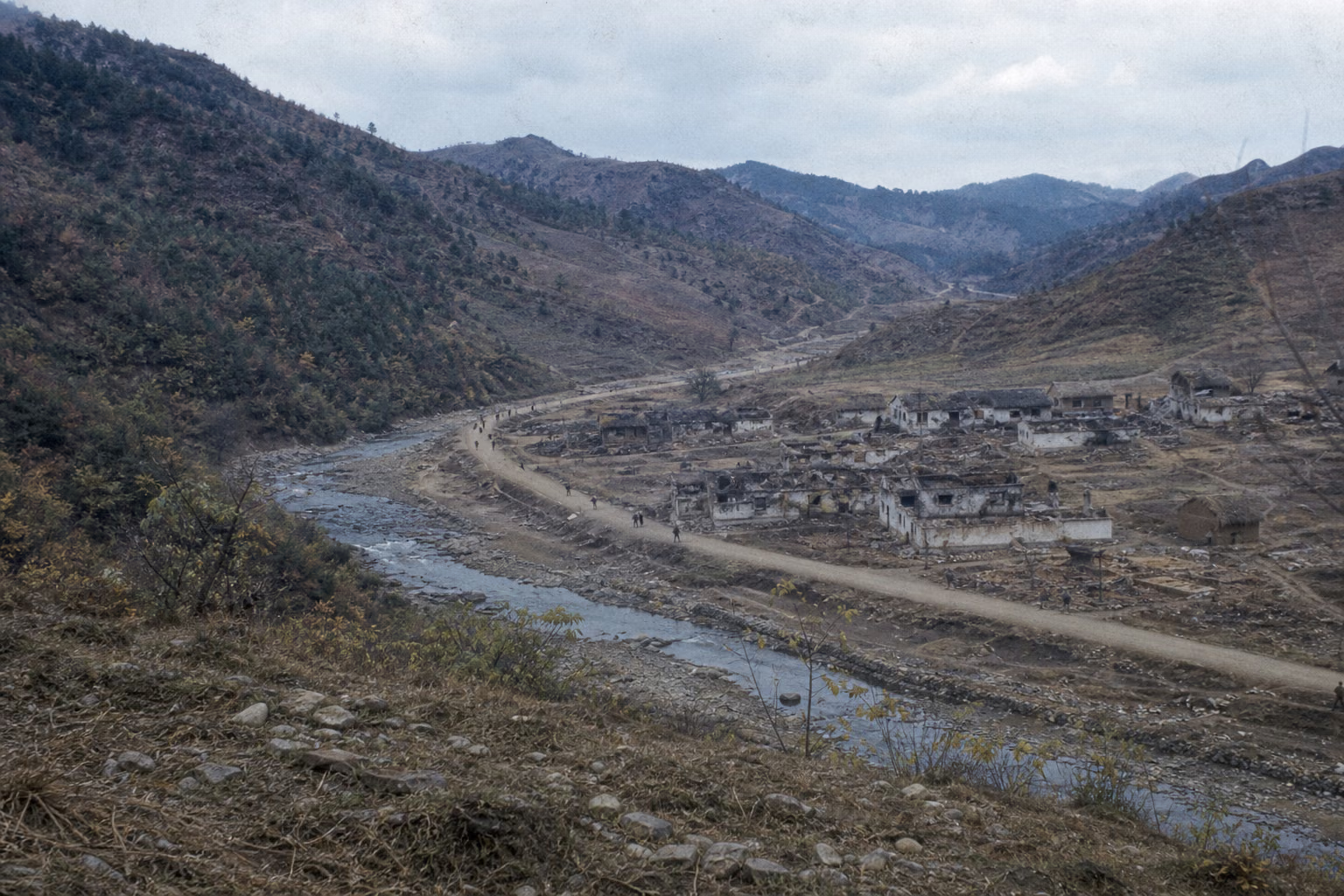
(For the broader situation in autumn 1950--the Inchon landing, the U.S. advance north across the 38th Parallel, and China's decision to send troops--see *War to Resist U.S. Aggression and Aid Korea · War Overview*; here the focus is only the mountain country of northwestern Korea.)
Northwestern Korea: ground for war among high mountains and narrow roads. The Onjong and Unsan area lies in the mountains along the southern rim of the Kaema Plateau. Roads run through river valleys, while ridgelines on both sides overlook them--mechanized troops cannot leave the roads; infantry can. The terrain itself was already selecting which kind of army it favored.
The northward posture of the "United Nations Command": In late October, U.S. and South Korean forces were moving through these mountains in a mentality of "pursuit"--Pyongyang had fallen, the Yalu River was in sight, divisions were racing north separately and without connection, and forward elements of the South Korean Sixth Division had already reached Chosan (on the Yalu River, around 10.26, dates vary by account). The front was dispersed; the formation was overextended.
Civilians of the battlefield country: North Korean villages and towns had already been damaged by bombing and retreat, and refugee columns flowed south along the roads; when the Chinese People's Volunteer Army crossed the river, the main force of the Korean People's Army had already been scattered and its organization broken--what the Chinese People's Volunteer Army took over was a North with essentially no defensive line to speak of (Pyongyang fell on 10.19, the same day the Chinese People's Volunteer Army crossed the river).
Why It Was Fought
When this battle began, China's own war had not yet closed. The failed sea crossing at Kinmen was only a year past, preparations for an operation against Taiwan were under way, and the advance into the southwest was still on the road--at precisely this juncture, the Korean Peninsula across the sea caught fire. On June 25, 1950, civil war broke out; two days later, the Seventh Fleet entered the Taiwan Strait, and the operation against Taiwan was frozen from that point (the causal chain by which the Korean War sounded and the Taiwan Strait froze is cross-visible in the overview). On September 15, U.S. forces landed at Inchon, and the military situation reversed: the main force of the Korean People's Army was cut off south of the 38th Parallel, the "United Nations Command" crossed the line and advanced north, and the objective changed from "restoring the prewar status" to "unifying the peninsula by force." China's warning, conveyed through Indian ambassador K. M. Panikkar--that China could not sit by if U.S. troops crossed the line--was taken in Washington as bluff (the diplomatic-history details remain to be checked; cross-reference the overview).
For the flames of war to press down to the Yalu River was to press down on China's only heavy-industrial belt at the time. And the situation left decision-makers no leisure: the state had been founded only one year earlier, economic recovery was not yet halfway complete, the army was being demobilized, and a majority in the Politburo did not initially favor sending troops (for the decision history, see the overview). But if China still did not move, the opponent would be watering its horses at the river. On the night of October 19, the same day Pyongyang fell, four armies of the Chinese People's Volunteer Army secretly crossed the Yalu River by separate routes.
The calculations on the two sides differed by an order of magnitude. MacArthur judged that China did not dare, and could not, enter the war on a large scale, and deployed the final blow that would bring the troops "home by Thanksgiving"; divisions raced north separately and without connection, with forward elements already touching Chosan on the river. What Peng Dehuai wanted was precisely this confidence on the opponent's part--the crossing itself had gone unnoticed, and that determined the nature of the first battle: not a positional confrontation, but an encounter battle in the form of an ambush. The river-valley mountain country around Onjong and Unsan was also selecting which kind of army it favored: mechanized troops cannot leave the roads; infantry can. The direct objective of the First Phase Offensive was plain: while the enemy was overextended in separated columns and had not yet detected the Chinese force, strike it head-on, push back the offensive pressing toward the river, and secure ground from which later operations could unfold.
On the morning of October 25, at Liangshuidong northwest of Onjong, the 118th Division of the 40th Army ran straight into the forward battalion of the Second Regiment, South Korean Sixth Division, advancing north--the first shot of the War to Resist U.S. Aggression and Aid Korea was fired in an encounter neither side had scheduled.
Course of the Engagement
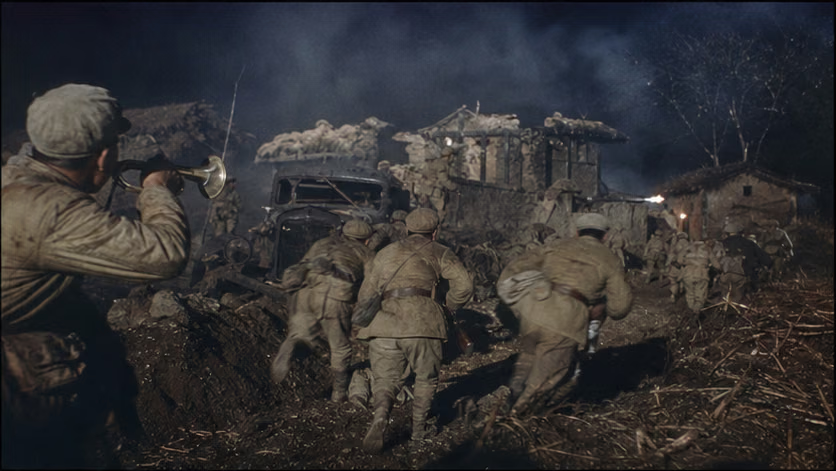
| Phase | Time | Key Points |
|---|---|---|
| Secret river crossing | From the night of 10.19 | The Fortieth, Thirty-Ninth, Thirty-Eighth, and Forty-Second Armies crossed the Yalu River by separate routes, moving by night and resting at dawn; after crossing, they advanced toward their assigned combat zones and concealed themselves by day against air attack |
| Onjong encounter | 10.25 | The 118th Division of the 40th Army encountered the forward battalion of the Second Regiment, South Korean Sixth Division, in the Liangshuidong area northwest of Onjong, and annihilated the battalion (the regiment's main force was subsequently routed, details unrecorded)--the first shot of the War to Resist U.S. Aggression and Aid Korea; for this reason, 10.25 was designated War to Resist U.S. Aggression and Aid Korea Memorial Day |
| Counterattack unfolds | 10.26–31 | On the western line, each army split and struck the overextended enemy: most of the South Korean Sixth and Eighth Divisions were routed, and the South Korean First Division was compressed at Unsan; on the eastern line, part of the 42nd Army blocked the northward advance of U.S. and South Korean forces at Hwangchoryong and Funchilin (for the eastern-line blocking details, cross-reference the background to *Battle of Chosin Reservoir*) |
| Battle of Unsan | 11.1–11.3 | The 39th Army launched a general assault on Unsan--the original target was the South Korean First Division, but during contact it discovered that the front had already been relieved by the Eighth Cavalry Regiment, U.S. First Cavalry Division (details of the relief sequence remain to be checked). It fought anyway: at night, multiple routes infiltrated and penetrated, cut off retreat, and closed to hand-to-hand fighting, heavily damaging the regiment (most of it destroyed, with figures varying by account), while also destroying part of its reinforcements at Longtoudong and elsewhere--the first engagement between the Chinese and U.S. armies |
| Closure and withdrawal | 11.4–11.5 | The Chinese People's Volunteer Army stopped its offensive across the whole line, and the engagement ended on 11.5; the main force then withdrew into concealment and deliberately showed weakness--leaving some worn-out equipment behind and reducing contact, giving the opponent the impression that "the Chinese had only sent symbolic troops and had already been beaten back" (the directive details of the show-of-weakness deployment remain to be checked) |
Casualties and Losses
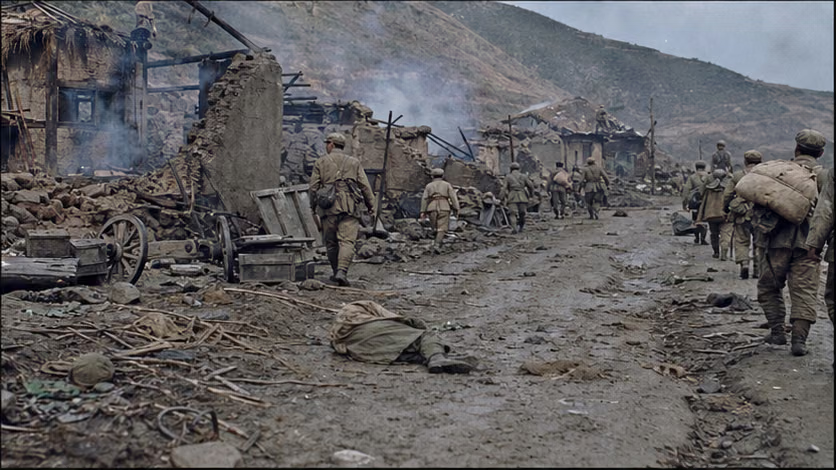
- Chinese People's Volunteer Army: about ten thousand casualties (Chinese statistical basis; the specific figure is disputed).
- United Nations Command: Chinese battle reports claimed more than 15,000 enemy troops annihilated (including prisoners, with figures varying by account); U.S. records state that the Eighth Cavalry Regiment, First Cavalry Division, suffered heavy losses at Unsan (the regiment's Third Battalion was essentially wiped out as an organized formation; details of the U.S. statistical basis remain to be checked); most of the South Korean Sixth and Eighth Divisions collapsed. Three numerical systems coexist.
- Civilian dimension: damage to towns and villages in the combat zone under both sides' fire and U.S. aerial bombing appears scattered across the records of all sides; systematic figures (unverified)--the account of the battlefield country begins with this engagement.
Aftermath
- Militarily, the Chinese People's Volunteer Army pushed the front back from the Yalu River to the Chongchon River line, gained a foothold, and won space to deploy forces.
- More crucial was the completion of strategic deception: MacArthur's headquarters judged from prisoner interrogations and battlefield contact that those who had entered Korea were only small groups of "volunteers," totaling no more than several tens of thousands (the original text of the U.S. intelligence assessment remains to be checked). In early November, the "United Nations Command" continued to deploy its general offensive north, preparing to "end the war before Thanksgiving / Christmas." The victory of the First Phase Offensive was designed as smoke--the closing show of weakness directly drew out the annihilation opportunity of the Second Phase Offensive (see *Second Phase Offensive — Overview*).
- In his engagement summary, Peng Dehuai criticized the 38th Army for moving slowly and letting the enemy at Huichon escape (the "Liang Xingchu was criticized" note--laying a character line for the 38th Army's reversal battle in the Second Phase Offensive; details remain to be checked).
Accounts of Those Present
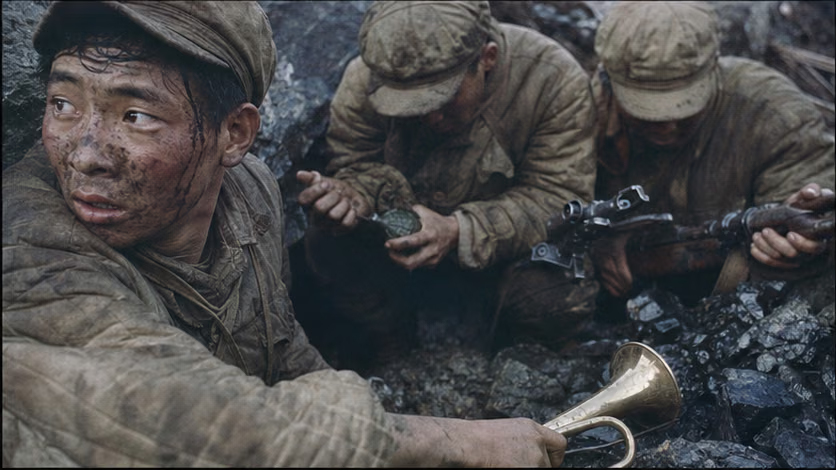
- "We thought they were Syngman Rhee's troops; only when we fought did we learn they were Americans": a common memory among soldiers of the 39th Army after contact at Unsan--under the opposing helmets were blond hair, and the firepower was on an entirely different order, but in night fighting and close combat that order could not unfold.
- Bugles: the Chinese People's Volunteer Army used bugles and whistles in night fighting for coordination and morale-building. U.S. memoirs repeatedly show the psychological shadow left by bugle calls--in mountain valleys at midnight, bugles sounding everywhere meant a charge was coming (U.S. records in the so-called "Oriental bugle" style; specific source unverified). The battlefield function of a musical instrument under a generational firepower gap is one distinctive detail of this battle.
- Bayonets and grenades: the density of close combat at Unsan--U.S. records repeatedly describe positions penetrated by Chinese soldiers with grenades and bayonets (details in U.S. military histories unrecorded).
- The quiet of crossing the river: hundreds of thousands crossing the Yalu River by night--mules and horses carrying artillery moving with bits in their mouths, troops under orders not to speak, and blackout controls on the far bank. Some veterans recalled looking back at the lights of Andong while crossing (oral-history details remain to be checked).
- The South Korean Sixth Division's Chosan vanguard: the regiment that rushed all the way to the Yalu River and then retreated all the way back was a miniature of the "United Nations Command"'s greatest overextension and quickest reversal (unit number and route unrecorded).
The Ground
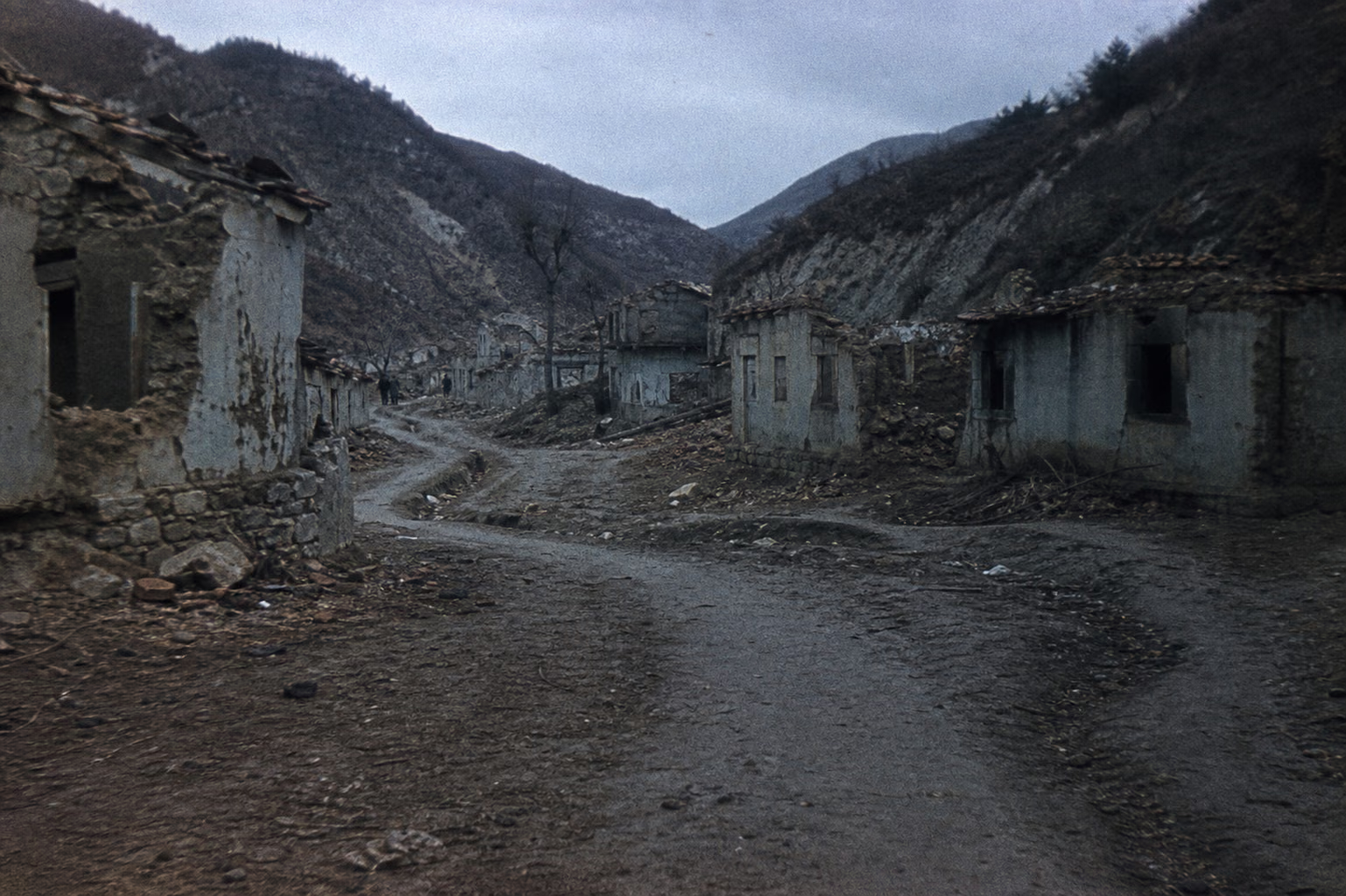
- The mountain corridors north of the Chongchon River: roads clinging to river valleys, ridgelines locking both sides--a natural grammar for ambush and cutting off retreat.
- Unsan town: a road junction in a small basin, watched by surrounding heights; the scale of night fighting was encounters and hand-to-hand fighting at distances of a few dozen meters, while daytime belonged to U.S. air-ground firepower--the reversal of attack and defense between day and night was the core spatial rhythm of this stage.
- Yalu River crossing sites (Andong-Sinuiju and others): hundreds of thousands of people and pieces of equipment had to pass covertly at night inside the reconnaissance radius of enemy aircraft.
How Each Side Records It
- Chinese side: "victory in the first battle" and "success at the first stroke"--Unsan, as the victory in the first Chinese-U.S. encounter, long served as a fixed opening in military-history narration; 10.25 was designated War to Resist U.S. Aggression and Aid Korea Memorial Day (designated in 1951, details remain to be checked).
- U.S. side: in U.S. military history, Unsan is a synonym for "the suddenness of China's entry into the war"--the First Cavalry Division, a "founding-fathers division" (an honor narrative of never having been defeated in its organizational history, unverified), suffered its first heavy blow; the battle fed the long internal U.S. debate over "who should be responsible for the intelligence failure" (historiography).
- South Korean side: South Korean military history records the collapse of units such as the Sixth Division between Onjong and Unsan (details in *History of the Korean War* unrecorded)--the South Korean army was the side struck first in this battle, and that fact is on record.
Disputes and Sensitivities
- Enemy losses inflicted: the gap between the Chinese figure of 15,000 and the loss records of individual U.S. units requires checking the statistical boundaries article by article (whether South Korean troops are included, whether prisoners are included).
- How to state the result at Unsan: Chinese narratives often say "annihilated one U.S. regiment"; the strict wording should be "heavily damaged" (the regiment's main force was routed and one battalion was wiped out as an organized formation), with the remainder entered into the open questions.
- The decision level of "showing weakness to lure the enemy": whether the withdrawal and show of weakness were Peng Dehuai's front-line deployment or a joint design by Volunteer Army Headquarters and the Central Military Commission awaits checking against decision telegrams.
Sources and Open Questions
Sources: *History of the War to Resist U.S. Aggression and Aid Korea* (Academy of Military Sciences), vol. 1; Peng Dehuai, *Peng Dehuai's Autobiography*; histories of the 39th Army and summaries of the Unsan fighting; U.S. Army official history, Roy Appleman, *South to the Naktong, North to the Yalu*; Ridgway, *The Korean War*; South Korea's *History of the Korean War*.
Open questions: the precise statistical basis for the first strength entering Korea; the South Korean unit number and loss details in the Onjong encounter; the Unsan relief sequence and U.S. statistical basis for the losses of the U.S. Eighth Cavalry Regiment; specific sources for the "Oriental bugle" and bugle-call records; decision telegrams on the show-of-weakness withdrawal; the original text of the U.S. November intelligence assessment; the process by which 10.25 was fixed as the memorial day; records of civilian losses.
All images on this site are AI-generated depictions. They are not historical photographs, not primary sources, and do not depict any real individual.