Engagement Archive · Battle of Chosin Reservoir
On the Kaema Plateau, at thirty or forty degrees below zero, 150,000 men of the Ninth Corps, still in thin cotton uniforms from East China, entered the snow woods and folded the U.S. military's most capable formation, the First Marine Division, into the ice valley of Chosin Reservoir: over seventeen days, the U.S. forces underwent what their own military history calls the "most difficult retreat," while frostbite losses among the Chinese People's Volunteer Army exceeded battle casualties; some companies froze to death on their positions while still holding firing postures. Both armies wrote this place into their own legends, and beneath the ice field lay a shared limit of human endurance.
Engagement Data
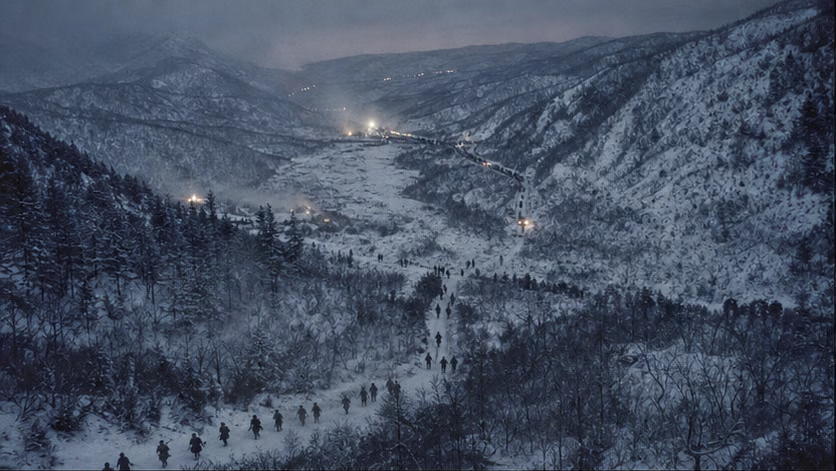
| Item | Content |
|---|---|
| Time | 1950.11.27 – 12.13 (the U.S. evacuation from Hungnam Harbor continued to 12.24, closing with the "Christmas evacuation") |
| Place | The Chosin Reservoir area on Korea's Kaema Plateau: the Yudam-ni-Sinhung-ni-Hagaru-ri-Koto-ri-Chinhung-ni-Hungnam line |
| Attacker | Ninth Corps of the Chinese People's Volunteer Army (Song Shilun): the Twentieth, Twenty-Sixth, and Twenty-Seventh Armies, about 150,000 men, originally the main force prepared for an attack on Taiwan and hastily transferred north (From Taiwan assault to high plateau: the fate of units under a sudden change of mission) |
| Defender | The eastern group of U.S. X Corps (Almond): mainly the First Marine Division (Smith), about 30,000 men, with elements of the U.S. Seventh Infantry Division and British and Korean forces |
| Result | U.S. forces broke out and withdrew to Hungnam for evacuation by sea (including the line of 100,000 Korean refugees in the Hungnam evacuation; see "Accounts of Those Present"); the Chinese People's Volunteer Army recovered the eastern front but failed to annihilate the First Marine Division |
Belligerents
| Item | Ninth Corps of the Chinese People's Volunteer Army | U.S. First Marine Division |
|---|---|---|
| Strength | 150,000 against 30,000, an absolute numerical advantage | An intact elite amphibious formation |
| Firepower | Mainly mortars (three in ten failed to fire in the severe cold; the effect of low temperature on firearms remains unverified); no air cover | Divisional artillery, carrier-based aircraft in all weather, and airdropped supplies |
| Cold-weather protection | Thin cotton uniforms from East China + emergency entry into Korea without refitting (the decision chain and responsibility for the hurried entry into Korea: urgent corps transfer and a break in logistics remain unverified); potatoes froze into stones | Arctic equipment + hot food, though frostbite was still widespread |
| Mobility | Night marches through snowy mountains on foot: "concealment purchased at the price of frostbite" | Convoys pinned to a single road: the only road was both its vital point and its route of survival |
Terrain and Conditions
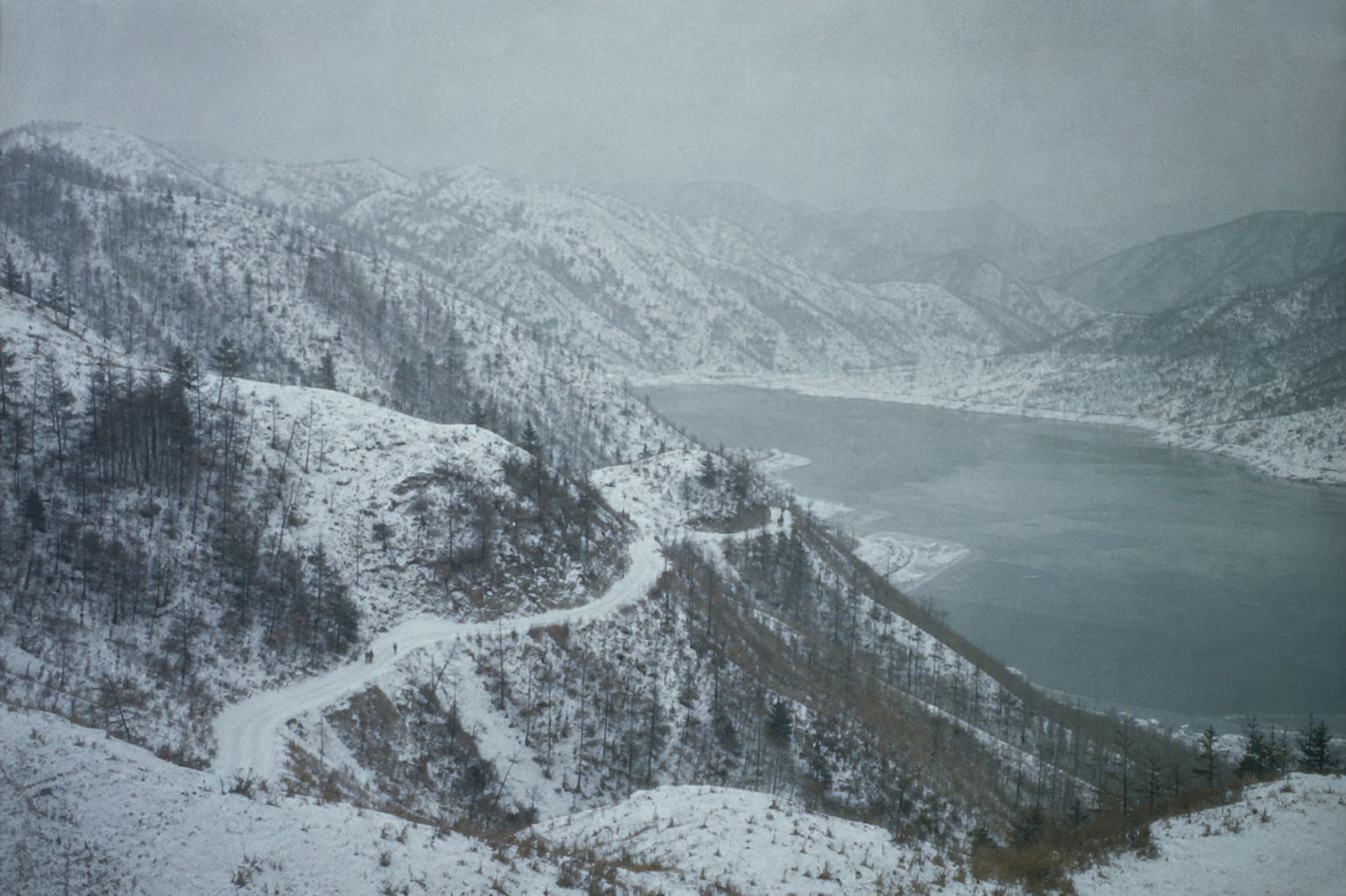
The Kaema Plateau, the roof of Korea: in late November 1950 it met a cold wave said to occur once in fifty years (-30℃ to -40℃; figures vary by account). Chosin Reservoir lay in reservoir-and-valley terrain, with one road linking all strongpoints. The real sovereign of the battlefield was temperature: bolts froze, mortar baseplates shattered, plasma froze and could not be transfused, and wounded men could freeze to death within ten minutes, a shared nightmare for medical personnel on both sides (the medical records of the two armies remain unverified in parallel).
Why It Was Fought
The Second Phase Offensive was a battle in which the eastern and western fronts closed at the same time. The western story took place along the Chongchon River; here the focus shifts to the east. For the deployment that drew the enemy in deep, see *Second Phase Offensive — Overview*: the 13th Corps cut the retreat route of the U.S. Eighth Army in the west, while in the east, the 150,000 men of the Ninth Corps, hastily transferred north from East China, faced the most complete amphibious elite formation in the U.S. order of battle: the First Marine Division.
This route could not simply be left alone. MacArthur's "home by Christmas" general offensive advanced on both the eastern and western axes. U.S. X Corps moved north along the east coast and mountain roads, with its spearhead pointing toward Kanggye, where the temporary North Korean leadership had withdrawn, and also toward the flank and rear of the Chinese People's Volunteer Army's western group. The terrain around Chosin Reservoir made the method of fighting plain: the Kaema Plateau was Korea's roof, and a single road linked the strongpoints at Yudam-ni, Hagaru-ri, and Koto-ri. The convoys were fixed to that road: it was both the opponent's vital point and the opponent's route of survival.
Time stopped for no side. The timetable of the general offensive was set by MacArthur; the cold wave was not. In late November 1950, once-in-fifty-years low temperatures pressed onto the plateau (thirty or forty degrees below zero; figures vary by account), freezing rifle bolts and turning blood plasma to ice. For the side with Arctic equipment and hot food delivered by air, the cold was hardship. For the Ninth Corps, wearing thin cotton uniforms from East China and eating potatoes frozen into stones, the cold later became the principal source of losses.
The two sides' calculations were unequal from the outset. The CPVA headquarters assigned the eastern front a mission of encirclement and destruction: to "annihilate the U.S. ace division." The gap between that objective and the real capacity of 150,000 lightly equipped infantrymen in extreme cold is the core of this article's military review. Opposite them, Smith never believed his flanks were safe. He built airstrips along the way, kept rearguards, and arranged the entire division into a chain that could contract.
On the night of 11.27, two armies and eight divisions attacked at the same time from the snow woods. Overnight, the U.S. eastern group was cut into five segments.
Course of the Engagement
| Phase | Time | Key points |
|---|---|---|
| Night of encirclement | Night of 11.27 | Three armies opened their attacks at the same time in the snowy night: Yudam-ni (Fifth and Seventh Marines), Sinhung-ni (the U.S. Seventh Infantry Division's Thirty-First Regimental Combat Team), and Hagaru-ri (division headquarters) were encircled simultaneously; overnight, the U.S. eastern front was cut into five segments |
| Destruction at Sinhung-ni | 11.28–12.1 | The 27th Army encircled and destroyed the U.S. Seventh Infantry Division's Thirty-First Regimental Combat Team (the "Polar Bear Regiment"), about 3,100 men: its commander Faith was killed and its regimental colors were captured (the only case in which the Chinese People's Volunteer Army annihilated a U.S. regimental-level formation; the "Polar Bear Regiment flag" is now held by the Military Museum of the Chinese People's Revolution, while the composition of the battle results varies by account) |
| Breakout from Yudam-ni | 12.1–4 | The Fifth and Seventh Marines fought while withdrawing toward Hagaru-ri: fourteen miles in seventy-seven hours (U.S. military-history figure), pulling out one hill position after another along the route (blocking actions on "Dead Eagle Ridge" and other heights, and companies frozen to death: Ice Sculpture Companies: records of the 125th Regiment and others freezing to death as formed units on blocking positions, summarized; figures for each company vary by account) |
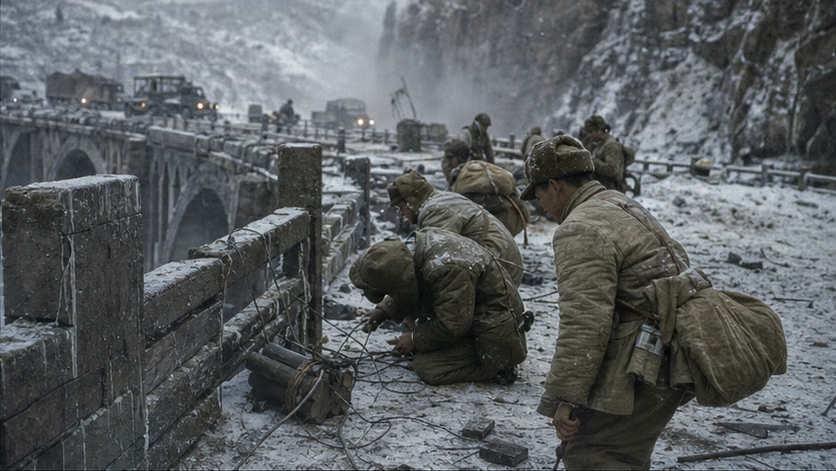
| Hagaru-ri and Shuimen Bridge | 12.5–9 | After concentrating, U.S. forces withdrew south: 4,300 wounded were evacuated from the airstrip (the number evacuated by air remains unverified); Shuimen Bridge was blown three times and repaired three times (Chinese People's Volunteer Army forces blew the bridge three times, and U.S. forces airdropped bridge components and passed over it: an open collision between industrial capacity and human will, the most famous material-evidence confrontation in this article; bridge construction details are unrecorded) |
| Hungnam evacuation | 12.10–24 | U.S. X Corps withdrew by sea from Hungnam Harbor with 105,000 troops and 98,000 Korean refugees (the refugee line of the Hungnam evacuation, "the North to which one could not return," was one starting point of South Korean separated-family narratives; figures vary by account); port facilities were demolished, closing the fighting on the eastern front |
Casualties and Losses
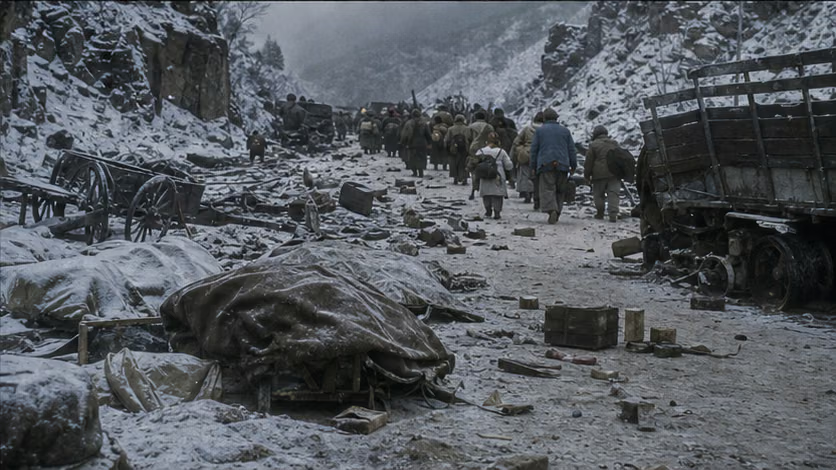
- Chinese People's Volunteer Army: more than 19,000 battle casualties, more than 28,000 frostbite losses, and more than 4,000 frozen to death (figures vary by account). This was a battle in which frostbite exceeded battle wounds: the Ninth Corps required several months of rest and reorganization before it could fight again.
- U.S. forces: about 14,000 casualties in the First Marine Division and attached units (4,400 battle casualties + 7,300 non-battle frostbite casualties; U.S. figures vary by account); the Thirty-First Regimental Combat Team was destroyed.
- The common enemy of both sides was winter. The share of non-battle losses in the two armies' casualty structures stands beside this article's "How Each Side Records It" as a third protagonist.
Aftermath
- U.S. forces on the eastern front withdrew from North Korea. Together with the collapse along the Chongchon River in the west, this became the "longest retreat in U.S. military history"; the front returned to the 38th Parallel (see also the Second Phase Offensive overview). Chosin Reservoir was a strategic victory.
- But the objective of "annihilating the First Marine Division" was not achieved: the gap between campaign objective and result (Song Shilun's postwar review and Mao's reply line remain unverified). The frostbite lessons of the Ninth Corps directly rewrote the winter-clothing logistics of the Chinese People's Volunteer Army (see also the logistics-revolution line in the overview).
- The First Marine Division's "Frozen Chosin" entered the inner canon of U.S. military history ("We are not retreating, we are just attacking in a different direction": the original wording and context of Smith's saying remain unverified). The Chinese People's Volunteer Army's "Ice Sculpture Companies" entered the Chinese spiritual lineage. The two armies each carried away their own legend, and both legends came from the same severe cold.
- When Song Shilun returned to China in 1952 and crossed the Yalu River, he is said to have removed his hat and bowed toward Chosin Reservoir (this episode is widely circulated; its evidentiary level remains unverified).
Accounts of Those Present
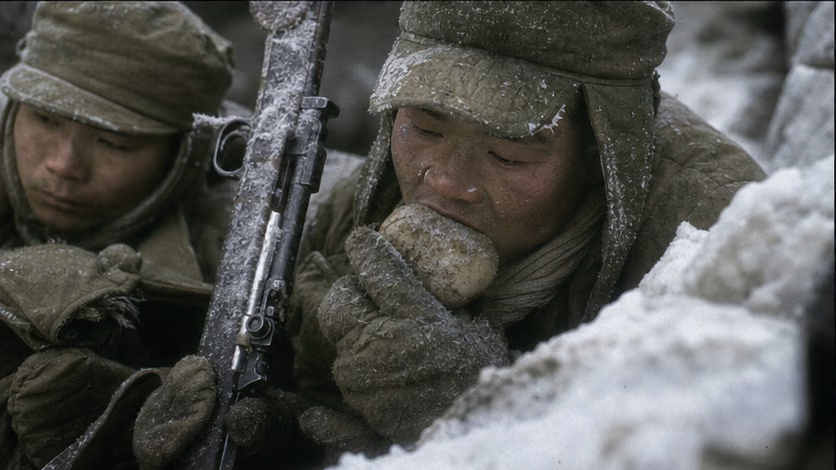
- Ice Sculpture Companies ※: companies on Dead Eagle Ridge that froze to death while maintaining combat formation. The Shanghai-born soldier Song Amao's deathbed poem ("I love my family and my motherland..."; text and source level remain unverified) belongs here. They were soldiers killed by logistics and severe cold, not a romanticized "choice"; respect and accountability must stand together.
- Potatoes and flares: frozen potatoes knocked teeth loose; marches were made by the light of U.S. flares (a common pattern in veterans' oral accounts), the everyday texture of hunger and severe cold.
- The engineers at Shuimen Bridge: Chinese People's Volunteer Army engineers who blew the bridge three times and U.S. engineers who assembled the airdropped bridge sets. The engineers on both sides completed their tasks: the cruel honesty of the confrontation.
- Refugees at Hungnam pier: 98,000 northern civilians boarded warships. The *Meredith Victory* carried 14,000 people in a single voyage (the Guinness-record line remains unverified); Moon Jae-in's parents were among them (a long tail in South Korean political history, unverified). This was the civilian exit inside an engagement archive.
- Colonel Faith's cross: Colonel Faith of the 31st Regiment was killed; his remains were found and reburied in 2004 (the U.S. remains-recovery line). The remains of both sides are still being sought: placed alongside the project of returning Chinese People's Volunteer Army remains to China (see also the overview), an equality beneath the ice field.
The Ground
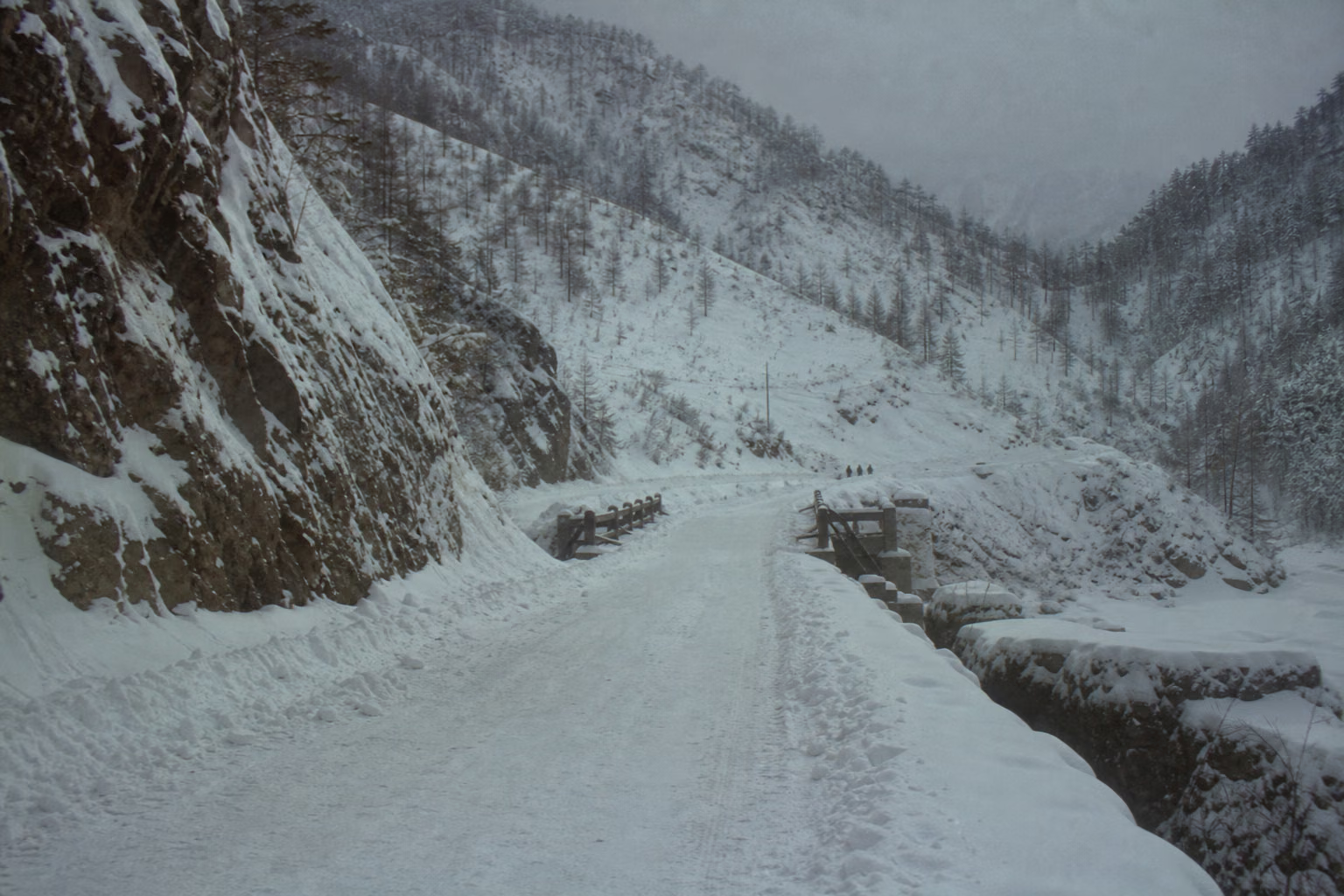
- A battle of one road: the seventy-eight-mile single road from Yudam-ni to Hungnam linked all the fighting. It is an extreme case of "the road is the battle": the entire logic of taking points, cutting bridges, and protecting the route lay on a single line.
- Severe cold as an environmental mechanism: weapon reliability, the time limit of body temperature, the survival window for the wounded. This was a battlefield of temperature as the core variable (forming the cold-heat opposite with the Savage Mountains, where "the rainforest is the enemy").
- Shuimen Bridge: the strategic weight of a single point in space. The bridge being blown three times and repaired three times determined whether the First Marine Division could withdraw along the road toward Hungnam.
- The reversed day-night rhythm of night infiltration through snow and daylight air superiority (isomorphic with Luodian's "night for us, day for the enemy," but at a more extreme intensity).
- Hungnam Harbor: the space of evacuation, the final pier scene of loading, demolition, and refugees.
How Each Side Records It
- Chinese side: from long-term understatement (the review of failing to annihilate the enemy) to mass national memory through *The Battle at Lake Changjin* (2021, the Chinese film box-office record): the largest-amplitude sample in the temperature curve of commemoration (see the commemorative-history section of the overview); the Ice Sculpture Companies entered textbooks.
- U.S. side: the "Chosin Few" veterans' association and the narrative of the "most difficult battle." The U.S. military wrote retreat in the grammar of honorable defeat (contrasted with the British narrative of the Amethyst, "turning being beaten into triumph"; this is the American version). Ridgway and Marine Corps histories recorded respect for the fighting will of the Chinese People's Volunteer Army (original text unverified).
- Korean and North Korean sides: in South Korea, the Hungnam evacuation is narrated as a "miracle" (the refugee line); in North Korean narration, this battle belongs to the victory chapter of the "Fatherland Liberation War."
Disputes and Sensitivities
- Placing side by side the review that the "annihilation objective was not achieved" and the characterization of "strategic victory": both accounts stand.
- The chain of responsibility for frostbite (hasty transfer decision, logistics break, and the corps itself): list each link, without assigning blame to a single point.
- The evidentiary level of details about the Ice Sculpture Companies and the deathbed poem; the context of Smith's quotation.
- Chinese and U.S. casualty figures differ in statistical boundaries (combat versus non-combat).
- Film representation (*The Battle at Lake Changjin*) and its relationship to historical fact belong to the postwar-memory layer.
Sources and Open Questions
Sources: *History of the War to Resist U.S. Aggression and Aid Korea*, volume on the Second Phase Offensive; postwar summary of the Ninth Corps (archive entry unverified); the official U.S. Marine Corps history *The Chosin Reservoir Campaign*; Appleman's *East of Chosin* (a monograph on the destruction of the 31st Regiment); collections of veterans' oral accounts from both the Chinese and U.S. sides.
Open questions: the casualty and frostbite figure sets for both sides; records for each Ice Sculpture Company; details of Shuimen Bridge; Smith's context; the evidentiary level of Song Shilun's bow; refugee numbers and the *Meredith Victory* record; the line of Faith's reburial.
All images on this site are AI-generated depictions. They are not historical photographs, not primary sources, and do not depict any real individual.