Engagement Archive · Battle of Tientsin (1900)
One city was turned into two battlefields: inside, Boxers and Qing forces besieged the Zizhulin Concession; outside, Allied troops landed continuously from Taku as reinforcements. Nie Shicheng, the Provincial Commander-in-Chief of Zhili, held one of the Qing army's most modernized units while attacked from front and rear. On 7.9 he was killed in action at Balitai; five days later Tientsin fell. After the breach came massacre and looting, and then modern China's first multinational military government.
Engagement Data
| Item | Details |
|---|---|
| Time | 1900.6 mid–7.14 |
| Place | Tientsin (the prefectural city, the Zizhulin Concession, Laolongtou Station, Balitai) |
| Part of | Boxer Rebellion · Zhili theater (see "Boxer Rebellion · Overview") |
| Defender | Mainly Nie Shicheng's Wuwei Front Army, with other units of the Lianjun, remnants of the Huai Army, and Boxers (including the forces of Cao Futian and Zhang Decheng), under the authority of Yulu, Viceroy of Zhili |
| Attacker | Allied forces (landing from Taku and receiving continuous reinforcements; Russian, Japanese, and British forces formed the main body; total strength changed by the day, unverified) |
| Result | 7.9 Nie Shicheng killed in action; 7.14 city fell; ※ Allied massacre and looting; the Eight Powers established the "Tianjin Dutong Yamen" (Tientsin Provisional Government) for two years of military rule (1900.7–1902.8) |
Belligerents
| Item | Defender | Attacker |
|---|---|---|
| Strength | Wuwei Front Army about 10,000 men (figure disputed), plus Lianjun and other units; Boxers had no fixed establishment, with tens of thousands at their height | Concession garrison initially several thousand; after reinforcements, about 17,000 by the general assault in July (figure disputed) |
| Firepower | The Wuwei Front Army was the best-organized Beiyang unit, German-equipped and trained, with modern artillery; other units were uneven | Standard rifles and artillery, plus naval-gun support (shallow-draft gunboats could move along the Hai River) |
| Situation | Forces divided between two tasks: attacking the concession, and holding the city and its perimeter; they were never able to concentrate | With the river mouth at their back, reinforcements and ammunition did not run out |
Terrain and Conditions
(For the larger situation, see "Boxer Rebellion · Overview.")
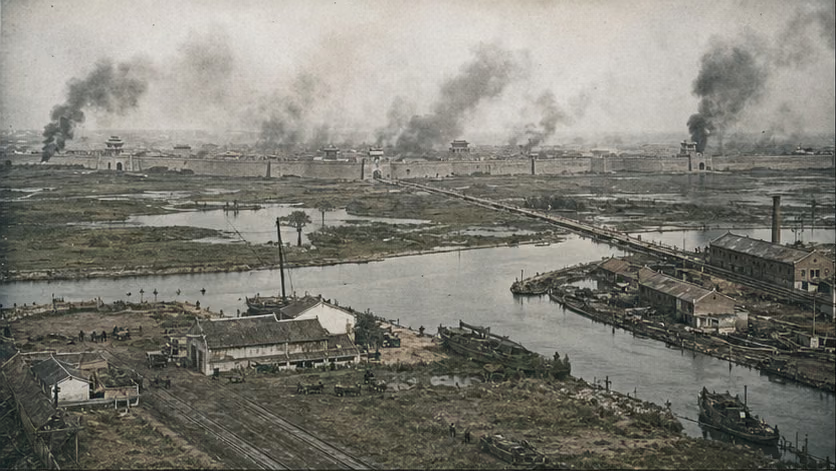
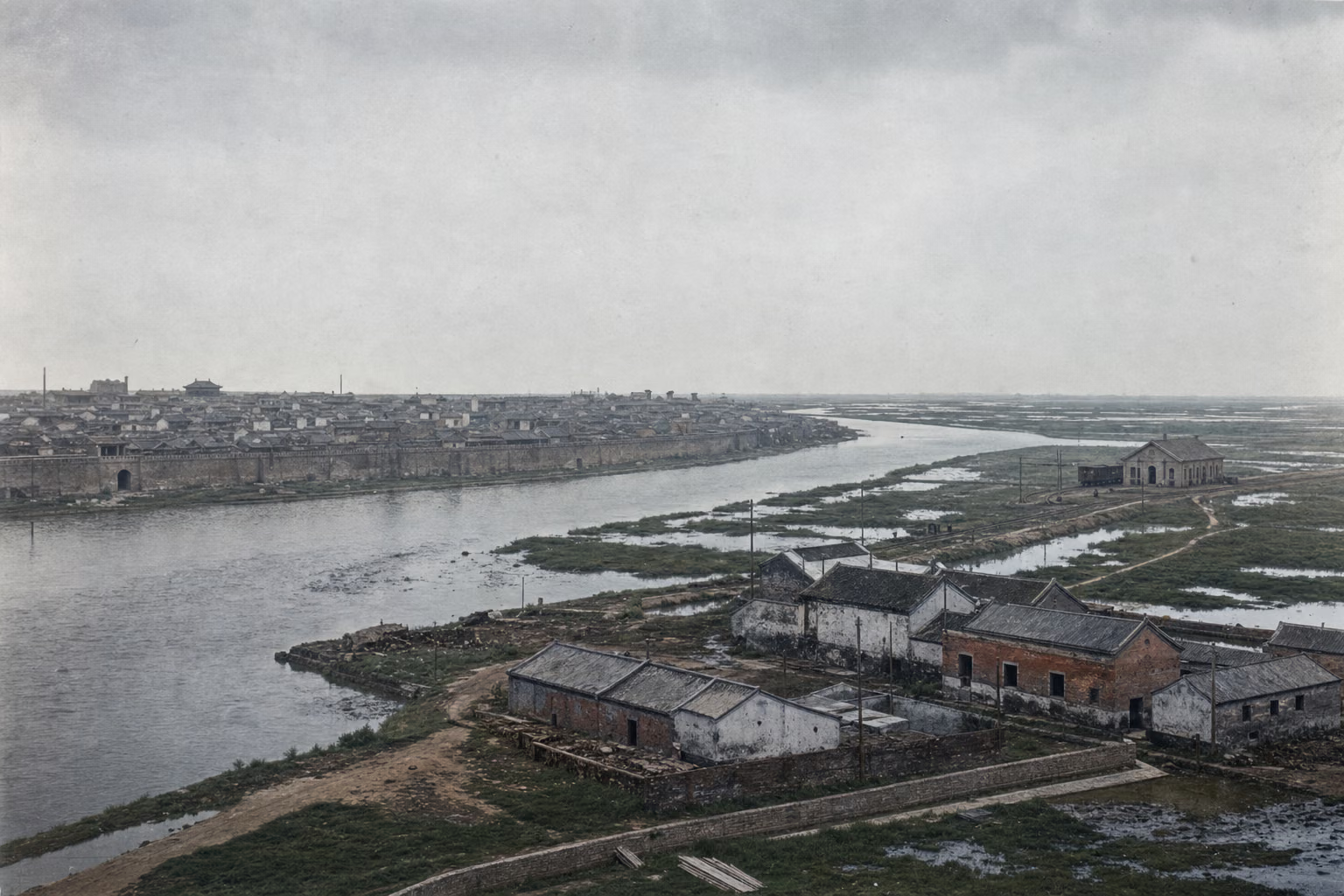
Tientsin was the seat of the Viceroy of Zhili and Beiyang's leading commercial port. The prefectural city stood on the west bank of the Hai River; the Zizhulin Concession lay southeast of the city along the river; Laolongtou Railway Station stood east of the river. City, concession, and station formed three points around a landscape of waterways and marshy depressions. In mid-June, Boxers entered Tientsin in force, set up altars, and burned churches ※; Chinese Christians fled into the concession. Once Taku was lost (6.17), the concession became the Allied forces' only forward base, and also the first target of the siege.
Why It Was Fought
The conclusion of "Battles of the Taku Forts and Langfang" was written on 6.17: once the forts were lost, the river mouth lay open, and Tientsin's Zizhulin Concession changed from a besieged island into the Allied forces' forward base. The battle came to Tientsin through that opening.
Why Tientsin: it was the seat of the Viceroy of Zhili and Beiyang's leading commercial port. The prefectural city, the concession, and Laolongtou Station formed three points, with the Hai River running between them. Allied troops landed continuously from the river mouth. The concession was their landing ground and their springboard toward Peking, and had to be held. On the city side, Boxers had already entered Tientsin in force in mid-June, setting up altars and burning churches, while Chinese Christians fled into the concession: the siege line had long since been laid out. When the declaration-of-war edict was issued on 6.21, Tientsin became the first main battlefield. To remove the concession and recover the river mouth was the most direct military aim after the declaration of war.
The decision for war was made in Peking. From 6.16 onward, imperial conferences were held for several days (dates vary by account). Zaiyi and Gangyi advocated appeasing the Boxers and resisting the foreigners, while ministers favoring peace argued at court to no avail. When the court made its decision, the information in its hands was incomplete: Taku had fallen on 6.17, but accounts differ over whether the battle report reached Peking before or after the declaration of war (dates vary by account). One of the key factors that reportedly drove the decision was a foreign note ordering the Empress Dowager to return power to the emperor; for more than a century, its authenticity has remained disputed (authenticity of the note unverified; records unverified). No one in Peking could answer how many troops the powers could put through the river mouth.
Both sides placed their calculations on this city, and both miscalculated. The Allied calculation was that with the river mouth at their back, reinforcements and ammunition would continue, the concession would hold, and their numbers would gather. The defenders' calculation was that while the concession garrison numbered only several thousand, they could take it in one stroke. But Nie Shicheng's Wuwei Front Army had to divide its forces between two tasks: attacking the concession and holding the city and its perimeter. It was never able to concentrate, was also checked by mutual friction with the Boxers, and attacked without taking its objective. After Seymour's remnant force was brought back to the concession on 6.26, the race of reinforcement had already been decided: the defenders' forces grew more scattered as they fought, while Allied forces gathered in increasing numbers.
The misjudgments lay on both sides. The Allied forces had not expected the concession to be shelled, burned, and surrounded for a month, its defenders holding behind trenches and walls while awaiting relief. The court had not reckoned with Nie Shicheng's situation: Allied forces in front of him; officials at court impeaching him for "collusion with foreigners"; Boxers hating him for having suppressed them earlier, even to the point of looting his family members' property (record unverified). The most modernized unit of the Qing army, with its commander under attack from three sides, was battered together with him at Balitai before the general assault had even begun.
The material limits had already been drawn. The Beiyang Fleet was long gone; what the maritime frontier still relied on was only the river-mouth forts and the shallow mouth of the Hai River. Nie Shicheng's Front Army had the best weapons and the fullest training, yet one army had to divide itself among several duties: attacking the concession, holding the city wall, and protecting the routes. The Tianjin Arsenal consumed ammunition daily without sustained replenishment (inventory and consumption details unverified). Tens of thousands of Boxers had neither pay nor weapons, gathering by the city but not subject to regular command. Dissent was not absent, and it paid the heaviest price: Yuan Chang, Xu Jingcheng, and others submitted memorials against besieging the legations and unleashing the Boxers to provoke conflict; within a month after the city fell, the five leading ministers who favored peace were executed. To the south, Liu Kunyi, Zhang Zhidong, and Li Hongzhang did not obey the declaration-of-war edict, instead arranging mutual protection of the southeast with the foreign powers. Once the edict left Peking, half the realm stopped listening.
There had been a window. Before the end of June the concession garrison was at its weakest; that was the defenders' only chance, and it closed amid divided forces and internal attrition. On 7.13 the Allied forces launched the general assault; the city fell the next day. The battle moved from besieging the concession to defending the city, and then to massacre and looting after the breach. Each step had the step before it as its cause.
Course of the Engagement
| Phase | Time | Key Points |
|---|---|---|
| Siege of the concession | mid-June–early July | Boxers and Qing forces besieged the Zizhulin Concession with shelling and fire attacks; the Wuwei Front Army later joined the shelling; the concession garrison held out while awaiting relief |
| Fight for Laolongtou | from 6.18 | The railway station changed hands repeatedly, with Cao Futian's Boxer group taking part (level of combat detail unverified); Allied reinforcements, mainly Russian forces, retook the station, and it ultimately remained in Allied hands |
| Race of reinforcement | late June–early July | After Seymour's remnant force was brought back on 6.26, the concession's troop strength increased day by day; the defenders, checked by mutual friction between Nie's troops and the Boxers, kept attacking without success |
| Balitai | 7.9 | Nie Shicheng held the line at Balitai south of the city, came under a fierce Allied assault (mainly Japanese forces, unverified), was struck by several bullets, and was killed in action; the Wuwei Front Army and its commander were broken there together |
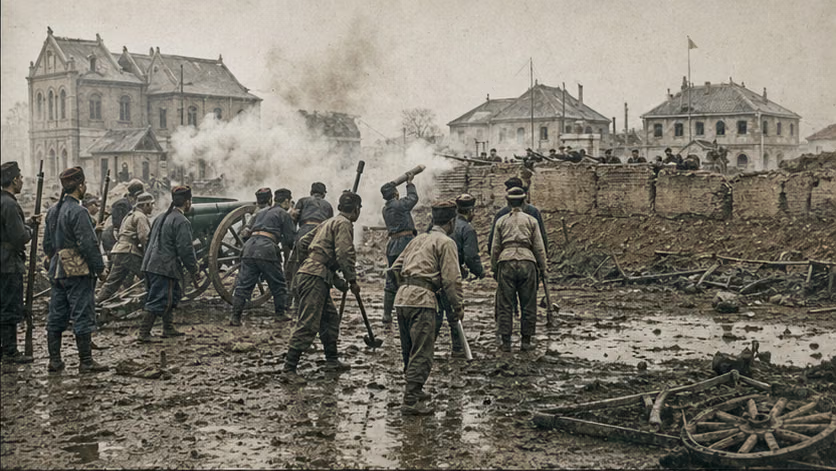
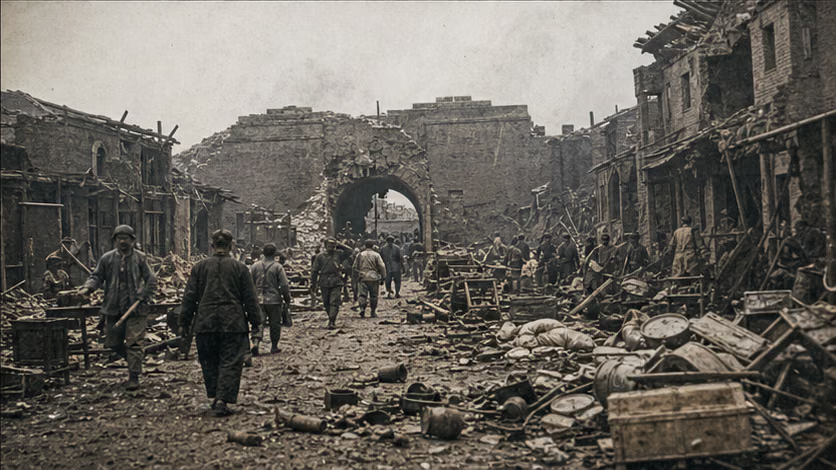
| General assault and fall of the city | 7.13–14 | The Allied forces launched a general assault; the South Gate was blown open (the account that Japanese engineers breached the wall is unverified); on 7.14 the city fell, and Yulu and others withdrew to Beicang; ※ after the breach, Allied forces carried out massacre and looting, and the dead lay thick inside and outside the South Gate (casualty statistical bases vary by account) |
Casualties and Losses
- Defender: the Wuwei Front Army suffered severe casualties (figures disputed), and from this point the Qing army's most modernized unit ceased to exist as an effective formation; casualties among the Lianjun and Boxers were not statistically recorded.
- Attacker: Allied casualties across the siege of the concession and the general assault totaled from several hundred to nearly one thousand (national reports used different statistical bases; figure disputed).
- ※ Civilians: after the city was breached, massacre and looting continued for several days, with casualty figures varying by statistical basis (vary by account); during the earlier siege, Chinese Christians and foreign civilians inside the concession also suffered casualties.
Aftermath
- The Eight Powers established the "Tianjin Dutong Yamen" (Tientsin Provisional Government) and imposed two years of military rule (1900.7–1902.8): the first multinational military government in a modern Chinese city. Under its administration, Tientsin's city wall was demolished (details unverified); the wall was removed and roads were built, and the city's appearance changed from that point onward.
- The Allied forces used Tientsin as their main base and sent troops toward Peking in August (see "Battle of Peking (1900)").
- Yulu, Viceroy of Zhili, led the remnants of his forces in retreat to Beicang; in August, after defeat, he died by suicide (see the article on the Battle of Peking).
Accounts of Those Present
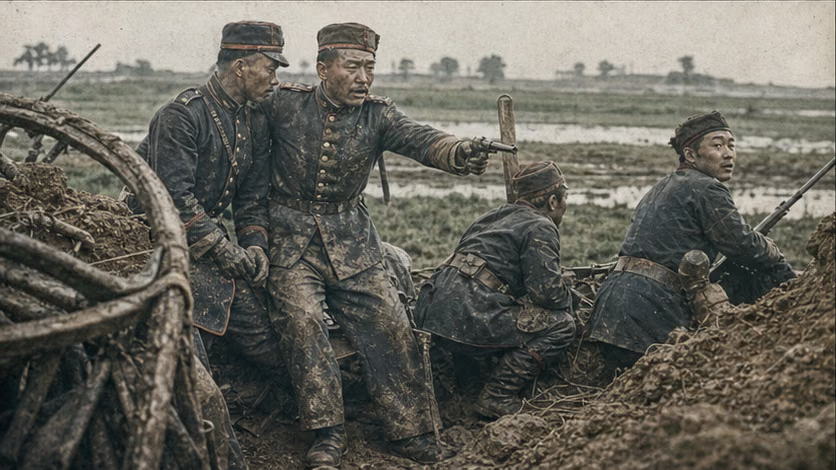
- Nie Shicheng attacked from three sides: Allied forces stood in front of him; people at court impeached him for "collusion with foreigners"; Boxers hated him for having suppressed them earlier, even to the point of looting his family members' property (record unverified). At Balitai on 7.9, he supervised the fighting and refused to retreat; after a leg wound he bound the injury and fought on, until he was finally killed by artillery fire (details differ among accounts and remain unverified). The court later granted posthumous honors and relief (posthumous title "Zhongjie" unverified): a man once hated by both sides died at the very front.
- The Wuwei Front Army: German equipment, German instructors, and the most orderly troops in Beiyang; at Balitai, it was destroyed together with its commander. Ten years of Qing military training were spent in five days.
- The other side inside the concession: those under siege were not only foreigners, but also several thousand Chinese Christians who had fled there and defended the trenches and walls alongside the guard force (details unverified). There were Chinese people on both sides of the siege line.
- Inside and outside the South Gate ※: on the day the city was breached, routed soldiers, Boxers, and civilians crowded the roads of escape. Allied gunfire and massacre and looting overlapped, and the dead lay thick. Multiple books record the "South Gate" as the place where deaths were most concentrated (vary by account).
The Ground
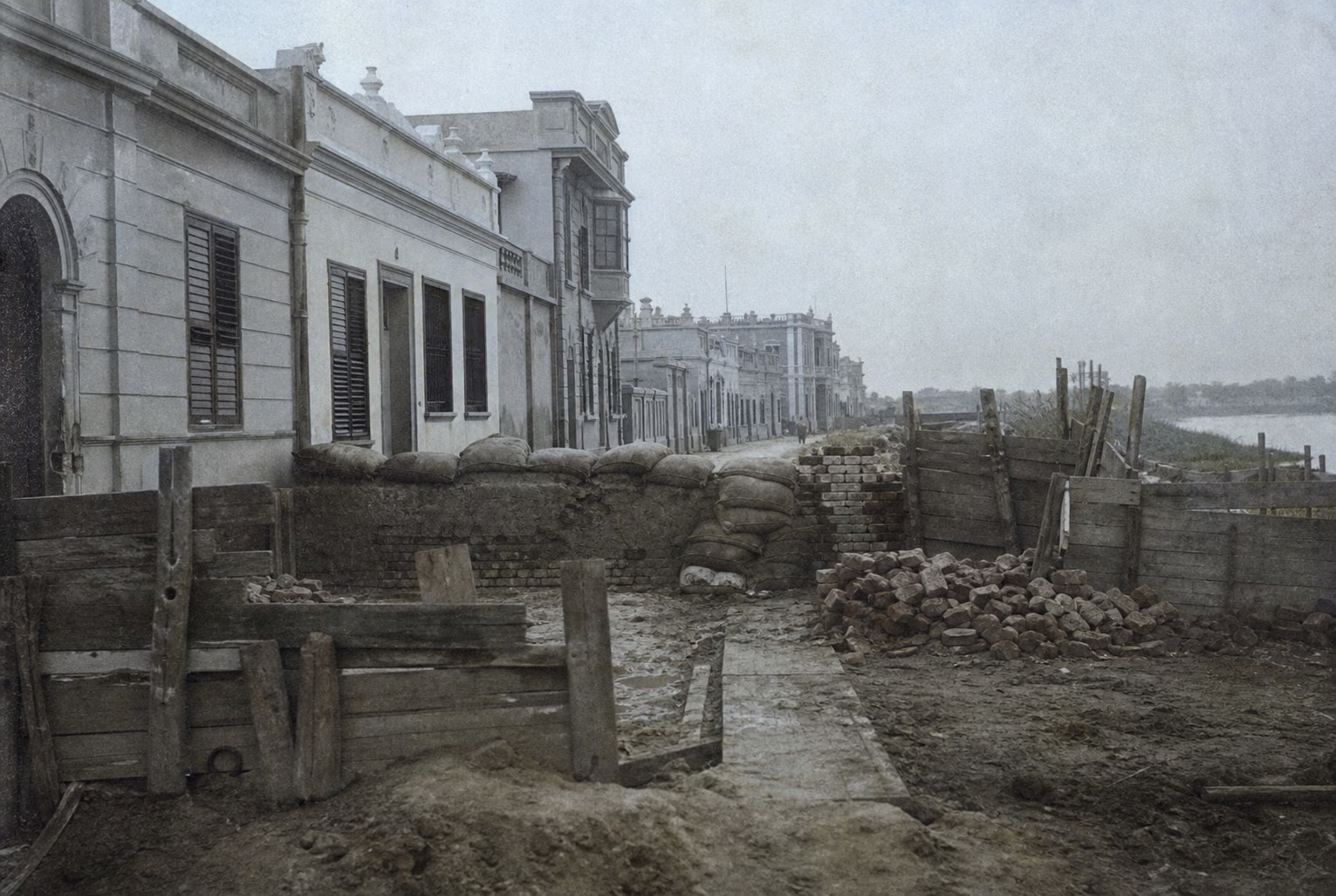
- Three points in balance: the prefectural city, the concession, and Laolongtou Station, with the Hai River running between them. Bridges and ferries were the throat through which attack and defense shifted.
- The concession was a "second city" outside the city: foreign-style houses, street barricades, and trench walls. A siege was fought for a month first in the streets beyond the city wall.
- Balitai lay amid open ground and waterways south of the city, with no defensible natural obstacle. It was a line being held, not a city: plain defense under modern firepower, paid for with human lives.
- The city wall was the last shell. The general assault of 7.14 opened the gate by demolition; once the shell broke, the fighting ended, and what remained was not battle.
How Each Side Records It
- Chinese side: assessments of Nie Shicheng have shifted with narratives of the Boxer movement, from a "general who suppressed the Boxers" to "the foremost martyr of the Boxer Rebellion." The fall and looting of Tientsin are central to local memory, and county gazetteers and oral accounts contain many ※ records (to be collected and verified).
- Allied side: each power recorded the "siege and relief of Tientsin" (Siege of Tientsin) as the opening chapter of the Boxer narrative; the concession garrison's hard defense became a serial focus in European and American newspapers. The looting after the breach was not entirely absent from the same body of memoirs.
- Japanese side: the credit for blowing open the South Gate appears in Japanese military histories (vary by account). At Tientsin, Japanese forces fought for the first time as one of the main forces among the powers, giving the battle a significant place in Japan's modern military history.
Disputes and Sensitivities
- Nie Shicheng's relationship with the Boxers: he suppressed the Boxers first and resisted foreign forces later; he and the Boxers saw each other as enemies, yet died in the same war. Which side later generations place him on remains disputed.
- ※ There is no reliable statistical basis for the number of deaths in the massacre and looting after the city was breached, and figures differ widely among books.
- The Boxers in Tientsin: records show both their role in the siege of the concession and their looting during the collapse; neither side can be omitted.
Sources and Open Questions
Known main sources:
- Yulu and Nie Shicheng-related telegrams and memorials (Qingji Waijiao Shiliao; Yihetuan Dangan Shiliao)
- Memoirs by those besieged in the concession and records by foreign armies in the field (editions unverified)
- Japanese military history, Meiji Sanjusan-nen Shinkoku Jihen Senshi (title unverified)
- Tientsin local gazetteers and Tientsin Provisional Government archives (Tianjin Municipal Archives, unverified)
Open questions: Wuwei Front Army troop strength and equipment details; variant accounts of the details of Nie Shicheng's death in action; the source for the account of Boxers looting Nie's family members' property; different statistical bases for Allied strength and casualties in the general assault; which unit carried out the South Gate demolition; statistical bases for the number of deaths after the city was breached; the start and end dates of the Tientsin Provisional Government and details of city-wall demolition; the sequence and dates of imperial conferences; differing accounts over whether the battle report of Taku's fall reached Peking before or after the declaration of war; the authenticity of the note ordering the return of power; the Tianjin Arsenal's ammunition inventory and consumption; original texts of the memorials by Yuan Chang, Xu Jingcheng, and others; documentary records concerning the southeastern viceroys' refusal to obey the declaration-of-war edict and the Mutual Protection of Southeast China.
All images on this site are AI-generated depictions. They are not historical photographs, not primary sources, and do not depict any real individual.