Engagement Archive · Blocking Actions at Niangzi Pass and Jingxing
After taking Peking, the Allied forces moved west under the name of "punishing Shanxi," hoping to break into the province, but Liu Guangcai's Guangwu Army held them at the Niangzi Pass-Guguan line by using the terrain; from the winter of 1900 to the spring of 1901, repeated attacks failed to get through -- one of the few passes held in the Boxer defeat, small in scale, but shielding the eastern flank of the court in flight to the west.
Engagement Data
| Item | Details |
|---|---|
| Time | 1900.10–1901.4 |
| Place | Zhili-Shanxi border: the Jingxing-Niangzi Pass-Guguan line (Falu Ridge, Dongtianmen, and other defiles) |
| Part of | Boxer Rebellion · western sector of the Allied "punitive expeditions" (see "Boxer Rebellion · Overview") |
| Blocking side | Guangwu Army under Commander Liu Guangcai (provincial commander-in-chief of Datong, office title disputed) |
| Attacking side | Allied forces (mainly German and French forces; unit designations and scale unverified) |
| Result | Several attacks were repulsed, and the Allied forces ultimately failed to enter Shanxi |
Belligerents
| Item | Blocking side | Attacking side |
|---|---|---|
| Strength | Several thousand Guangwu Army troops (base figure disputed), divided among the passes | Several hundred to several thousand in each attack (figure disputed), advancing west from Baoding and Zhengding |
| Equipment | Mainly modern rifles, with few guns; fortifications built in the difficult terrain | Standard rifles and artillery, with superior firepower for attacking fixed positions |
| Situation | Defending difficult ground: Taihang defile roads, where one man could hold a pass | Expedition: long supply lines, aiming not to occupy territory but to "punish" |
Terrain and Conditions
(For the larger situation, see "Boxer Rebellion · Overview.")
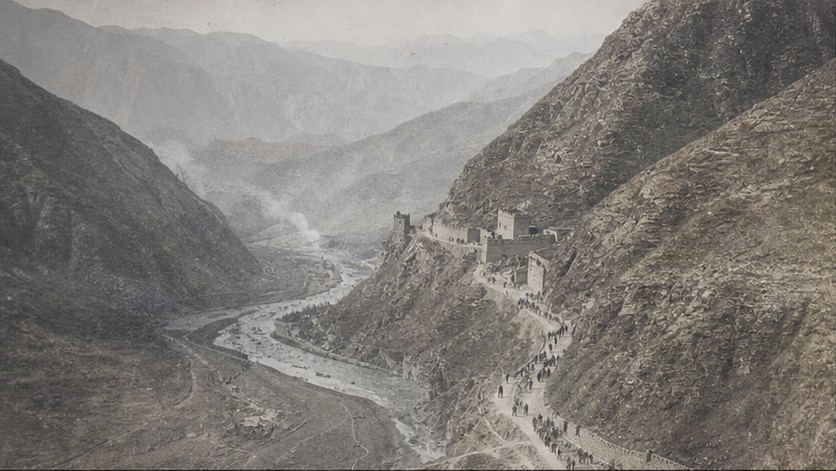
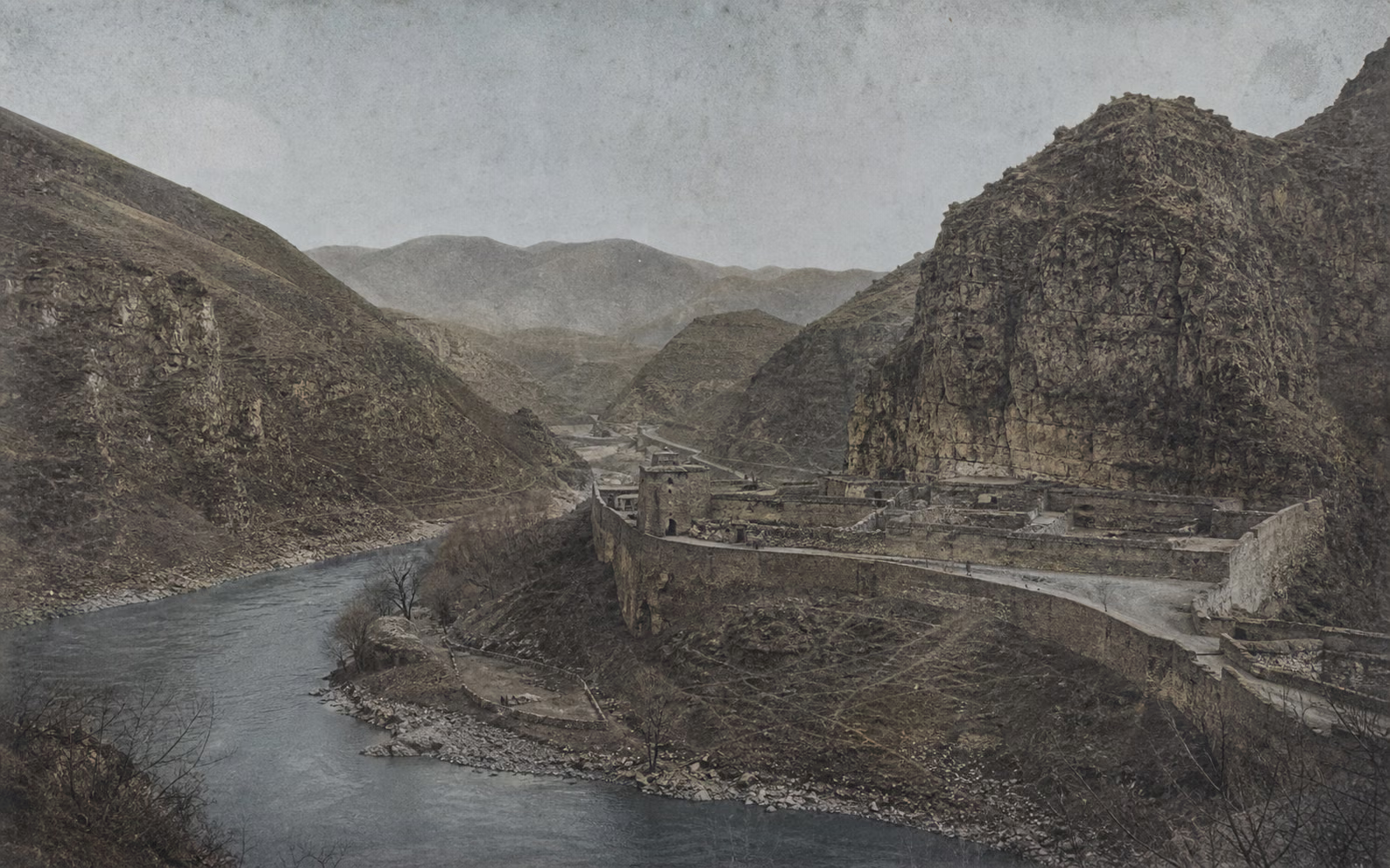
Jingxing was one of the Eight Passes of the Taihang Mountains, and the Niangzi Pass-Guguan line held the throat into Shanxi. The pass city stood by the river against the cliffs, with the defile road pinched between ridges on both sides. Shanxi was the province blamed as the "chief culprit" of the Boxer year: Governor Yuxian had killed missionaries and Chinese Christians at Taiyuan ※ (the Taiyuan Missionary Case, number of dead unverified), and after the Allied forces occupied Baoding and Zhengding, "punishing Shanxi" became the public name for the westward advance. At this moment the court in flight to the west was at Xi'an, and Shanxi was its eastern screen -- if Niangzi Pass fell, the theoretical route for pursuit would be open.
Why It Was Fought
After Peking fell on 8.14, the Allied forces moved outward from Peking and Tianjin in all directions under the name of "punishing the Boxers." Baoding and Zhengding were occupied in succession, with local officials executed and massacre and looting following in their wake (see "Battle of Peking (1900)") -- this was the so-called "punitive expedition." The next stop on the western line pointed toward Shanxi: Shanxi was the province blamed as the "chief culprit" of the Boxer year, Governor Yuxian had killed missionaries and Chinese Christians at Taiyuan ※ (number of dead disputed), and "punishing Shanxi" was the public name for the westward advance; meanwhile the court in flight to the west was at Xi'an, and Shanxi was its eastern screen.
Jingxing was one of the Eight Passes of the Taihang Mountains, and the Niangzi Pass-Guguan line held the throat into Shanxi. Two mountains pinched a single river valley; troops could not deploy, and even modern rifles and artillery had to queue when they entered the defile road. The troops holding the pass were several thousand men of Liu Guangcai's Guangwu Army (office title and base figure disputed), who built fortifications in the difficult terrain and held from the winter of 1900 to the spring of 1901. Each Allied attack numbered from several hundred to several thousand men (figure disputed), coming a long way from Baoding and Zhengding, and the terrain cut their assault firepower in half.
The decision to defend the passes came from the court in flight. The two palaces, having fled west, were stationed in Xi'an and issued repeated edicts ordering the Shanxi governor and officers commanding troops to hold the passes into Shanxi strictly; Liu Guangcai's military reports repeatedly stated that he had received imperial orders to hold the Niangzi Pass-Guguan line (specific edicts and military-report fascicles unverified). When the decision was made, what Xi'an lacked most was information: whether the Allied forces intended to enter Shanxi or were only making a show of force, intelligence from the Peking-Baoding line and letters and telegrams from the peace negotiators contradicted one another, and no one could say exactly how much holding would count as having held (details of western-line military intelligence available to the court in flight unverified). The material limits were just as clear: after the killings of Christians in Shanxi, indemnities were already being discussed at the negotiating table, and the provincial capital was short of funds for pay and supplies; the Guangwu Army's several thousand men had many rifles but few guns, and could only use the depth of the passes to fold the firepower gap into the mountains. On the Allied side, food and ammunition had to be transported hundreds of li from Tianjin and Baoding -- it was not that they could not fight on, but that it was not worth spending an expeditionary force on a mountain pass.
Traces of dissent remained on both sides, and on both sides they were faint. Within the Allied forces there had been disagreement over pushing deep into Shanxi, and the German and French steps were not fully aligned; Chinese telegram reports and later Western-language accounts do not always match (details of German-French disagreement and records unverified). After spring began, the attacks gradually thinned out, and the proposal to advance west was shelved. On the Qing court's side, defending the passes and negotiating peace did not interfere with one another -- holding Shanxi was precisely a bargaining counter at the table. As for whether anyone in central Shanxi advocated abandoning the passes to avoid battle, or whether any Allied officers opposed these assaults on fixed positions, no surviving record has been seen (no dissenting record found).
In truth, neither side wanted a major battle. The Allied forces aimed not to occupy territory but to "punish," and their supply lines were already stretched very long; on the Qing court's side, peace talks were already under way, but Niangzi Pass had to be held -- only if it was held would Shanxi at the negotiating table not become the next Baoding. In 1901.4, the Allied forces stopped before the pass; Yuxian had already been executed while under escort (dates vary by account). "Punishing Shanxi" ended with the chief culprit put to death, not by fighting through -- once this pass was held, the battle no longer had an unavoidable reason to be fought.
Course of the Engagement
| Phase | Time | Key Points |
|---|---|---|
| Allied westward advance | 1900.10–11 | Allied forces (mainly German and French) took Baoding and Zhengding in succession, and their spearhead reached the mouth of Jingxing |
| Standoff at the passes | winter 1900 | Liu Guangcai's force built fortifications and deployed along Niangzi Pass-Guguan; Allied probing attacks were repulsed (dates and scale unverified) |
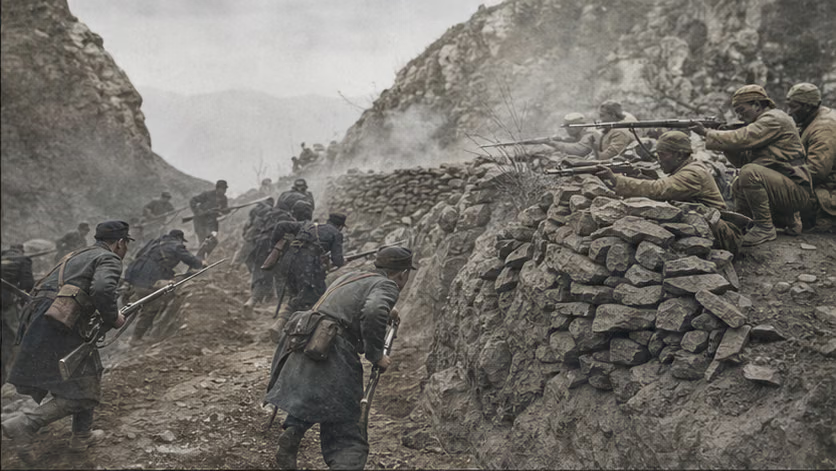
| Fighting at Falu Ridge, Guguan, and other points | spring 1901 | Allied forces several times attacked Falu Ridge, Guguan, and other passes, and failed each time (dates, scale, and results of each fight vary among books and remain unverified) |
| Close | 1901.4 | The Allied forces stopped before the passes; as the Boxer Protocol negotiations advanced, the proposal to move west was dropped, and the Allied forces ultimately failed to enter Shanxi |
Casualties and Losses
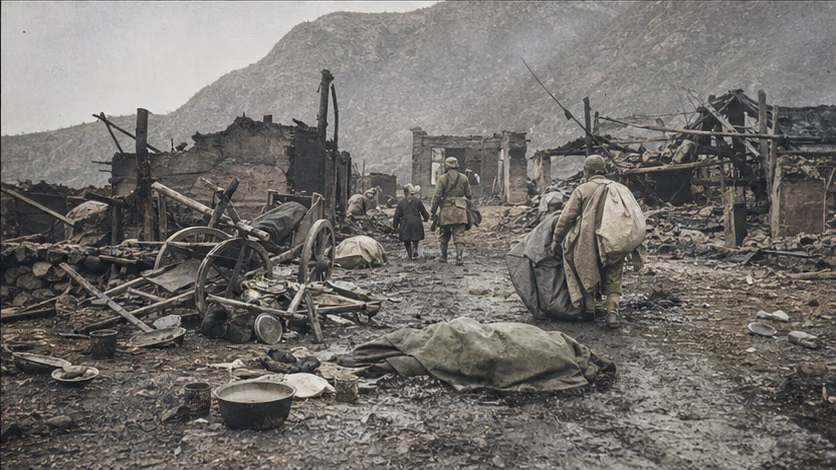
- Neither side has reliable casualty figures (figure disputed) -- the scale was never large, and the records are thin.
- Villages inside the mouth of Jingxing, near the Allied line of arrival, suffered burning and looting ※ (record unverified); the Shanxi side inside the passes did not suffer war damage.
Aftermath
- The Allied forces ultimately did not enter Shanxi, and Yuxian had already been executed while under escort (early 1901, dates vary by account) -- "punishing Shanxi" ended with the chief culprit put to death, not by fighting through.
- The fortifications along the Niangzi Pass line gradually fell into disuse; in late-Qing military reports this battle was a bright trace, but later narratives mention it rarely -- "small but hard" within a defeated campaign, not admitted into the larger story.
Accounts of Those Present
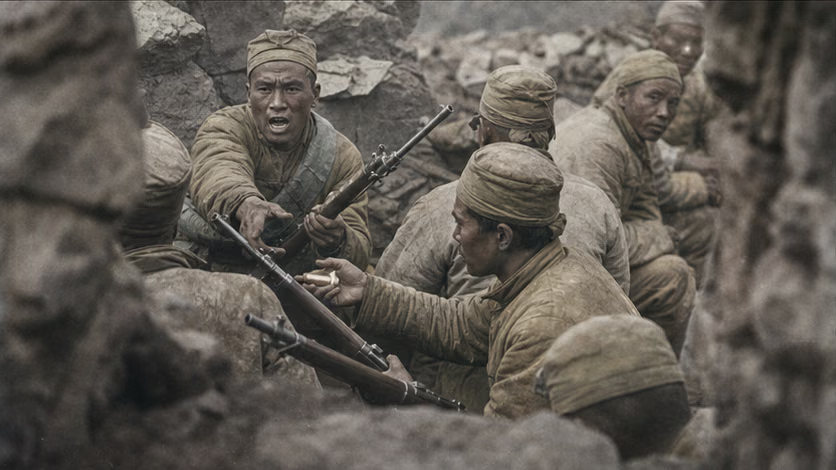
- Liu Guangcai: an old career soldier (career record unverified), who in the Boxer year, when the wider situation collapsed everywhere, held one pass to the end -- the wording of his military reports was restrained, reporting only that attacks had been "repulsed," not a "great victory" (original memorials unverified).
- Yuxian's shadow ※: the pretext for the Allied westward advance was his killing of missionaries and Chinese Christians at Taiyuan; by this time he himself was already on the road of banishment under escort, and in the first lunar month was beheaded at Lanzhou (date unverified) -- every day of the standoff before the pass had this account standing behind it.
- The German and French soldiers below the pass: in the final stage of a ten-thousand-li expedition, they fought a small battle to which newspapers paid no attention -- the thinness of Western-language records is itself a statement about the state of the sources.
The Ground
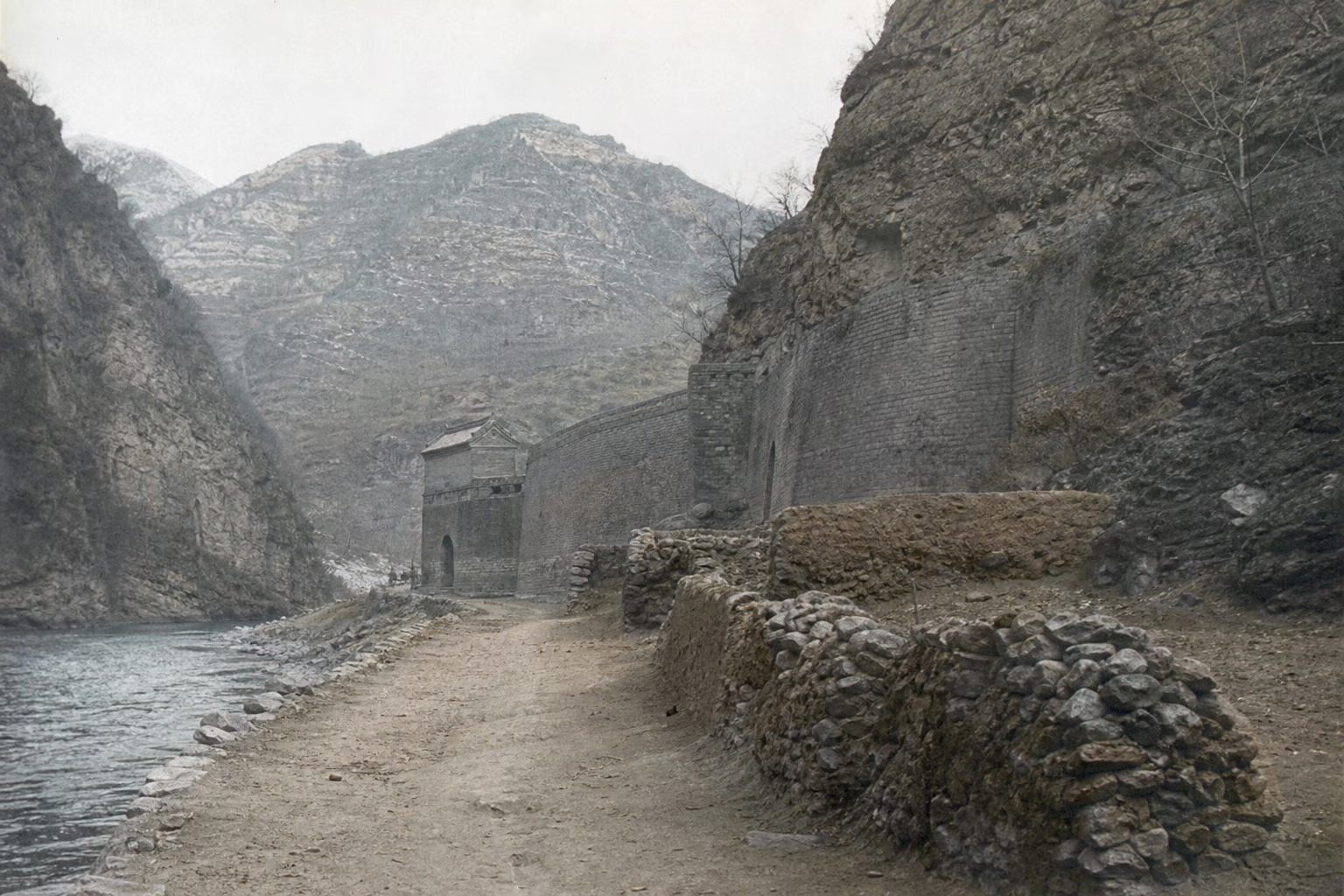
- Defile road: two mountains pinching one river valley, the pass city locking its mouth, troops unable to deploy, and the firepower advantage folded in half by the terrain -- even modern rifles and artillery had to queue when they entered a Taihang defile road.
- Falu Ridge: a height before the pass; whoever held the ridge could look down on the pass (the origin of the place name belongs to the layer of legend and is not included in the main text).
- Niangzi Pass faced the river (Mian River, water name unverified), where cliffs met the city wall -- vertical terrain and a single avenue of attack made for natural obstruction.
How Each Side Records It
- Chinese side: an edge page in Boxer narratives, occasionally seen in Shanxi local historical writing and military histories, usually in the formulation "repulsed the German and French Allied forces"; this article writes it as it was, "small but hard," without elevating it.
- Allied side: a setback in the expeditionary sequence, thinly recorded in Western languages (to be collected and checked) -- major defeats get written down, small setbacks do not, and that is the other half of why the sources for this article are thin.
Disputes and Sensitivities
- Dates, scale, and results for the individual fights vary among accounts, and some records may be embellished -- any statement of results must mark its source.
- The strategic intent of the "Allied attempt to enter Shanxi" is itself disputed: whether it was a fixed objective or the afterwave of the expedition (accounts vary).
- Figures for the dead in the Taiyuan Missionary Case and Yuxian's responsibility vary among books (accounts vary).
Sources and Open Questions
Known main sources:
- Telegrams and memorials related to Liu Guangcai and the Shanxi governor (*Qingji Waijiao Shiliao*; *Yihetuan Dangan Shiliao*, fascicles unverified)
- Shanxi local gazetteers and Niangzi Pass gazetteer records (records unverified)
- German and French expeditionary-force battle reports (Western-language archives, to be collected and checked)
Open questions: the Guangwu Army's strength and Liu Guangcai's office title and career record; dates and scale of the fights at Falu Ridge and Guguan; the command level for the Allied westward advance; records of burning and looting in villages at the mouth of Jingxing; statistical bases for the dead in the Taiyuan Missionary Case; Yuxian's date and place of execution; the water name at the pass city and details of battlefield geography; the successive edicts ordering the Shanxi passes held and the fascicles of Liu Guangcai's military reports; sources of the court-in-flight's intelligence on the Allied westward advance; Western-language records of German-French disagreement inside the Allied forces; details of the Guangwu Army's pay, arms, and equipment; whether there was any proposal in central Shanxi to abandon the passes and avoid battle.
All images on this site are AI-generated depictions. They are not historical photographs, not primary sources, and do not depict any real individual.