Engagement Archive · Battle of Palikao (incl. Battle of Zhangjiawan)
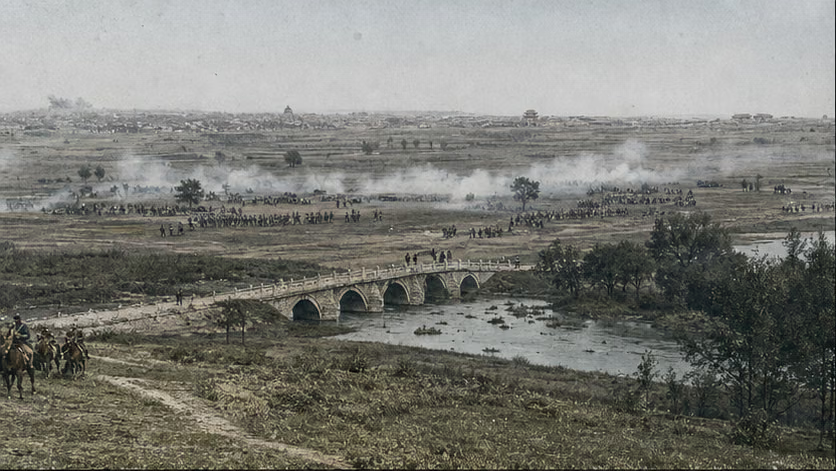
On 1860.9.21, the main Qing force under Sengge Rinchen, built around Mongol cavalry, charged head-on at the artillery and infantry squares of the Anglo-French allied forces on a stone bridge west of Tongzhou; the charge was destroyed in a modern fire web, and after this battle Beijing had no troops left to defend it, while the Xianfeng emperor fled north to Rehe.
Engagement Data
| Item | Details |
|---|---|
| Time | 1860.9.18 Battle of Zhangjiawan; 1860.9.21 Battle of Palikao |
| Place | Tongzhou, Zhili: Zhangjiawan (a canal wharf town south of the city) → Baliqiao (Yongtong Bridge west of the city, on the Tonghui River) |
| Affiliation | Second Opium War · the allied northern advance of 1860 (for the larger situation, see Second Opium War · Overview) |
| Qing side | Forces under Prince Sengge Rinchen of Khorchin (built around Mongol cavalry), together with units under Shengbao, Ruilin, and others |
| Anglo-French allied side | French commander Cousin-Montauban, British commander Hope Grant; allied advance force of about 6,000 men |
| Result | Consecutive defeats at Zhangjiawan and Palikao; the main Qing force collapsed. On the following day the Xianfeng emperor fled north from the Old Summer Palace to Rehe (dates vary by account), and the allied forces pressed toward Beijing |
Belligerents
| Item | Qing side | Anglo-French allied side |
|---|---|---|
| Strength | More than 10,000 to 30,000 (figures differ greatly by basis of counting; later scholarship usually takes lower figures, unverified); the core was the Mongol and Chahar cavalry that had campaigned with Sengge Rinchen for years | About 6,000 committed in the direction of Palikao, mainly French troops with part of the British force (the British deployment on the left/right wing is unverified) |
| Infantry firearms | Matchlocks, heavy wall guns, bows and arrows, swords and spears: hot and cold weapons mixed together | Rifled guns (Minie pattern), with a comprehensive advantage in rate of fire and range |
| Artillery | Old muzzle-loading guns, recoil-carriage pieces that could not be aimed flexibly | Field artillery, Armstrong breech-loading guns (British, unverified), Congreve rockets; canister shot used against dense charges |
| Mobility | Cavalry was the only field-mobile force, with both training and horse supply dependent on levy from the Mongol banners | Infantry-artillery squares; artillery could fire repeated volleys while the cavalry was still within charge distance |
| System | Frontline command and capital decision-making were disconnected: negotiation, detention, and opening battle occurred almost at the same time, with orders coming from different levels | Elgin and Gros as the 2 plenipotentiaries, and Montauban and Grant as the 2 commanders, made decisions on the spot |
Terrain and Conditions
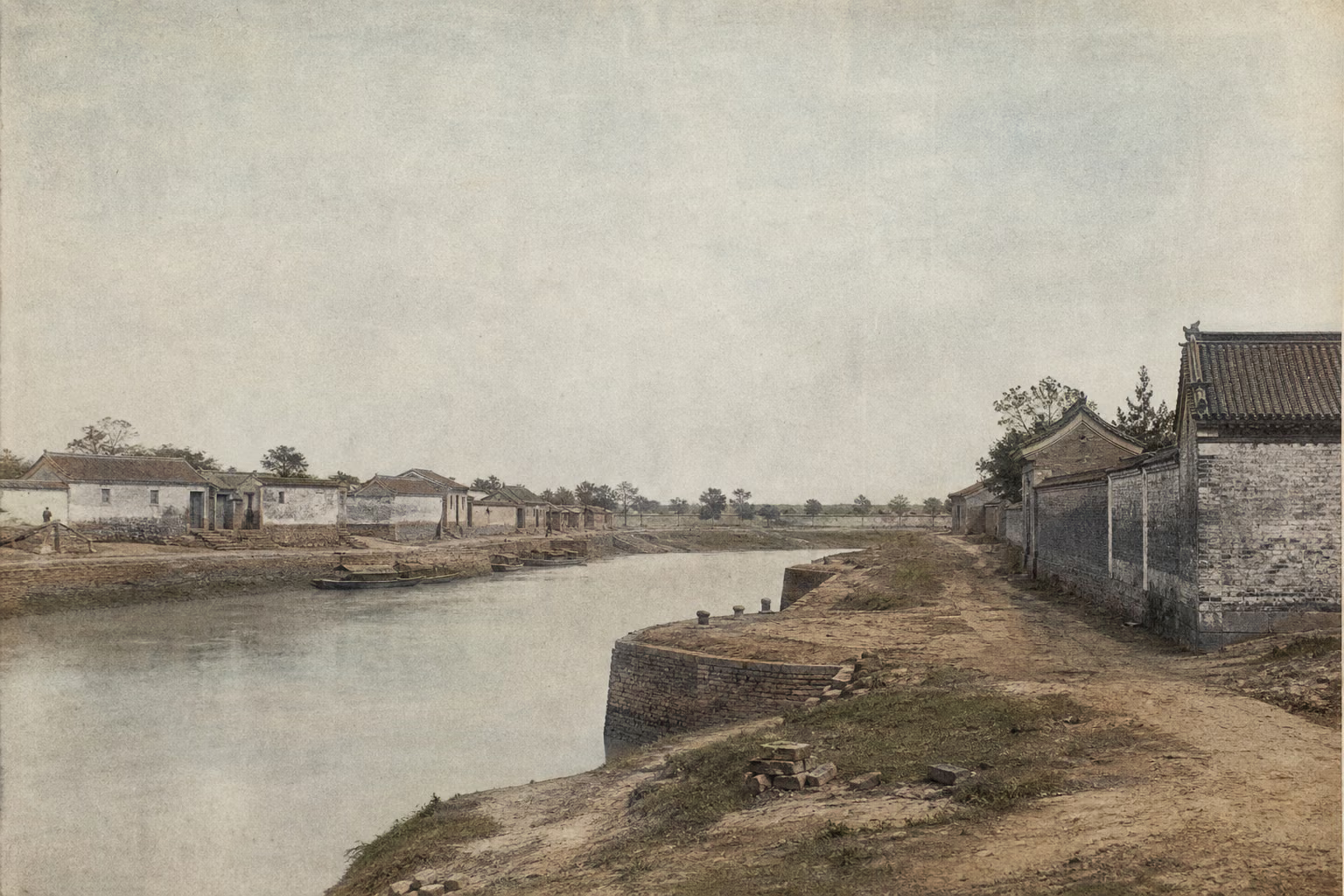
(For the broader situation in 1860 — the Anglo-French alliance, the Qing court fighting on 2 fronts, and Russian and American "mediation" accompanying the campaign — see Second Opium War · Overview.)
A straight line from Beitang to Beijing. After the allied forces landed at Beitang in 1860.8, took Taku, and occupied Tianjin (see Three Battles of the Taku Forts), they advanced west along the Beiyun River–Tonghui River corridor: Zhangjiawan was the wharf town at the northern end of the canal; farther west, past Tongzhou city, 8 li out of the west gate stood Baliqiao; west of the bridge lay open flat ground reaching directly to Beijing's Chaoyang Gate. After his defeat at Taku, Sengge Rinchen gathered his main force and placed it along this line.
Tongzhou. The capital's granary and the end point of grain transport by canal. As the allied forces approached, court debate swung back and forth between "war" and "peace," while negotiators and military commanders each acted on their own — before the enemy had even appeared before the city, the Qing command system had already fallen into disorder.
Why It Was Fought
After the 3rd battle at Taku, only 1 road remained in front of Beijing. After his defeat at Taku, Sengge Rinchen gathered his main force and placed it on the Beiyun River–Tonghui River corridor. This was not a good battlefield he had chosen; it was the last ground outside Beijing where an army could form a line.
Tongzhou was the capital's granary and the end point of canal transport, while court debate still wavered between "war" and "peace." As the allied forces approached, negotiators and senior commanders each acted on their own; before the city had even seen the enemy, its own command system had already become confused. On 9.14, Prince Yi Zaiyuan and Minister of War Muyin negotiated at Tongzhou with British and French representatives. They accepted most allied terms, but the talks stuck on the clause that "the ministers should personally proceed to Beijing and present the letters of credence to the emperor" (the exact disputed clause varies by account): for the Qing court this was a matter of ritual order and state dignity; for Britain and France it was face that had to be fought over. If 1 article could not be settled, all the rest became void.
The 2 sides' calculations diverged from there. The memory of victory at Taku in 1859 was still present, and the court believed there was still a chance in field battle. On the allied side, the 2 plenipotentiaries Elgin and Gros and the 2 commanders Montauban and Grant made decisions on the spot; what they wanted was to enter Beijing with the artillery train and exchange ratifications. On 9.18, the British negotiator Harry Parkes led the mission to Tongzhou again and was detained by Sengge Rinchen's troops. Including British and French personnel, the party numbered 39 people (headcounts vary by account), and they were sent in restraints to the Board of Punishments in Beijing (whether the order came from Sengge Rinchen, Zaiyuan, or Beijing is unverified) — people from the negotiating table became prisoners in an instant. More than 20 of these 39 later died in custody (death figures vary by account), and 1 month later this became the direct allied pretext for reprisal by burning the palace (※ for the burning of the Old Summer Palace and the decision-making process behind it, see Second Opium War · Overview; see the overview for details). On the day of the detention, fighting began in the Zhangjiawan direction; on 9.21, the allied forces advanced to Palikao, and Sengge Rinchen met them with his entire main force. The last battle below Beijing began there.
The decision to fight the decisive battle was made on what resources? The 2 ledgers have to be laid out. The Qing elite force in hand was the Mongol and Chahar cavalry that had followed Sengge Rinchen through years of campaigning and had come out of the battlefields of pursuit and blocking against the Taiping Northern Expedition; their number was more than 10,000 to 30,000 (figures differ greatly by basis of counting; later scholarship usually takes lower figures, unverified). Tongzhou's granaries held tribute grain, but the firearms were old muzzle-loading guns unchanged for decades, mixed with matchlocks and bows and arrows. Provincial relief troops had been ordered forward but had not arrived (the situation of orders and arrival at defensive positions is unverified). The court's confidence in fighting came from the victory at Taku in 1859, and so did its blind spot: 1 year later, the guns and artillery in the opponent's hands were no longer of the same generation. The allied side had limits of its own: a 20,000-man expeditionary force was hanging at the end of a sea supply line; from Beitang to Tongzhou it advanced while fighting and waiting, and after 9.18 it paused for 3 days before advancing again, waiting for the artillery train, grain, and ammunition to catch up from Tianjin (the reason for the pause appears in allied records, unverified). Nor was there no other voice at court: since the opening of talks at Tianjin, the advocates of accommodation had consistently sought to end the matter with a treaty, while Sengge Rinchen advocated war, and court debate repeatedly shifted between war and peace according to frontline memorials (records of court memorials and replies on war and peace are unverified). Once negotiations broke down and the mission was detained, the path of accommodation was cut off. When talks opened again, Beijing's gates had already opened.
This battle need not have been fought at this time and place. After Tianjin fell, Beijing still had the option of withdrawing in depth and avoiding the edge of the enemy's artillery. But the mission had already been detained, the talks had broken down, and the emperor was at the Old Summer Palace only a few dozen li away. For the Qing court, if this battle was not fought, there would be nothing left between the allied forces and Beijing.
Course of the Engagement
| Phase | Time | Main points |
|---|---|---|
| Negotiation and breakdown | 9.14–9.17 | Zaiyuan and Muyin negotiated at Tongzhou; the dispute over presenting the letters of credence in person caused the talks to stall (the exact breaking point is unverified) |
| Detention of the mission | 9.18 | Harry Parkes's mission of 39 people was detained at Tongzhou (level of the order: whether Sengge Rinchen acted under imperial order or decided on his own is unverified); the Battle of Zhangjiawan broke out the same day |
| Battle of Zhangjiawan | 9.18 | Qing troops engaged the allied advance force, were defeated, and withdrew toward the Palikao line (the specific course of engagement and troop strengths on both sides are unverified) |
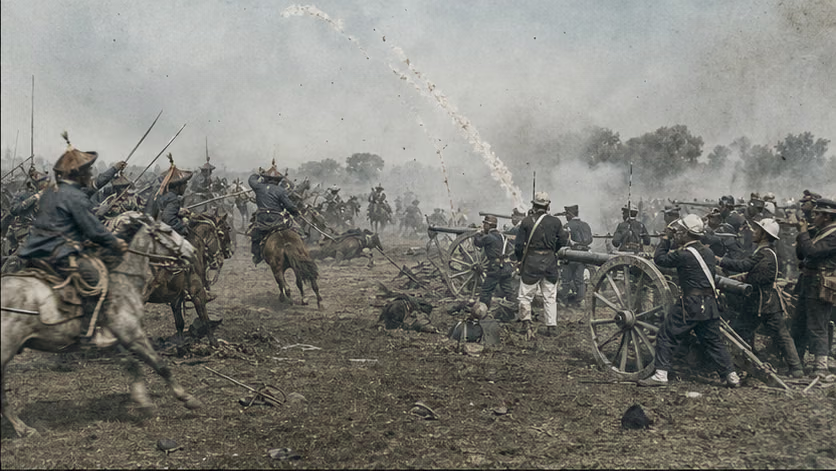
| Battle of Palikao | 9.21 | Sengge Rinchen deployed across the whole line with Mongol cavalry at the core, while Shengbao and Ruilin separately commanded their units. The cavalry charged again and again at allied artillery positions and infantry squares; under rockets, canister shot, and rifled-gun fire, men and horses fell in sheets, yet still charged to close range before finally being destroyed. Shengbao was wounded (nature of the wound unverified); the Qing army collapsed along the whole line |
| After the battle | From 9.22 | The Xianfeng emperor fled north to Rehe (dates vary by account); the allied forces reached the walls of Beijing, and entered the city in 10 (see Second Opium War · Overview) |
Casualties and Losses
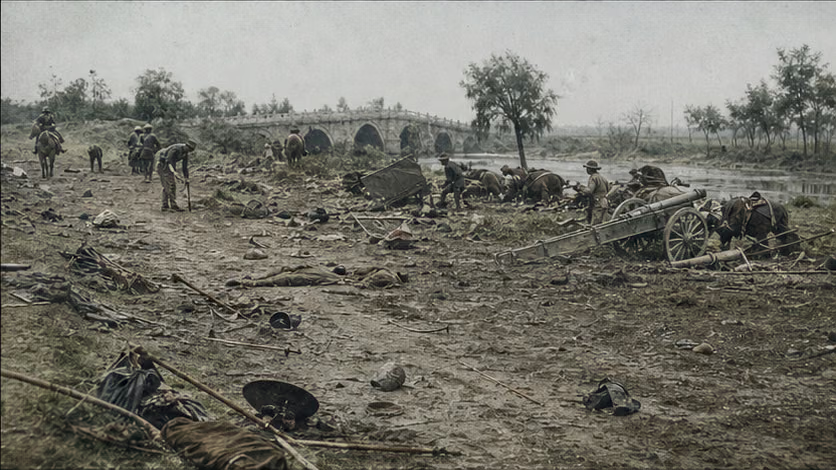
- Qing side: there is no reliable count of the dead; common accounts range from more than 1,000 to several thousand (Qing memorials and later scholarship differ greatly in their basis of counting, accounts vary). The elite Mongol cavalry was basically spent in this 1 battle.
- Anglo-French allied side: French records give single-digit deaths (figure disputed), and British casualties were also extremely slight; the commonly used allied-side count is several dozen killed and wounded in total (exact figures, and British and French separate figures, are unverified).
- Whichever set of figures is used, this was the battle with the most lopsided exchange ratio in the whole war, and one of the fastest destructions of a main field formation in Qing foreign warfare.
- Civilians: after the fighting, the Zhangjiawan and Tongzhou area suffered double plunder by the allied forces and routed troops (specific records unverified).
Aftermath
- Beijing's defenses were left in vacuum. In 10 the allied forces reached the city walls, Anding Gate opened without a fight (the process is unverified), Prince Gong, Yixin, who remained behind, came forward to negotiate peace, and in late 10 the Convention of Peking was signed (for details, see Second Opium War · Overview).
- The survivors among the 39 members of the mission were released in early 10 (release dates vary by account); the return of bodies and confirmation of causes of death directly stimulated Elgin's decision for reprisal — ※ the burning of the Old Summer Palace, see the overview.
- Sengge Rinchen was stripped of his princely rank but retained in office (disciplinary details unverified), and the remnants withdrew toward Nanyuan to regroup. After this, the Qing court no longer spoke of fighting Britain and France, and turned fully toward "borrowing foreign troops to aid suppression" against the Taiping Heavenly Kingdom.
- The Xianfeng emperor never returned to Beijing, and died at the Rehe temporary palace in 8 of the following year.
Accounts of Those Present
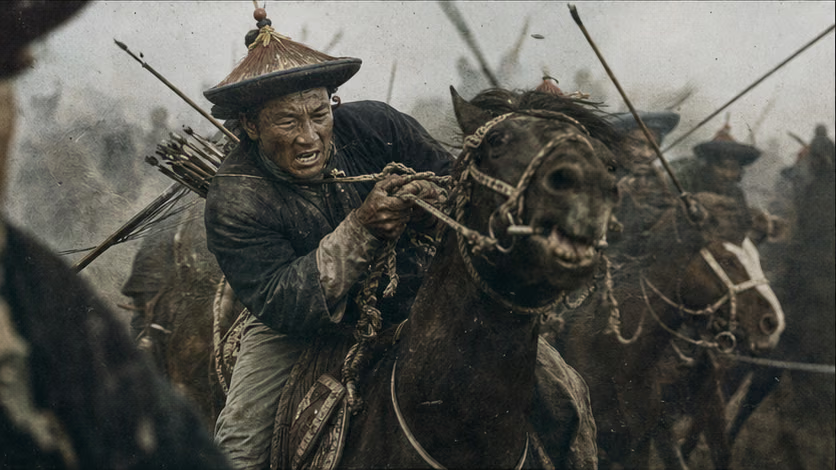
- The cavalry charge: French military personnel recorded that Mongol cavalrymen charged through artillery fire to extremely close range from the squares, with men and horses dead and wounded piled together, yet still did not withdraw (the specific recorder and original text are unverified). These accounts are the direct source of the word "brave" in enemy writing.
- Rockets and horses: the allied forces fired Congreve rockets; the warhorses were startled, and some cavalry units fell into disorder before contact with the enemy (from allied-side accounts, unverified).
- Shengbao: he was wounded in the line at Palikao (where and how severely he was wounded are unverified). The year before, after the battle at Taku, he had opposed Sengge Rinchen's underestimation of the enemy (record unverified), and after this battle he became a figure moving between negotiation in the capital and relief-service mobilization.
- Harry Parkes in custody: he went straight from the negotiating table into the Board of Punishments prison, wore shackles, and was interrogated (whether he was tortured in prison differs between British self-account and Chinese records, unverified). After his release in 10, he was among the strongest advocates of reprisal.
- Montauban's hesitation: French records say Montauban had no firm grasp of the situation after the army reached Beijing, and the controversy over the extent of French participation in the decision to burn the palace stems from this (see the overview for details; Montauban's own account is unverified).
The Ground
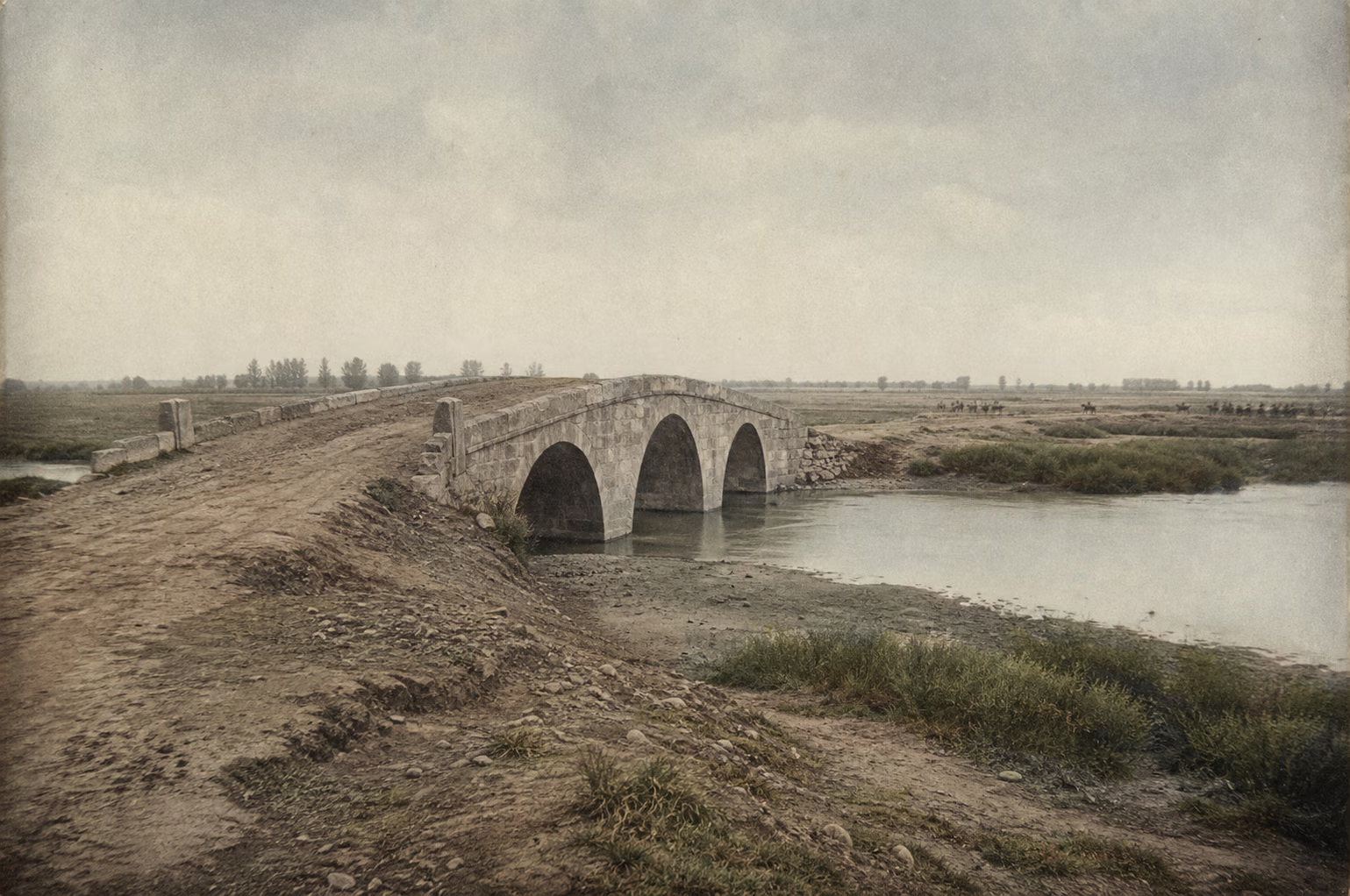
- Baliqiao's original name was Yongtong Bridge (founding date unverified), a 3-arch stone bridge across the Tonghui River, named because it lay 8 li from Beijing (the exact starting point for the mileage behind the place name is unverified). The bridge itself and the place name "Baliqiao" both survive today in Tongzhou, Beijing.
- The bridge was the only node of passage: east of it lay the approach from Tongzhou; west of it, flat country ran straight to the capital. There was no 2nd defensible terrain line, so the battle space was compressed into a front only a few kilometers wide from the bridgehead to the 2 wings.
- Zhangjiawan lay south of Tongzhou city, a canal wharf town whose streets, lanes, and river landings formed another scale of engagement space.
- Beitang — Taku — Tianjin — Zhangjiawan — Baliqiao — Beijing: the whole 1860 campaign advanced point by point along a water-route axis, with 1 article for each point (for Taku, see Three Battles of the Taku Forts).
How Each Side Records It
- French side: in France this battle is called the "Battle of Palikao" (Bataille de Palikao) — "Palikao" is the transcription of "Baliqiao." In 1862, Montauban was made "Count of Palikao" (Comte de Palikao) by Napoleon III (year unverified). When the French legislature examined the annuity attached to the title, opposition members attacked it, leaving a gibe roughly meaning "a victory not worth an annuity" (original wording unverified). The dispute over the title and annuity has left this battle with an awkward reputation in French political memory. French military accounts (various memoirs by officers and interpreters, specific titles unverified) give considerable space to the charges of the Mongol cavalry, and most acknowledge their bravery.
- British side: in British military writing this battle is relatively marginal, a field engagement in the final stage of the 1860 expedition. Grant's dispatches and reports by correspondents both treat it as part of the allied operation. The real center of the British narrative was not the battlefield, but the detention, imprisonment, release, and deaths of more than 20 members of Harry Parkes's mission. This line led directly to Elgin's decision to burn the palace, and became the core basis on which the British side later justified the burning of the Old Summer Palace (※ see Second Opium War · Overview).
- Chinese side: one of the prototype scenes in modern narrative — the generational-gap image of "cavalry against modern firearms" — is often cited as the sign of old military equipment leaving the stage. Sengge Rinchen and his Mongol cavalry thus became synonymous with the "last large-scale cavalry charge." Recent scholarship has reexamined troop figures, the actual course of fighting, and the exchange ratio (specific works unverified), tending to lower Qing strength and give finer detail on how the charges were blocked by firepower, but the basic judgment of a "generational gap" has not changed.
Disputes and Sensitivities
- The basis for the disparity in troop strength: Qing strength is given as more than 10,000 to 30,000, a 3-fold spread, while the allied "about 6,000" refers only to those committed on the Palikao line. The troop figures on each side come from different sources.
- The memory risk of "cavalry charging a fire web": this battle is very easily written as a dramatized spectacle of generational difference. The core in accounts from both sides is "repeated charges, destroyed in the fire web."
- The chain of responsibility for detaining the mission: whether the decision to detain people came from Sengge Rinchen, Zaiyuan, or imperial orders from Beijing is recorded differently in different books (accounts vary). In British and French narratives this was characterized as "treachery" and used as the pretext for burning the palace; in Chinese narratives it was long rarely handled directly. Points 1 and 2 under How Each Side Records It have already set out the respective accounts; the difference in characterization itself is placed side by side here.
- The causal relation between the mission deaths and the palace burning: the British and French side used the death of more than 20 of the 39 prisoners in custody as the direct reason for burning the palace; Chinese narratives emphasize the burning as an invasive atrocity. The 2 accounts coexist and do not cancel each other out (※ the burning itself is handled in the overview).
Sources and Open Questions
Known main sources:
- French side: Montauban's related dispatches and self-accounts; memoirs by French officers and interpreters attached to the army (titles unverified); French legislative debates over the "Count of Palikao" annuity
- British side: Grant's dispatches; writings and biographies related to Harry Parkes; reports by correspondents attached to the army (titles unverified)
- Chinese side: Chouban yiwu shimo: Xianfeng reign, Sengge Rinchen's memorials, and recent re-studies of the Battle of Palikao (related discussions by scholars such as Mao Haijian; specific titles unverified)
Open questions: the exact clauses over which negotiations broke down; the level at which the detention order for the mission was given; the composition of the 39-person mission and the basis for counting the dead; release dates; the course of the Battle of Zhangjiawan and troop strengths on both sides; source basis for the various Qing strength figures at Palikao; details of Shengbao's wound; the position and performance of Ruilin's units at Palikao; British and French casualty figures listed separately; whether Armstrong guns were used at Palikao; the year of Montauban's ennoblement and the original text of the legislative annuity case; the date of Xianfeng's flight north; the founding date of Yongtong Bridge and the starting point for the "8 li" mileage; specific records of post-battle plunder at Zhangjiawan and Tongzhou; bibliographic titles and original texts for French military accounts of the cavalry charge; the wording and date of the capital's decisive-battle edict after the breakdown; the situation of provincial relief troops being ordered forward and arriving at defensive positions; allied records explaining the 3-day pause after 9.18; records of court memorials and replies on the 2 policies of war and peace.
All images on this site are AI-generated depictions. They are not historical photographs, not primary sources, and do not depict any real individual.