Engagement Archive · Three Battles of the Taku Forts
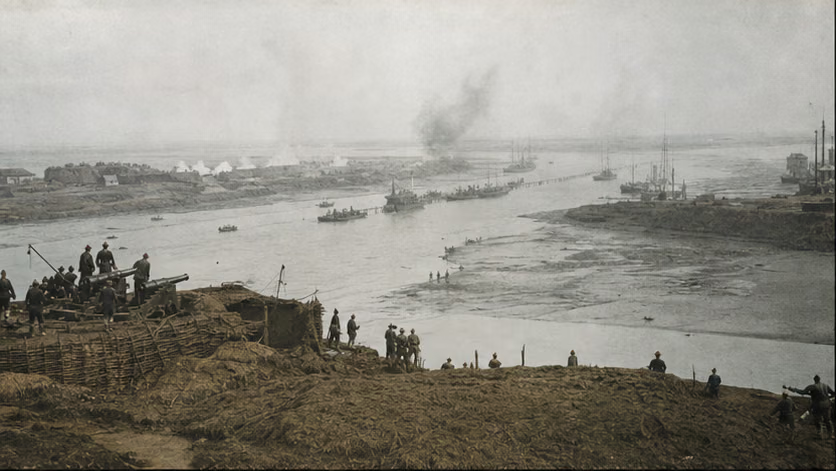
At the same river mouth, three battles were fought in three years: in 1858, as soon as the fleet arrived the forts collapsed; in 1859, Sengge Rinchen crippled the ratification-exchange fleet that forced its way in, trapping it inside the river barriers, the Qing army's only clear tactical victory against a foreign power; in 1860, the allied forces bypassed the forts, landed at Beitang, and came in on their flank and rear, so even the strongest forts no longer mattered. One battle was won; the whole situation was lost.
Engagement Data
| Item | Details |
|---|---|
| Time | 1858.5 (first) / 1859.6 (second) / 1860.8 (third) |
| Place | Taku mouth, Zhili: the mouth of the Haihe River (then called the Baihe), with fort groups on both banks of the river mouth |
| Belongs to | Second Opium War (for the larger situation, see Second Opium War: Overview; for the origins, see Battle of Canton (1856–58)) |
| Fortress defenders | Qing forces: in 1858, defended under the direction of Tan Tingxiang, governor-general of Zhili; in 1859 and 1860 under Prince Sengge Rinchen of Khorchin, with Zhili provincial commander Leshan defending the north-bank forts in 1860 |
| Fleet / landing attackers | Anglo-French allied forces in 1858 and 1860; in 1859 the attempted forced entry was led mainly by the British fleet (fleet commander Rear Admiral James Hope), French ships were present but did not make the main attack (record unverified), and the U.S. ship Toey-Wan assisted the British |
| Result | In 1858 the defenders collapsed and the forts fell, after which the Treaties of Tientsin were signed; in 1859 the attackers suffered a crushing defeat and withdrew; in 1860 the forts fell, Tianjin was lost, and the war burned toward Beijing (see Battle of Palikao) |
| Nature | First and second battles: fleet assaults on a river-mouth fortress; third battle: landing and flanking attack against the fortress rear |
Belligerents
| Item | Fortress defenders | Fleet / landing attackers |
|---|---|---|
| Strength | In 1858, several thousand defenders (figure disputed); in 1859, more than ten thousand under Sengge Rinchen, including cavalry (figure disputed); in 1860, more than ten thousand along the river-mouth defense line, with about 2,000 defenders in the north-bank forts (figure disputed) | In 1859, several hundred to over one thousand personnel in the British gunboat formation (figure disputed); in 1860, landing forces of more than ten thousand British troops and several thousand French troops (figures vary by basis of counting), nearly twenty thousand in total |
| Artillery | Old-style muzzle-loading guns in the forts; before 1859 they were repaired, heavy guns were added, and gun positions were protected by earthen works | Naval guns had an overall advantage in range, rate of fire, and gunnery; in 1860 the landing troops brought modern field artillery, including Armstrong breech-loading guns (equipment details unverified) |
| Water surface / mobility | No navy capable of going out to sea to meet the enemy; reliance on river barriers to delay enemy vessels | Shallow-draft steam gunboats could enter the river mouth, but sandbars and tides restricted their draft; in 1860 the attackers shifted to a Beitang landing and used army mobility to bypass the water-front approach |
| Works | Forts on both north and south banks; after 1858, Sengge Rinchen rebuilt and strengthened them, setting layers of obstacles in the river, including iron chevaux-de-frise, chains, and wooden rafts (names and layout unverified) | In 1859 the attackers first had to break the obstacles before storming the works, the most tactically disadvantageous of the three attempts; in 1860 they avoided this front altogether |
| Command | Sengge Rinchen's 1859 dispositions were rigorous and his orders effective; in 1860 the decision to abandon Beitang became the fatal point in the whole situation | In 1859 Hope underestimated the enemy and forced the entrance; in 1860 the British and French armies coordinated the landing, with Grant and Montauban commanding separately (details of the two armies' coordination unverified) |
Terrain and Conditions
(For the larger situation of treaty revision and ratification exchange, and the Xianfeng court's swing between war and negotiation, see Second Opium War: Overview.)
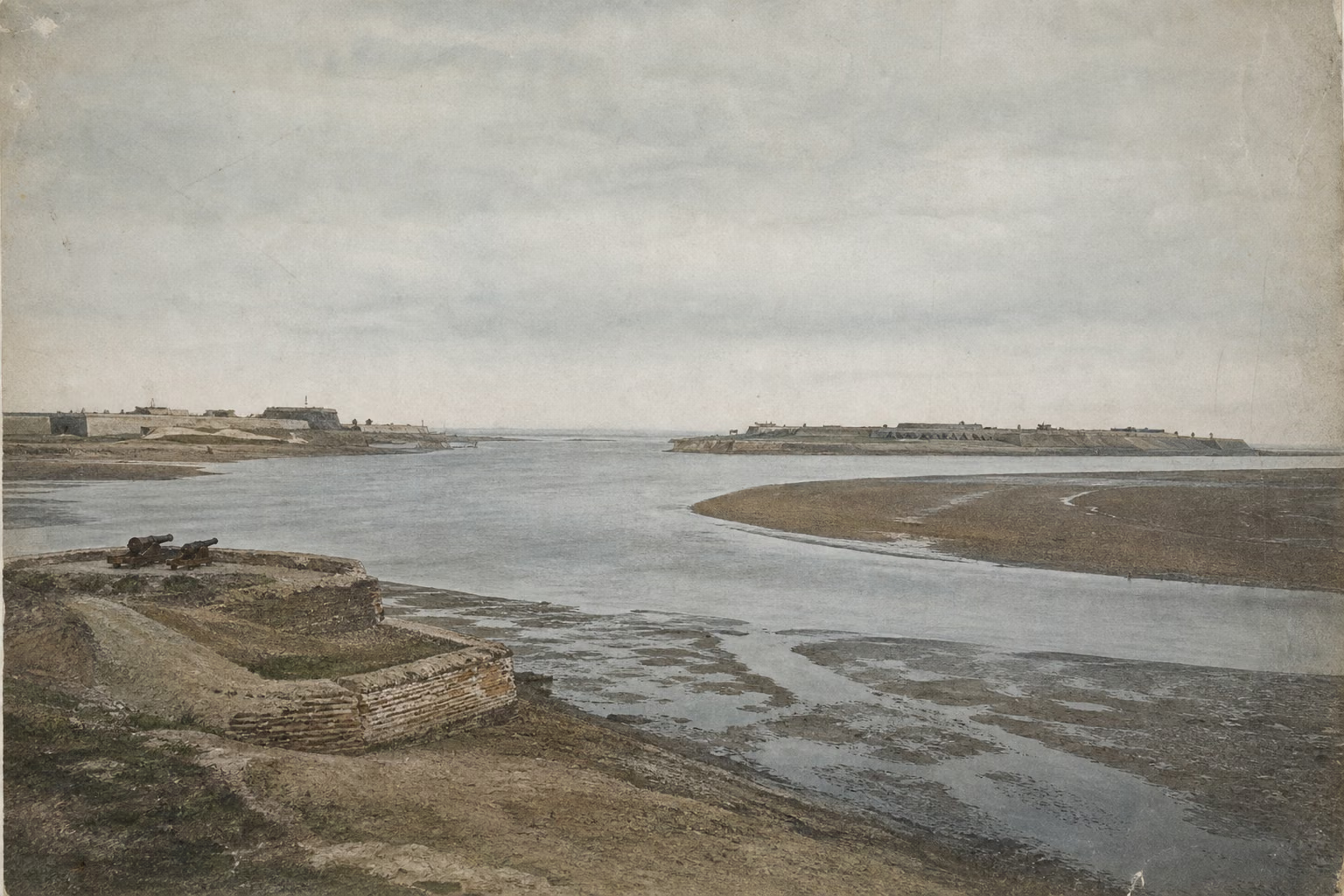
This river mouth: The Haihe River, called the Baihe by contemporaries, enters the sea downstream from Tanggu; that sea entrance is Taku. Outside the mouth lay bar sandbars; where the water was deep and fast, only one navigable channel could pass, and it was governed by the tides. On both banks spread broad mudflats, with shallows exposed at low tide. About thirty-plus kilometers upstream from Taku was Tianjin; from Tianjin the river connected onward to Tongzhou and Beijing. This river mouth was Tianjin's gate and Beijing's shield: any force coming from the sea toward Beijing first had to pass this waterborne chokepoint.
The forts: The forts were built on both banks, holding the river between them, with the south bank as the main side. After the disastrous defeat of 1858, Sengge Rinchen oversaw their reconstruction: raising and thickening the works, adding guns, and placing river barriers in the channel. This river mouth changed from a "paper-pasted pass" into a fortress with real depth (scale of works and number of gun positions unverified).
Why It Was Fought
After Canton fell, the problem was not solved. In December 1857 (1857.12) the Anglo-French allied forces took the provincial capital and captured Ye Mingchen (see Battle of Canton (1856–58)), yet the court did not change its position because of the loss of one city: the demand for treaty revision remained where it had been. Canton was too far from Beijing; it did not hurt enough. To bring Xianfeng to the table, they had to press the muzzles of their guns up to Zhili. So they chose the Baihe mouth: thirty-plus kilometers upstream from Taku was Tianjin, and from Tianjin the river led on to Tongzhou and Beijing.
In May 1858, as soon as the fleet arrived, the forts collapsed at the first attack; the gunboats went straight to the walls of Tianjin, and in June the Treaties of Tientsin were signed. This was the first battle: a negotiation forced out at gunpoint. Xianfeng afterward regretted the breadth of the treaties, with the clause on envoys residing in Beijing seen as the deepest danger, and this planted the dispute over ratification exchange the next year. The second battle in June 1859 was set off by the route for that exchange: the treaty ratifications were to be exchanged in Beijing; Xianfeng directed the ratification fleet to land at Beitang and forbade it to force an armed passage through Taku. The British treated this as an insult, and the fleet commander, Hope, insisted on taking the armed fleet through the main Taku entrance. A dispute over route became a dispute settled by fire. The defender of Taku that year was Sengge Rinchen. After the disastrous defeat of 1858 he had rebuilt the fortress by imperial order, setting layer after layer of iron river barriers and chains in the channel. The court's instruction was not to open hostilities first, but to wait until the enemy had forced entry and then strike (original wording of the edict unverified). On June 25, the British gunboats forced their way in, were allowed inside the river barriers, and then came under close-range volleys from the forts; several ships grounded and sank, Hope was wounded, and the British themselves reported more than four hundred casualties (basis of counting and breakdown unverified). This was the Qing army's only major victory in the entire war.
The third battle was precisely what that great victory brought on. The 1859 defeat shook London, and "revenge must be taken" became the overwhelming public mood. On the Qing side, the war party took the victory as proof that "the barbarians are no more than this," and gained still more confidence in rejecting the proposed route for ratification exchange. The two sides read wrong conclusions from the same battle. In the summer of 1860, Britain and France assembled an expeditionary force larger than any they had previously sent against China: more than ten thousand British troops and several thousand French troops (figures vary by basis of counting), returning to take back with interest what had been lost the year before. Sengge Rinchen staked everything on the sea-front approach, but withdrew the Beitang garrison (theories of luring the enemy and of simple error both exist, unverified). On August 1 the allied forces landed at Beitang, avoided the front, and moved overland to the flank and rear of the forts. On August 21 the north-bank forts fell, and provincial commander Leshan died in hard fighting. The south bank wavered at the news; Sengge Rinchen withdrew by imperial order, and Taku collapsed without being held.
Money and dissent each entered the account, one entry on each side. Qing finances had already been drained by the fighting in Jiangnan; two years of rebuilding the forts and laying barrier after barrier concentrated the strength of the capital region on a single point (construction-cost details unverified). Nor were there no advocates of negotiation: in 1860, Zhili governor-general Hengfu repeatedly sent communications to the allied forces asking that the envoys be allowed to enter Beijing through Beitang for ratification exchange, but the center refused (memorials and diplomatic correspondence unverified). After the great victory, such voices were completely drowned out. On the allied side, war expenses had to pass Parliament, while provisions, ammunition, mules, and horses for twenty thousand men had to be collected across the sea (details unverified); they could not afford delay either. Whether this line of accounting entered Beijing's calculations is not clear in the records (unverified).
The logic linking the three battles can be put in one sentence: the first proved that the forts were practically hollow; the second proved that they could kill; the third proved that they had only a front. A defense line built over two years was overturned whole by one undefended landing.
Course of the Engagement
First Battle (1858.5): the forts collapsed at the first attack
In May 1858, the British and French fleets arrived off the Taku mouth, delivered communications demanding negotiations, and then on May 20 (dates vary by account) forced their way in and bombarded the forts on the north and south banks. The defenders' resistance was brief before they collapsed; the forts changed hands in succession, with the whole action taking only several hours (duration of the fighting unverified). Zhili governor-general Tan Tingxiang abandoned the defense and fled (the course of his flight and the wording of his memorial report unverified). Allied gunboats ascended the Baihe directly to the walls of Tianjin. This time the allied forces did not even need an army landing; the fortress had already collapsed on its own. In June, the Qing court signed the Treaties of Tientsin with Britain, France, Russia, and the United States separately.
Turning significance: It proved that the Taku forts were practically hollow and that the Haihe defense line could be pierced with one thrust; Beijing's gate lay open before naval guns. Only after this did Sengge Rinchen receive orders to develop the Taku defenses, making the next year's very different battle possible.
Second Battle (1859.6): disaster inside the river barriers
In June 1859, the British fleet commander Hope led a gunboat formation (common accounts range from more than ten to more than twenty vessels, unverified) to the Taku mouth to open an armed road for the envoys' ratification exchange. The Qing court had already designated the route of landing at Beitang and proceeding to Beijing; Hope would not accept it, insisting on the main Taku entrance and demanding that the obstacles in the river be removed.
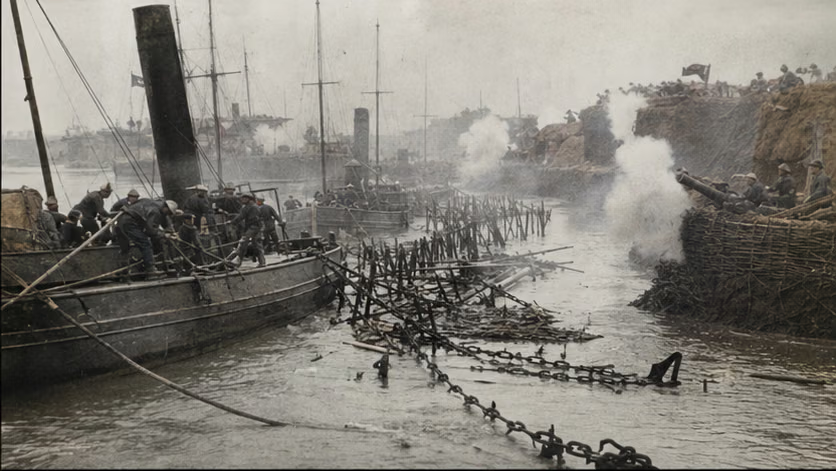
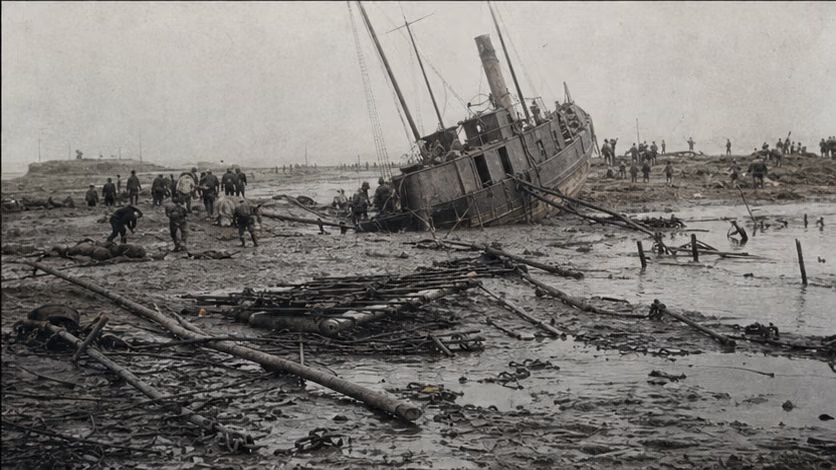
On June 25, British gunboats forced their way in, trying to drag aside or blast open the iron river barriers and chains. The Qing guns in the forts had been concealed in advance, their positions masked with reed matting and earthen parapets (camouflage details unverified), and the defenders waited quietly until the enemy vessels had all entered the channel and come up against the obstacles. Then they suddenly opened fire together. Jammed in the narrow channel, the gunboats could neither advance nor withdraw; several were hit, sank in place, or were badly damaged and grounded on the mudflats. After the tide ebbed they could not move, becoming targets under the forts. Hope himself was wounded in the leg (wound details unverified). Commodore Josiah Tattnall of the U.S. East India Squadron was present aboard the Toey-Wan as an observer; seeing the British in danger, he violated neutrality and intervened, towing British boats and carrying reinforcements (degree of intervention unverified), leaving the phrase "blood is thicker than water" (whether the words were said on the spot is unverified). At night, allied marines attempted to land and seize the forts, but were trapped on the mudflats by gunfire and mud, suffered heavy casualties, and finally withdrew. The British basis of counting put casualties in this battle at more than four hundred (basis of counting and breakdown unverified); Qing casualties were light (figure disputed).
Turning significance: This was the only clear tactical victory in the Qing army's history of fighting foreign powers. It gave Xianfeng the confidence to reject the ratification-exchange route, and it also planted a fatal misjudgment: the war party concluded from it that "the barbarians are no more than this," while London read only one conclusion: revenge must be taken. One battle was won; what was lost was the judgment of the overall balance of power.
Third Battle (1860.8): taking the fortress from the flank and rear
In the summer of 1860, the Anglo-French allied forces returned: more than ten thousand British troops and several thousand French troops (figures vary by account), with around two hundred vessels (accounts vary). On August 1 (dates vary by account), the allied fleet appeared at the Beitang mouth, another river mouth north of Taku. Beitang had forts of its own, but before the battle Sengge Rinchen had withdrawn its defenders: one explanation says he deliberately let the enemy land so that Mongol cavalry could destroy them in field battle; another says it was simply a mistake in judgment (both versions coexist, unverified). The allied forces landed at leisure without resistance and established themselves among the mudflats and villages.
The allied forces did not take the front at Taku. Instead they moved along the north-bank roads and inserted themselves from the flank: first taking Xinhe and Tanggu (mid-August; dates of individual points vary by account), cutting Taku's rear, and on August 21 (dates vary by account) assaulting the north-bank forts from flank and rear. Zhili provincial commander Leshan supervised the defense of the north-bank Shifeng Fort (fort name unverified) and died in hard fighting (circumstances of death unverified); the north bank fell. The south-bank defenders wavered at the news, Sengge Rinchen withdrew by imperial order (sequence of the withdrawal order unverified), and the whole Taku mouth collapsed without being held. In late August the allied forces entered and occupied Tianjin without bloodshed.
Turning significance: It proved that a fortress with only a front is dead. Sengge Rinchen's two-year defense line was overturned whole from the flank by a landing that had not been defended. Beijing's outer shield was lost from this point onward; the next stop was Palikao (see Battle of Palikao), and the one after that was the Old Summer Palace.
Casualties and Losses
- 1858: the defenders fled in collapse, with several hundred casualties (Qing memorials and Anglo-French records each give their own account; both unverified); attacker casualties were light.
- 1859: the British themselves reported more than four hundred dead and wounded (British basis of counting; casualty breakdown unverified), and multiple gunboats were sunk or damaged (common accounts give three, four, five, and other figures, disputed); Qing casualties were light (figure disputed). In the entire Second Opium War, this was the engagement with the most lopsided attacker-defender loss ratio, and unusually the direction favored the Qing army.
- 1860: of the roughly 2,000 defenders of the north-bank forts, most died in battle (figure disputed), and Zhili provincial commander Leshan was killed; allied casualties in the assault numbered several hundred (Anglo-French basis of counting, unverified).
- Civilians: after the allied landing, villages around Beitang and Tanggu were requisitioned and looted, and residents fled (circumstances and scale unverified)※. After Tianjin fell it was occupied by the allied forces, leaving a local-order vacuum for a time (security conditions during the occupation unverified).
Aftermath
- 1858: the Treaties of Tientsin were signed, providing for envoys resident in Beijing, additional treaty ports, inland river navigation, and indemnities; Xianfeng afterward regretted the breadth of the treaties, planting the next year's dispute over ratification exchange.
- 1859: the Qing court, relying on the victory, rejected the ratification-exchange route; voices for war outweighed voices for negotiation, while Britain and France resolved to enforce the treaties by force. The 1860 expeditionary force was far larger than any previous use of arms against China.
- 1860: after Tianjin fell, the allied forces advanced along the Baihe and canal toward Tongzhou; in September, the Battle of Palikao routed the Qing main force (see Battle of Palikao), Xianfeng fled north to Rehe, Beijing fell, the Old Summer Palace was burned, and the Convention of Peking was signed.
- The Taku forts were later demolished according to treaty (relevant clauses of the Convention of Peking and demolition sequence unverified), and Tianjin's gate stood open under the treaty system for nearly half a century.
Accounts of Those Present
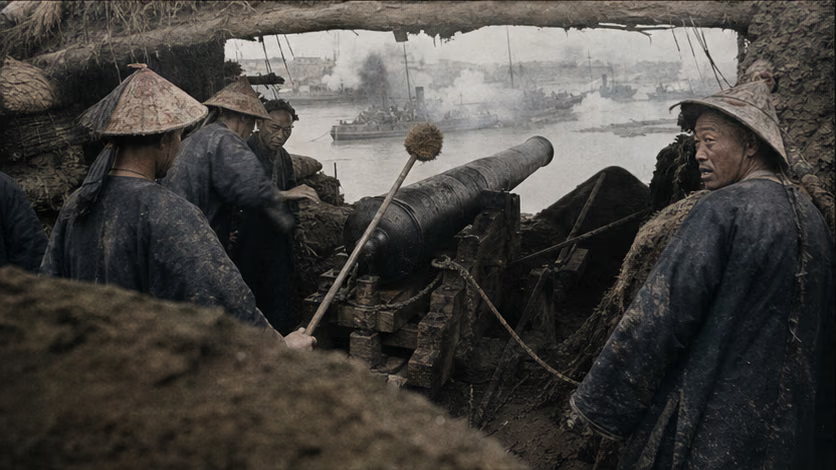
- "Blood is thicker than water": Tattnall saw the British gunboats being beaten inside the river barriers and ordered U.S. vessels to intervene and tow them out. The explanation he left was "blood is thicker than water": a naval officer of a neutral country used a household proverb to strip neutrality from himself (source and occasion of the phrase unverified). The name of the U.S. ship Toey-Wan also remained in Chinese records in transliteration.
- Hope's leg: the fleet commander was hit and wounded aboard his flagship, and continued commanding through the defeat and retreat (wound and command details unverified). A rear admiral lost most miserably on the very water surface where he most should not have lost.
- Leshan: a Mongol bannerman (banner affiliation unverified), provincial commander of Zhili, he held the north-bank forts to the death in 1860 and was killed when they fell: at the level of Qing commanders, the only officer killed in action across the three Taku battles (this statement unverified).
- Tan Tingxiang: after the 1858 defeat he fled; how his memorial report described the rout to the court is another specimen of the system of "polished memorial reporting" (original memorial unverified).
- Sengge Rinchen: his 1859 dispositions, concealing gun positions, using obstacles to delay, and opening fire at close range, were the Qing army's finest command performance in the whole war. In 1860, the same commander lost the entire board at Beitang. One man carried the whole paradox of this war.
The Ground
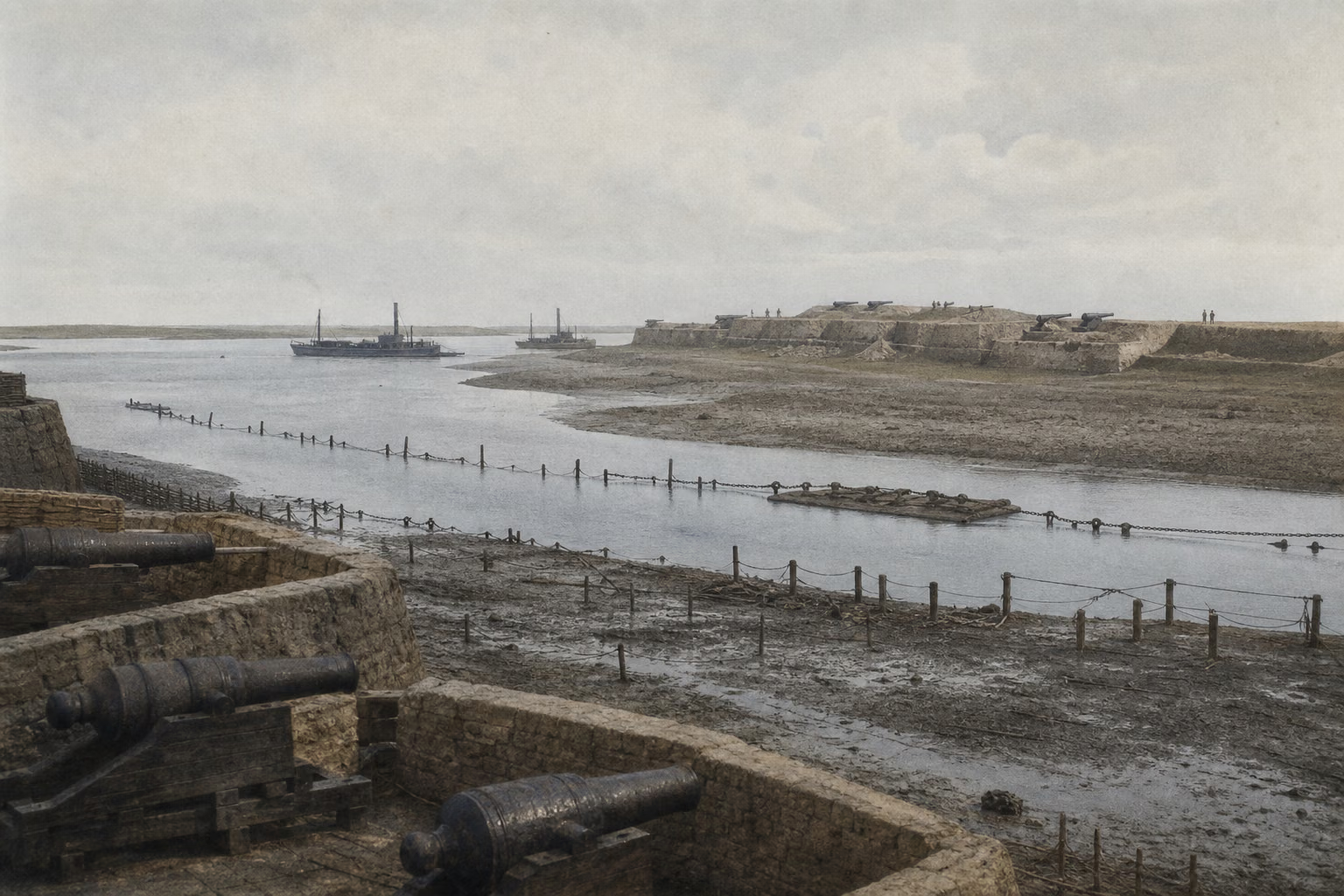
- The river mouth was a narrow tidal channel: bar sandbars lay outside, the channel had limited depth, and gunboats grounded if their draft was even slightly too deep; at low tide the mudflats on both banks were exposed, and a landing man could sink to the knee with one step.
- The obstacles in the river were the protagonists of the space: iron chevaux-de-frise, chains, and wooden rafts locked the channel in layers (names and number of layers unverified), pinning enemy vessels inside the forts' field of fire. Half of the 1859 victory was made by gunfire, and half by obstacles and tide.
- The forts were built on both north and south banks and held the river between them: a typical fortress space "invincible in front, naked at the flank and rear." In 1860, the allied forces landed at Beitang and moved overland; all the depth on the front became useless.
- Beitang: another river mouth north of Taku. In 1859 it was the "peace entrance" designated by the Qing court; in 1860 it was the "undefended back door" chosen by the allied forces. The same place, two identities.
How Each Side Records It
- British side: in English military history the three battles are the First, Second, and Third Battles of the Taku Forts. The 1859 defeat shook London; newspapers described it as a "national humiliation," and "revenge must be taken" became the overwhelming public mood (representative newspaper comments unverified). The navy conducted an internal review of Hope's decision to force the entrance (review documents unverified). The 1860 narrative was written as "avenging humiliation and enforcing the treaty," and the name of the Baihe mouth, Peiho, entered the English public view through war reports.
- French side: French ships participated throughout in 1858; in 1859 they were present but did not undertake the main attack, and French accounts basically recorded that defeat as "British rashness" (French archival bases vary by account); in 1860 several thousand French troops landed with the British from Beitang, and Montauban's force took part in the Tanggu and Taku operations. French campaign memoirs include accounts of the march across the Beitang mudflats and the assault on the north-bank forts (specific titles unverified).
- Chinese side: the great victory of 1859 was the confidence behind Xianfeng's refusal of the ratification-exchange route, and also the source of the later war-party misjudgment. The center used it to reestimate the balance of Chinese and foreign military power, and that reestimation was wrong. Later Chinese narratives set this battle apart as the only victory in a chain of routs; the name "Taku Mouth Victory" came from this. Leshan, meanwhile, was written into the sequence of loyal martyrs.
Disputes and Sensitivities
- Who opened fire first in 1859: the British said Qing forces fired on their work to remove obstacles; the Chinese said British forces forced the pass first. The factual chain of "forced entry" and "first firing" has self-serving versions on both sides, and the original communications and battle reports remain to be checked. This issue affects the characterization of "legitimate defense" and "provocation."
- Why Beitang was undefended: Sengge Rinchen's supposed plan to "lure the enemy ashore and annihilate them with cavalry" coexists with the explanation of a "mistake in judgment"; there is still no settled conclusion (memorials and Grand Council archives unverified). This is not a dispute over detail, but a dispute over how to characterize Sengge Rinchen himself.
- American neutrality: Tattnall's intervention violated the United States' neutral position at the time, yet in the United States it was passed down as an admirable story. The phrase "blood is thicker than water" became an early allusion for the special Anglo-American relationship, while in Chinese and American-Chinese narratives it became a footnote to "the powers are in fact one group." One event, two directions of memory.
- The weight of the "great victory": whether 1859 was a tactical victory or a strategic disaster depends on which later year one looks back from. This article takes the latter factual chain (victory -> refusal of ratification -> retaliation -> fall of Beijing), but the former should remain in the narrative as the genuine feeling of people at the time.
Sources and Open Questions
Known main sources:
- Chouban yiwu shimo: Xianfeng reign (Chinese archival compilation; main source for memorials and court deliberations on the three battles)
- Mao Haijian, The Doomed Emperor: Xianfeng Emperor Yizhu (central decision-making and the 1859 turn toward war)
- Hope's fleet reports and British parliamentary papers (the British basis of counting for the 1859 defeat)
- Several British and French campaign memoirs (the 1860 Beitang landing and assault on the forts; specific titles unverified)
- U.S. records related to Tattnall (tracing the source of "blood is thicker than water")
Open questions: the course of Tan Tingxiang's flight and the wording of his memorial report; the names, number of layers, and layout of the iron river barriers, chains, and wooden rafts; the number of vessels in the 1859 British formation and the number sunk or damaged; the breakdown basis for the more than four hundred allied casualties in 1859 (British / Qing / later research); Hope's wound; the source and on-the-spot occasion of Tattnall's "blood is thicker than water," and the degree of the Toey-Wan's intervention; the exact date and duration of the first battle in 1858; the 1860 British and French strength figures (more than ten thousand and several thousand); the exact dates of the Beitang landing, Tanggu, and the fall of the north-bank forts; the circumstances of Leshan's death, his banner affiliation, and the name of the fort he defended; the decision sequence behind Beitang's abandonment (luring-the-enemy theory vs. error theory); the 1860 allied casualty basis; the source for the figure of 2,000 north-bank fort defenders killed; the circumstances of civilian looting in Beitang and Tanggu; the clauses and sequence for the demolition of the Taku forts under treaty; the French archival basis for "present but not the main attackers" in 1859; the British internal review documents on Hope; details of the disguised gun positions in 1859; the original wording and issuance sequence of the 1859 edict "do not open hostilities first; wait until the enemy enters, then strike"; detailed costs of rebuilding the Taku forts; Hengfu's 1860 pro-negotiation memorials and correspondence with the allied forces; the 1860 allied war-expense parliamentary cases and overseas logistics details; records of the Qing court's estimate of the 1860 allied forces' logistical endurance.
All images on this site are AI-generated depictions. They are not historical photographs, not primary sources, and do not depict any real individual.