Engagement Archive · Fighting in Taiwan and Penghu (Keelung, Tamsui, Penghu)
The French Far East Squadron wanted to use Taiwan as a bargaining counter in the peace talks: first attacking Keelung, then advancing on Tamsui, and later occupying Penghu, dragging the war on for ten months. At Tamsui it was driven back into the sea; at Keelung it held the town but never broke out of it; in the end, its commander Courbet died of illness in Penghu, the place he himself had occupied.
Engagement Data
| Item | Details |
|---|---|
| Time | 1884.8 – 1885.6 (ceasefire 1885.4.4; the French withdrawal from Penghu came later, dates vary by account) |
| Place | The Keelung-Tamsui (Huwei) line in northern Taiwan; Magong in Penghu (then written 妈宫, now 马公) |
| Belongs To | Sino-French War · Taiwan Strait Theater (called the "Franco-Chinese War" or "Sai-a Huan" in Taiwan) |
| Defenders | Qing forces defending Taiwan: overall direction by Liu Mingchuan, Minister Charged with Taiwan Affairs; the northern front under units including Sun Kaihua (brigadier-general of Zhangzhou), Cao Zhizhong, and Zhang Gaoyuan, together with local volunteers and militia; Liu Ao, Taiwan Circuit Intendant in the south, did not directly take part in the fighting |
| Attackers | French Far East Squadron (commanded by Amédée Courbet); the early attack on Keelung was directed by deputy commander Lespès; landing operations were carried out by naval infantry |
| Result | French forces occupied Keelung and Penghu, but never crossed the Keelung River into the Taipei plain; the landing at Tamsui was repulsed; after the ceasefire in 1885.4 and the Treaty of Tientsin ending the Sino-French War in June, French forces withdrew |
Belligerents
| Item | Defenders | Attackers |
|---|---|---|
| Strength | The Huai Army troops and old Ming Army units Liu Mingchuan brought across to Taiwan were few in number; Taiwan's defenders as a whole numbered roughly around twenty thousand, including local volunteers and militia, though the counting basis varied (figure disputed); those directly engaged in the northern theater numbered somewhat over ten thousand | Several dozen ships of the Far East Squadron; the garrison landed at Keelung had grown to about four thousand by early 1885; the Tamsui landing force numbered about six hundred; the Penghu operation used eight ships |
| At Sea | No ships to oppose them: the Fujian Fleet was destroyed in the Battle of Fuzhou (Majiang) on 1884.8.23, leaving control of the Taiwan Strait entirely to the French | The Far East Squadron, formed around ironclads and cruisers, held an overwhelming naval-gun advantage over shore batteries |
| Land Firepower | Most old-style batteries were destroyed by naval gunfire (the Keelung batteries were destroyed on the first day of battle); on land the defenders relied on rifles, jingal guns, and fieldworks | The naval infantry carried breech-loading rifles and were accompanied by mountain guns; most of the troops were naval infantry, and land warfare was not their strength |
| Supply | After the blockade, aid from the mainland could only be smuggled through; grain, pay, and munitions arrived intermittently | Movement by sea was free, but the men were long stationed in damp camps, and losses to disease far exceeded combat losses |
Terrain and Conditions
(For the larger situation of the 1880s: France's designs on Vietnam, the Qing court's overstretched position, and the battle on the Mawei river that settled command of the Taiwan Strait, see "Sino-French War · Overview.")
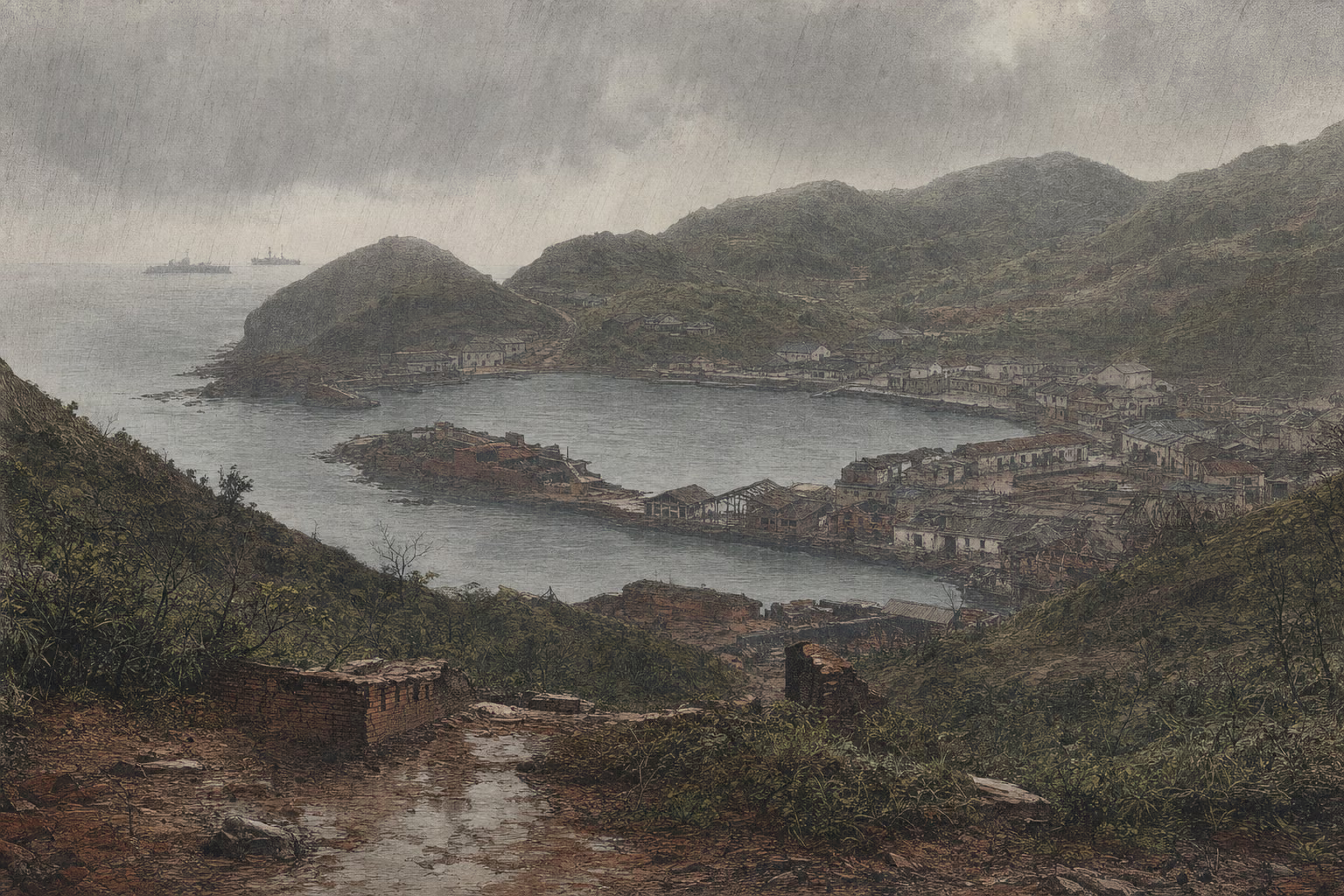
Taiwan: an island battlefield across a strait. In 1884 Taiwan was still part of Fujian Province; provincial status came only after this battle (1885.10, unverified). Once the Fujian Fleet was gone after the battle at Majiang, only a strait watched by French warships remained between Taiwan and the mainland. Defending Taiwan meant defending an island from the beginning.
Coal and ports in northern Taiwan. Keelung had coal mines, then one of the few sources of steamship fuel in the Far East, and the first layer of French motive in attacking Keelung was coal. Tamsui (Huwei) was the port gateway to Taipei; by going upriver on the Tamsui River one could reach Bangka and Dadaocheng. Neither place was large, but one was tied to fuel and the other to the provincial seat. The French choice was plain.
The people on the island. Northern Taiwan's mountains were full of miasmatic rain, and winter rain was continuous; fieldworks sat in water. The island's manpower was supplemented by locally recruited volunteers and militia, who knew the ground and could endure miasma and disease. This was one of the few cards in the defenders' hand.
Why It Was Fought
The previous article, "Land Battles in Northern Vietnam," ended with successive Qing defeats at Son Tay and Bac Ninh. The Qing court replaced the entire Grand Council and, through Li Hongzhang at Tianjin, signed the Li-Fournier Accord, agreeing to withdraw Qing forces from Tonkin. The war should have stopped there. But the two sides read the withdrawal deadline differently; after the clash at Guanyinqiao (Bac Le) in June 1884, the settlement collapsed. France demanded a large indemnity, the Qing court refused to pay, and in the Shanghai negotiations the opening for indemnity was never conceded (negotiation details unverified). Paris therefore decided to take a "guarantee": occupy a place the Qing court cared about, and force the other side back to the negotiating table.
Why Taiwan? Keelung had coal mines, then one of the few sources of steamship fuel in the Far East. The squadron needed it for itself, and taking it also meant choking off another side's supply. Beyond Keelung harbor, the Tamsui River led upriver to Bangka and Dadaocheng, pointing directly at Taipei Prefecture. A coal port and a waterway into the prefectural seat: the place was not large, but its weight was just enough for a pledge. Courbet's original plan was far larger: take the squadron north, strike straight into the Bohai, and threaten Beijing and Tianjin. The French government rejected it and ordered him to take Taiwan where he stood (decision details unverified). Paris wanted collateral, not a second theater.
On the Qing side, Liu Mingchuan had just crossed to Taiwan in July to direct military affairs (date of arrival in Taiwan varies by account). His troops were few and his officers old; the island's defenders numbered roughly around twenty thousand (counting basis varied, figure disputed), and the Fujian Fleet had its own troubles. From the beginning, the problem before him was this: if Keelung and Taipei could not both be held at once, which one should be kept?
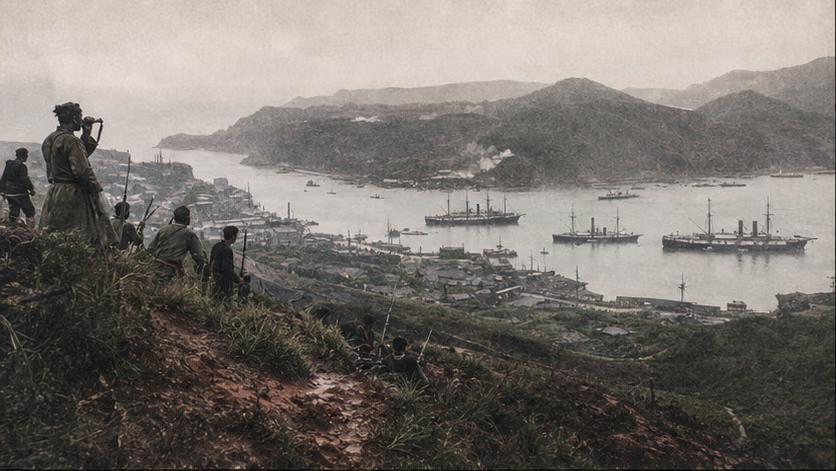
On August 4, Lespès arrived off Keelung with three ships and demanded territory, without success. The next day he destroyed the Keelung batteries by gunfire; the naval infantry landed, but Cao Zhizhong, Zhang Gaoyuan, and other units drove them back. The first battle in the Taiwan Strait theater was a defender's victory. Misjudgment occurred on both sides at once. The French assumed that once the batteries were destroyed and the naval infantry had landed, the result would be settled, and even after the setback they did not change that estimate. On the Qing side, some believed this setback would be enough to make the French retreat before difficulty. On August 23, the Fujian Fleet was destroyed at Majiang, and there was no longer any restraint at sea. At the end of September, the French divided their forces and advanced again: Courbet took Keelung himself, while Lespès attacked Tamsui. This time Liu Mingchuan abandoned Keelung and pulled his troops back toward Taipei and Tamsui. The court had ordered that no ground be abandoned; he abandoned it anyway.
When news of the defeat at Mawei reached Beijing, the court issued an edict breaking off peace with France and committing fully to war, while the southeastern provincial authorities prepared defenses under imperial order (wording and date of the pro-war edict unverified). The instructions Paris gave Courbet, by contrast, kept the war tightly bounded: take a guarantee, do not expand, and do not add army troops (authorization time and content of the instructions unverified). The material limits on both sides were fixed from that point. Taiwan was defended as an island: troops, roughly around twenty thousand across Taiwan, were mostly old units and local volunteers; reinforcements from the mainland could only slip through the blockade one ship at a time. Pay had previously depended on support from Fujian, but now had to be raised through Nanyang and the Guangdong Maritime Customs; the arms and ammunition Liu Mingchuan brought with him to Taiwan were only enough for a short time (details of the arms brought to Taiwan unverified). Every gun or cannon broken was one fewer. The attacker's objective was collateral: Courbet never had more than the squadron and several thousand naval infantry. Keelung could be taken; Taipei could not be swallowed. Disease lay beyond the line as well: in Keelung's rainy season, far more occupation troops fell ill than were hit by bullets. There were indeed objections on the surface, and from his own side. The court repeatedly ordered Keelung recovered, while Liu Ao, the Taiwan Circuit Intendant stationed in Tainan, submitted memorial after memorial impeaching Liu Mingchuan, accusing him of abandoning territory and favoring the northern route (texts of Liu Ao's impeachment memorials and the edicts ordering Keelung recovered unverified). The objections did not shake the deployment. It was not that right and wrong could not be argued out; it was that the far side of the strait could not send a single soldier or ship. Contracting the line to hold Taipei was the only workable path at the time.
Could the fighting have been avoided? The guarantee scheme itself was France's substitute for an indemnity it could not obtain. When the indemnity could not be negotiated, the pledge appeared. In the end the pledge was occupied for ten months, not one coin of indemnity was obtained, and the negotiations were still settled around Vietnam. That came later.
Course of the Engagement
① Keelung (1884.8 – 1885.3)
| Phase | Time | Key Points |
|---|---|---|
| First attack repulsed | 1884.8.4–8.6 | Lespès led three ships to the waters off Keelung and demanded territory, without success; on 8.5 he destroyed the Keelung batteries by gunfire. The naval infantry landed, but Cao Zhizhong, Zhang Gaoyuan, and other units counterattacked, and the French withdrew to their ships. The first battle in the Taiwan Strait theater was a defender's victory |
| After Majiang | From 8.23 | The Fujian Fleet was destroyed; Liu Mingchuan ordered the Keelung coal-mining machinery destroyed and coal sunk into the shafts (execution details unverified), leaving the French no fuel |
| Renewed attack and abandonment | 9.30–10.3 | Courbet personally attacked Keelung, while Lespès attacked Tamsui in a divided operation; Liu Mingchuan judged that the two places could not both be covered, abandoned Keelung, and contracted his forces to hold Taipei and Tamsui. On 10.1 French troops landed around Xiandong; around 10.3 they occupied Keelung (10.1 and 10.3 both appear in accounts as dates of occupation, unverified) |
| Fighting around the perimeter | 1884.11–1885.3 | French forces were pinned in Keelung, while Qing forces held the heights along the Yuemeishan-Niaozuifeng line and besieged them: the Battle of Niaozuifeng in 1884.11; the first fighting for Yuemeishan from 1885.1.25; on 1.31–2.1 a Qing night attack on the new French position was repulsed (French account, details unverified) |
| French breakthrough | 1885.3.4–3.7 | French troops stormed Yuemeishan and seized the table-shaped height (called La Table by the French); on 3.7 Qing forces withdrew to the Nuannuan line south of the Keelung River. Heavy rain and inadequate ammunition also left the French unable to cross the river. The line froze there until the ceasefire |
② Tamsui (Huwei) (1884.10.2 – 10.8)
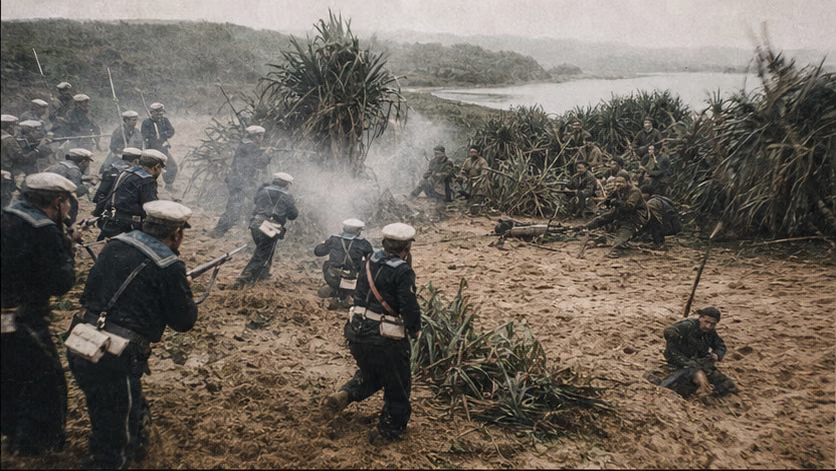
Lespès led his ships to the waters off Tamsui on 10.1–2. He first bombarded the port batteries, and had originally planned a general attack on 10.5, but wind and waves delayed it. On the morning of 10.8, roughly six hundred naval infantry landed. Sun Kaihua's Zhuosheng Battalion formed the main Qing force, joined by Zhang Gaoyuan's units and local volunteers. They lay in ambush behind screw-pine and grassland terrain around Youchekou and Shalun (specific deployments vary by account, unverified), waited until the French closed to short range, and rose to strike from several sides. The French naval infantry formation was cut apart and retreated back by boat to the ships. The French figures: 17 killed and 49 wounded; the results claimed in Chinese battle reports were far higher (specific figures unverified). French troops never again landed at Tamsui. This was a rare clear defeat for a French landing operation in China, remembered in Taiwan as the "Huwei Victory."
③ Blockade and Relief (1884.10 – 1885.4)
On 1884.10.20 Courbet announced a blockade of Taiwan's west coast (effective on 10.23, unverified), severing sea transport between the mainland and Taiwan. During the blockade, the defending army's grain, ammunition, and pay all depended on smuggling: civilian boats crossed the Taiwan Strait by night, while Nanyang and the Guangdong Maritime Customs sought supplies through multiple channels (accounts commonly mention Nie Shicheng leading troops across to reinforce Taiwan, but the route and date of arrival in Taiwan vary by account). The blockade also took effect against civilian life on the island: rice prices soared and fishermen's livelihoods were cut off. ※ Civilians' accounts have no headcount, only prices and displacement.
④ Penghu (1885.3.29 – 6)
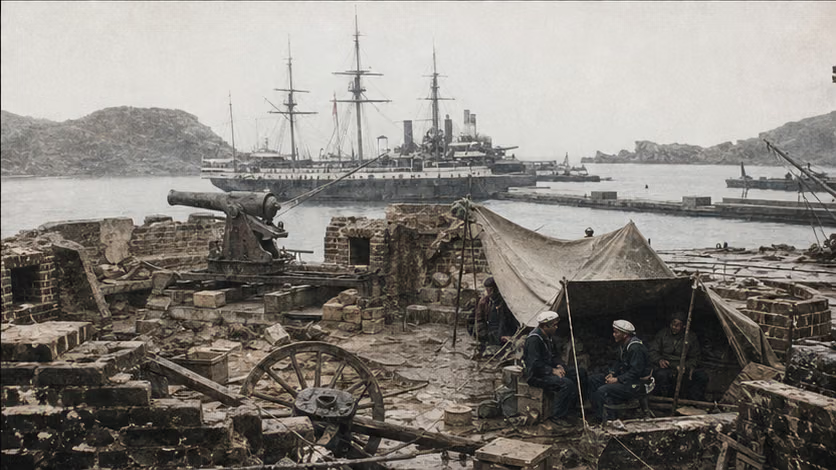
With the Keelung line frozen and Taiwan unable to produce the "victory" required for negotiations, Courbet turned to take Penghu under government orders. On 3.29 he led eight ships in shelling the Magong batteries, and on 3.29–31 occupied the Penghu Islands over three days (3.31 and 4.1 both appear as the date occupation was completed). On 4.4 Qing and France entered a ceasefire; on 6.9 the Treaty of Tientsin ending the Sino-French War was signed. During the occupation, disease spread among the French forces. Courbet himself contracted dysentery and suffered worsening anemia, and on the morning of 6.11 died of illness aboard his flagship Bayard. Its anchorage was the harbor at Magong in Penghu, the place he had occupied. French forces later withdrew from Penghu according to the treaty (withdrawal dates vary by account).
Casualties and Losses
- Defenders: There is no reliable combined total for Qing casualties along the Keelung-Tamsui line; losses were especially heavy in the seesaw fighting around Yuemeishan (itemized figures vary by account, disputed). French accounts record nearly two hundred Qing bodies left after the night attack of 1.31–2.1 (attested in one source only, unverified).
- Attackers: For the Tamsui landing, the French themselves acknowledged 17 killed and 49 wounded. For the Yuemeishan breakthrough on 1885.3.4–7, French accounts record 42 killed and 121 wounded (French counting basis, from the systematic materials in E. Garnot's L'Expédition française de Formose). Chinese battle reports, by contrast, claimed that the French forces invading Taiwan lost more than a thousand killed across the campaign (Chinese counting basis, source unverified). The two sets of figures coexist.
- Disease: French deaths from disease during the occupation of Keelung and Penghu were several times combat losses, and included the squadron commander Courbet himself; specific disease-death figures unverified.
- Civilians: Residents fled before the fighting began at Keelung, and mining machinery was destroyed; during the blockade, rice became expensive across Taiwan and fishing was cut off. There are no statistics.
Aftermath
- Taiwan becomes a province: After the war, the Qing court sharply felt the danger of Taiwan's isolated position. In October 1885 it issued an edict making Taiwan a province (month unverified), with Liu Mingchuan as the first governor of Taiwan. Taking northern Taiwan as his center of gravity, he built roads, laid defenses, and opened mines. This battle directly rewrote Taiwan's administrative status.
- At the negotiating table: French forces occupied Keelung and Penghu, but failed to obtain any result that could alter the outcome of the negotiations. The treaty still settled the matter around Vietnam, and Taiwan did not lose a mine or a port.
- French forces withdrew from Keelung and Penghu; Courbet's remains were carried back to France (burial details unverified).
- In Taiwan's popular memory, the battle remains in place names and temple rites: the Tamsui "Huwei Victory" commemorations, the old forts of Keelung, and Cili's late Dragon Boat Festival for Sun Kaihua on the fifteenth day of the fifth lunar month (folk-custom details unverified).
Accounts of Those Present
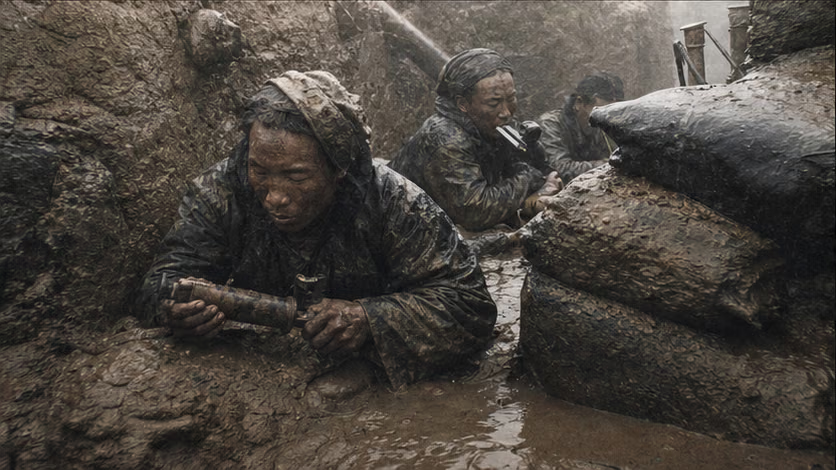
- Liu Mingchuan's choice: Once the Keelung batteries were destroyed, he dismantled the coal-mine machinery, sank the coal, and abandoned the town to preserve Taipei. The court had ordered that no ground be abandoned; he abandoned it anyway. That move later became an opening for his political enemies in the "dispute between the two Lius," and also the basis on which historians defended him.
- Sun Kaihua: Brigadier-general of Zhangzhou, from Cili in Hunan, he used the Zhuosheng Battalion as the main force defending Huwei. On 10.8, when he ambushed the French landing force from behind screw-pine trees, it was his hardest day in Taiwan. His home county of Cili later delayed the Dragon Boat Festival by ten days, observing it on the fifteenth day of the fifth lunar month; legend says this was to commemorate his death for the country (his year and cause of death have other accounts, unverified).
- Rain and mud: French accounts record that in February 1885 Keelung saw month after month of overcast rain. Trenches filled with water, soldiers lay in mud a foot deep, and uniforms were so dirty their colors could no longer be distinguished (E. Garnot's systematic materials, translation unverified). The besiegers and the defenders soaked in the same rain.
- Courbet's death: The commander of the expeditionary squadron died after the ceasefire and before the withdrawal, at the anchorage in Magong harbor, the last place he had occupied. The disease explanation, centered on dysentery and anemia, is the main account; an older Chinese account links his death to a gunshot wound at Zhenhai. The two accounts are handled side by side under "Battle of Zhenhai (1885)"; see also there.
- Local volunteers: In the Battle of Tamsui and the seesaw fighting at Yuemeishan, locally recruited volunteers and militia knew the ground and fought at close quarters. They are a part of the defenders' results often passed over in a single stroke by official histories (name lists unverified).
The Ground
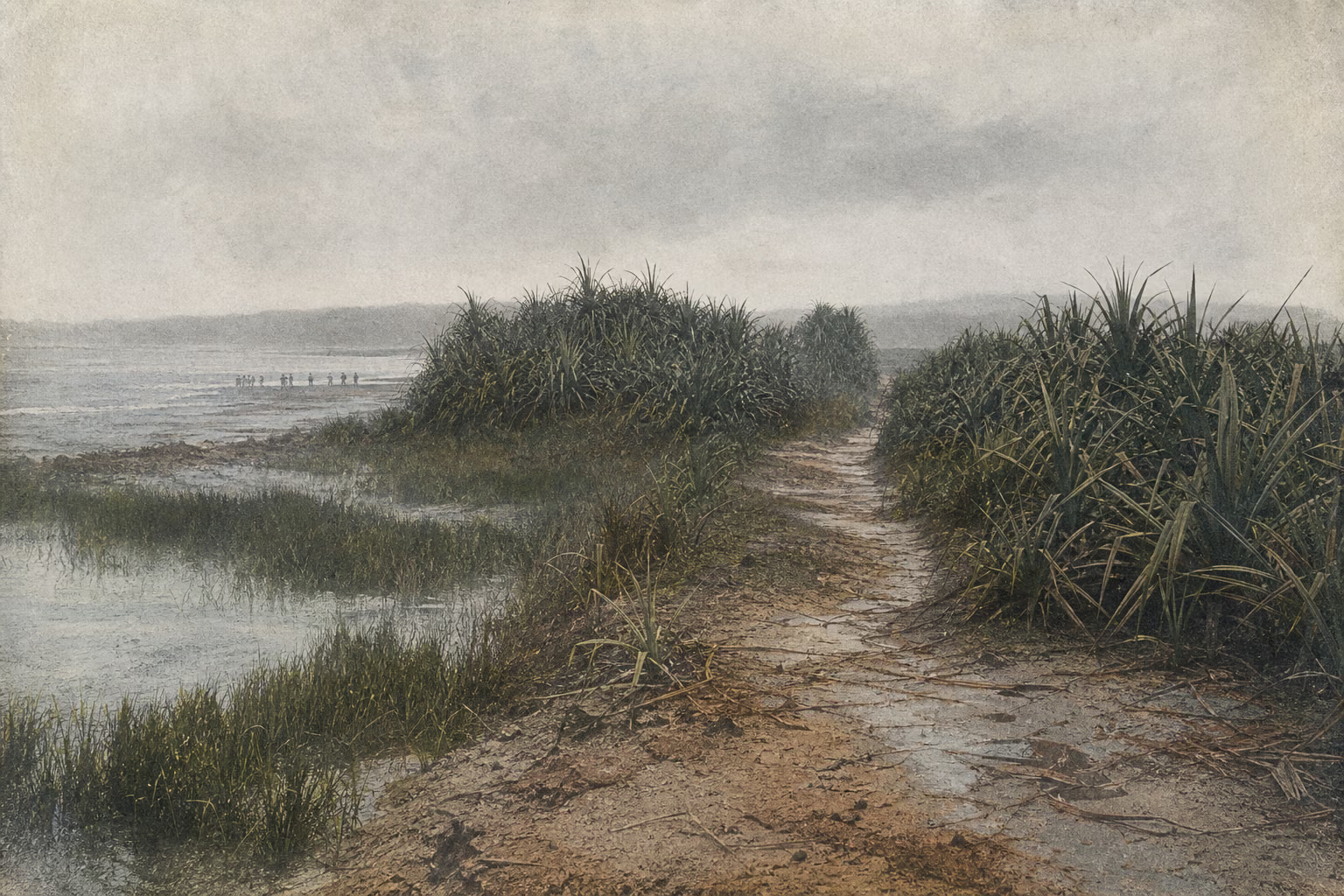
- Keelung Harbor: A deep-water port held tight by heights, with Shiqiuling, Xiandong, Yuemeishan, and a ring of hills overlooking the harbor district. The town was lost, but the heights remained in defender hands; entering the town meant entering a basin for the French.
- Tamsui River mouth: Around Youchekou and Shalun, screw-pine thickets and grassy pools formed a natural depth for ambush. From the beachhead inland, the landing force had only a few channels, and the defenders waited on both sides of them.
- The Yuemeishan line: The spatial units of the seesaw battle were hilltops and ridgelines, on a scale of several hundred meters. In the rainy and foggy season, visibility was extremely poor, and night attacks were routine.
- Taiwan Strait: The blockade line cut the battlefield in two. On the island, the war was fought with the stock already present; on the strait, it was fought through civilian boats crossing by night.
- Penghu Magong: A frontal contest between shore batteries and naval guns, decided in three days. Afterward it was a port city occupied at once by the occupation army and by disease.
How Each Side Records It
- Chinese side: Tamsui is called the "Huwei Victory," placed alongside Zhennan Pass as one of the Qing court's only two victories in the Sino-French War that could be spoken of loudly. The abandonment of Keelung long remained Liu Mingchuan's point of controversy, not his point of shame.
- French side: Expeditionary accounts, including Garnot's, present the Taiwan fighting as a war of attrition held down by weather, terrain, and disease. In French narratives, the defeat at Tamsui is usually attributed to insufficient naval-infantry strength and unfamiliar terrain (original text unverified).
- Taiwan: Popular memory calls it "Sai-a Huan," and rests in concrete places such as Tamsui temple festivals, Keelung's old batteries, and Courbet's grave in Penghu (the grave site has since been moved; details unverified).
Disputes and Sensitivities
- Abandoning Keelung: Liu Mingchuan abandoned Keelung in October to preserve Taipei, and was impeached for it at the time. Two accounts coexist: one sees it as the correct tradeoff under inadequate manpower, preserving the provincial seat and pinning the French in the port city; the other sees it as fear before battle, losing territory and dishonoring the command.
- The dispute between the two Lius: The political struggle between Minister Charged with Taiwan Affairs Liu Mingchuan and Taiwan Circuit Intendant Liu Ao, stationed in Tainan, ran through the entire war. Liu Ao accused Liu Mingchuan of abandoning Keelung and favoring the northern route, and the two accused each other at court. After the war Liu Ao was impeached and dismissed (course and characterization unverified). Faction and region, Huai clique versus Xiang clique and northern route versus southern route, were entangled in it.
- The substance of the "Huwei Victory": The French landing force numbered only about six hundred and was naval infantry; the "great" in "great victory" is relative to the defeat across the war as a whole.
- Courbet's cause of death: The disease explanation is mainstream; the gunshot-wound explanation is an older Chinese account. See "Battle of Zhenhai (1885)."
- Qing and French casualty figures differ greatly, with a wide gap between the two sides' numbers.
Sources and Open Questions
Known main materials:
- E. Garnot, L'Expédition française de Formose (French expeditionary account, translated into Chinese)
- Liu Mingchuan's memorial drafts and Liu Zhuangsu Gong Zouyi (first-hand documents from the defending commander)
- Taiwan's National Cultural Memory Bank entries on the Franco-Chinese War (image files for the Keelung, Tamsui, and Penghu engagements)
- Tables on the Franco-Chinese War in Taiwan in the Chinese Culture University research collection (French action chronology, in a paper hosted at pccu.edu.tw)
Open questions: the original sources for the two dates of Keelung's fall, 10.1 and 10.3; the varying accounts of Qing deployments at Tamsui and the Chinese figures for results; the effective date of the French blockade proclamation against Taiwan (10.20/10.23); Nie Shicheng's route to Taiwan and date of arrival; the single-source claim about Qing bodies left after the night attack of 1.31–2.1; the statistical boundaries of the two sets of French casualty figures at Yuemeishan on 3.4–7 (42/121 and 22/71); the completion date of the Penghu occupation (3.31/4.1) and the date of French withdrawal; the month of the edict making Taiwan a province; Liu Mingchuan's date of arrival in Taiwan; the original memorials in which the two Lius impeached each other; Courbet's reburial and the history of his Penghu grave site; Sun Kaihua's year and cause of death and the source for the Cili late Dragon Boat Festival custom; the counting basis for total defending strength across Taiwan; the wording and date of the post-Mawei pro-war edict against France; the authorization time and content of Paris's instructions to Courbet; details of the arms and ammunition Liu Mingchuan brought with him to Taiwan; the original text of Liu Ao's impeachment memorials and the court edicts ordering Keelung recovered.
All images on this site are AI-generated depictions. They are not historical photographs, not primary sources, and do not depict any real individual.