Engagement Archive · Battle of Fuzhou (Majiang)
For more than a month, two fleets lay in the same harbor, moored face to face; on the afternoon of August 23, 1884, as the ebb tide turned, the French ships opened fire first, and within half an hour nine of the Fujian Fleet's eleven vessels had been sunk or destroyed -- more than ten years of Fujian Shipyard's shipbuilding capital was lost in a single battle inside its own harbor.
Engagement Data
| Item | Details |
|---|---|
| Time | 1884.8.23 (third day of the seventh month, Guangxu tenth year), afternoon; the naval battle itself lasted about half an hour. In the following days French ships continued shelling, then put to sea by the end of the month |
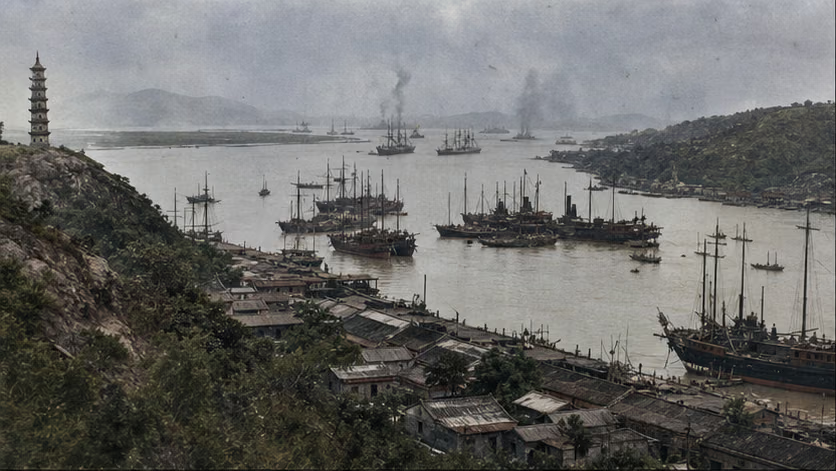
| Place | Mawei harbor, Fuzhou, Fujian (the Majiang section of the Min River, near Luoxing Pagoda) |
| Belongs to | Sino-French War (for the wider situation, see *Sino-French War: Overview*) |
| Fujian Fleet | Zhang Peilun, minister-associate for Fujian maritime-frontier affairs, He Ruzhang, minister of the Shipyard, and others presided in harbor; flagship Yangwu; eleven ships in all |
| French Far East Squadron | Commander Courbet (Amédée Courbet, vice admiral); about eight or nine ships lay inside the harbor, with additional forces holding the mouth of the Min River (ship count disputed) |
| Result | The Fujian Fleet was almost annihilated; the Mawei Shipyard and batteries along the river were shelled and destroyed; the French squadron put to sea intact |
Belligerents
| Item | Fujian Fleet | French Far East Squadron |
|---|---|---|
| Ships | Eleven ships: Yangwu (flagship), Fuxing, Zhenwei, Feiyun, Ji'an, Fusheng, Jiansheng, Fubo, Yixin, Yongbao, Chenhang (full ship-by-ship roster and attributes await verification); most were wooden warships built by the Shipyard itself and were small in tonnage | Eight or nine cruisers, gunboats, and torpedo boats in harbor, including ironclads (ship count and ship names await item-by-item verification); overall tonnage and number of guns were both superior |
| Artillery | Small calibers, mainly old-style recoil-carriage guns; weak in rate of fire and armor penetration | New breech-loading guns, machine guns, spar-torpedo boats; dense rapid-fire capability |
| Position | Moored upstream; at ebb tide their sterns faced the enemy, and they were hit before they could weigh anchor and turn | Moored downstream; tide level and firing ranges had been measured in advance, and when the ebb tide turned the hulls by themselves, the ships formed a broadside position |
| Readiness | Under orders that "if they do not move, we do not fire"; they could not act first, and no preparations such as dispersal, shifting anchorage, or mining were made (original order text and chain of responsibility await verification) | Observed in the same harbor for more than a month, with hydrology, tide times, and each ship's anchorage fully in hand; the French side chose the moment of battle |
Terrain and Conditions
(For the wider situation of 1884 -- France's designs on Tonkin in northern Vietnam, the Qing court's indecision between war and peace, and the opening bombardment at Keelung -- see *Sino-French War: Overview*.)
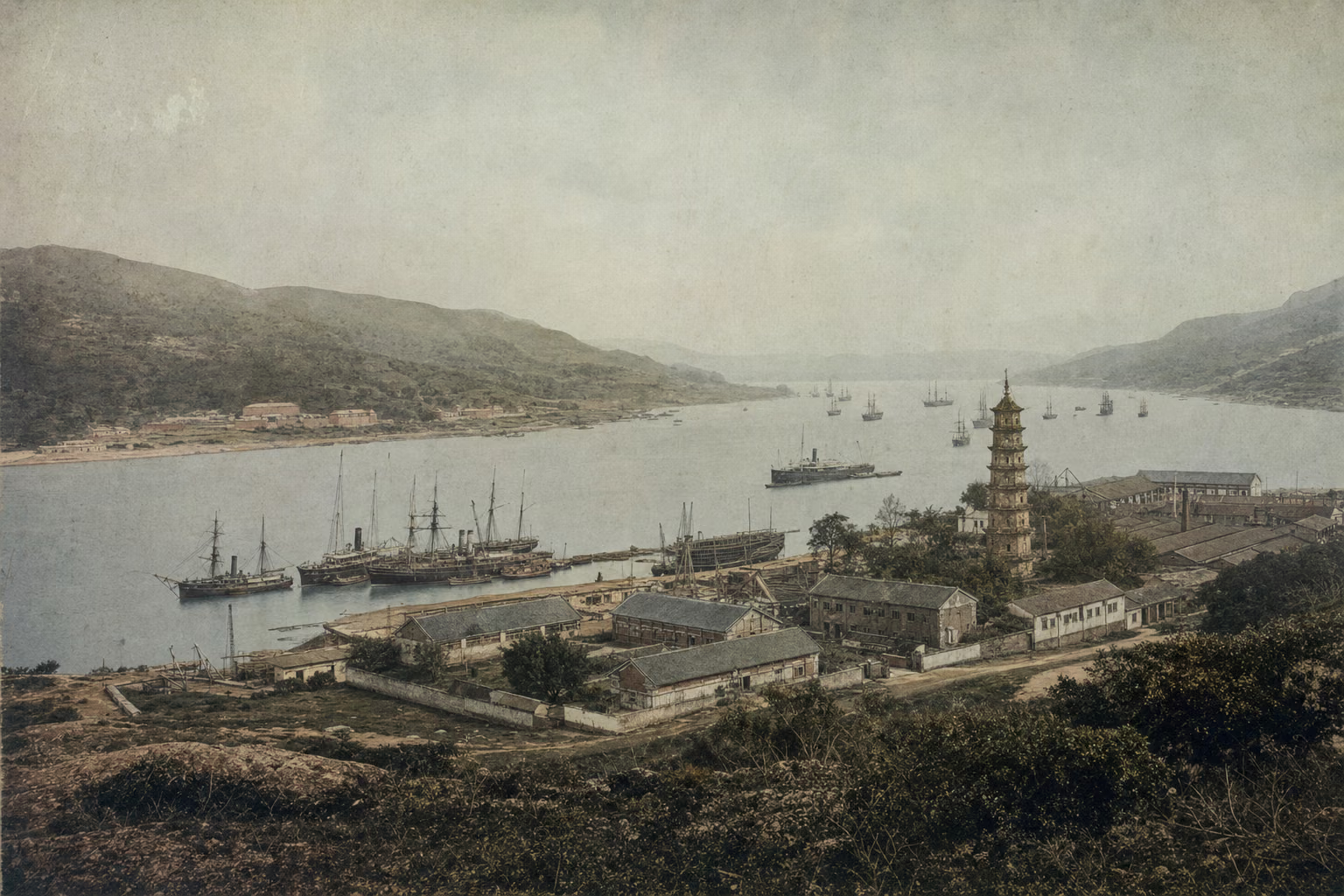
Mawei: a deep-water reach of the lower Min River, several tens of li from the river mouth, with Luoxing Pagoda standing by the river. This was no ordinary naval harbor: the Fujian Shipyard was located here, the labor of Zuo Zongtang, Shen Baozhen, and a generation of Self-Strengthening officials -- a shipyard, a naval school, and a fleet they had built themselves. Over more than ten years the Shipyard had built several dozen vessels (ship count disputed), and the school had trained China's first self-taught naval officers and craftsmen. What lay moored on the waters of Majiang was the entire estate of China's modern naval education.
Same harbor: from mid-July 1884, Courbet led his ships by force into Majiang and moored in the same harbor as the Fujian Fleet, at the closest point only several hundred meters away (distance in the records awaits verification). It was called a "tour," but in substance it was close-range surveillance. The batteries on both banks, the shipyard, and the fleet all lay under French guns -- a guest ship had moved into the master's courtyard, and the instruction given to the master was not to move first.
Why It Was Fought
The first battle of the preceding article, *Fighting in Taiwan and Penghu* -- from August 4 to 6, Lespes failed to extort territory at Keelung, shelled the batteries, and sent marines ashore only to have them driven back -- meant that the French army's "security" met resistance as soon as it was opened. Indemnity negotiations were still dragging on in Shanghai, and the Qing court still had not opened the door to payment. The breakdown of negotiations would not come openly to the table until late August, but one thing had happened a month before that breakdown: in mid-July, Courbet led his ships by force into Majiang and moored in the courtyard of the Fujian Fleet, at the closest point only several hundred meters away (distance in the records awaits verification). In other words, by the time the peace talks truly collapsed and gunfire again sounded at Keelung, the French ships had already been living in the Min River for more than a month. The time difference of the Battle of Fuzhou lies here: the fleet did not arrive after negotiations broke down; the fleet first moved in, and only then did negotiations break down.
Why Mawei in particular? The Fujian Shipyard was here: the labor of Zuo Zongtang, Shen Baozhen, and a generation of Self-Strengthening officials, with a shipyard, a naval school, and a fleet they had built themselves (see Terrain and Conditions). To knock out Mawei was to knock out the parent body of the Qing dynasty's self-built navy; to destroy this fleet at the same time was to leave the Taiwan Strait with no ships that could reinforce Taiwan.
The authority to decide war or peace was never in Mawei. In Beijing, the censors favored war, Li Hongzhang, who handled negotiations, favored peace, and the Grand Council wavered for the entire summer. The only basis it could give the front was "provocation must not begin from our side." Military authority in Fuzhou was divided into five heads: the governor-general, the general, the governor, the minister of the Shipyard, and Zhang Peilun, minister-associate for the maritime frontier, each acting in his own way (details of the division of responsibilities await verification). Zhang Peilun came to the front with a reputation as a Qingliu war advocate. Once there, what he took over was an order forbidding the first shot: the reputation for wanting war and the command not to move pressed down on the same man. More importantly, there was an intelligence blind spot: Courbet had already received authorization from his own country to open war as he saw fit and had chosen the ebb tide as the moment, while Mawei knew nothing in advance. When the notice of war reached He Ruzhang's desk on the morning of the battle, only a few hours remained before the ebb tide (the sequence of delivery of the notice and his handling of it await verification).
The Qing response was three noes: do not expel them, do not move first, and do not leave. Zhang Peilun and He Ruzhang repeatedly telegraphed for instructions, and the reply was: "if they do not move, we do not fire" (original instruction, telegrams exchanged, and chain of responsibility await verification). Specific military orders are also said to have included the words: "without an edict, do not open fire first; wait until the enemy ships fire, and only then may you return fire; those who disobey shall be executed even if they win" (this wording circulated very widely; source unverified). Military orders are like mountains: at Majiang, that was literal. The misjudgment was here as well: the commanders wagered that the French side would not dare to act in a harbor watched by British and American warships while peace talks still retained some warmth, and that if matters were dragged out the shipyard could be preserved. The French did not wager. They calmly measured the tide: at Majiang each day's ebb tide turned the upstream Qing ships with the current, leaving their sterns facing the downstream French ships and most of their guns unable to bear forward. Within a single day, the quality of the position rotated twice; the other side simply chose the most favorable afternoon.
The material boundary had also been drawn long before. The Fujian Fleet consisted of wooden-hulled warships built by the Shipyard itself, funded through the Fujian Maritime Customs; years of shortage had left both ship guns and the batteries on the banks old-fashioned. The court repeatedly ordered the provinces to act together, but it could not move the other two fleets: Beiyang guarded the approaches to the capital, while Nanyang delayed in sending ships (the full course of Beiyang and Nanyang aid to Fujian awaits verification), each guarding its own doorway. Pay, ammunition, reinforcement: Mawei could wait for none of them.
On the morning of August 23, the French side delivered notice that war would open (delivery process and wording of the notice await verification); once the ebb tide arrived in the afternoon, the guns sounded. Before the battle had even been fought, the timing, the position, and the order of initiative were all already in the other side's hands.
Could the battle have been avoided? Possible routes had lain open for more than a month: shifting anchorage upstream for dispersal, sinking ships to block the river, laying mines, or even striking first. The officers and men of the fleet were eager to fight, but were held down by military orders (details of the calls to fight await verification). Every route was open, and every route first required unfastening the knot of "do not move first"; no one dared unfasten it, and no one was willing to.
Course of the Engagement
| Stage | Time | Key points |
|---|---|---|
| Same-harbor standoff | Mid-July-8.22 | French ships entered the harbor in succession and moored near Luoxing Pagoda; the Qing side neither expelled them, nor left, nor prepared for battle; officers and men of the fleet asked to fight and were not permitted (details await verification) |
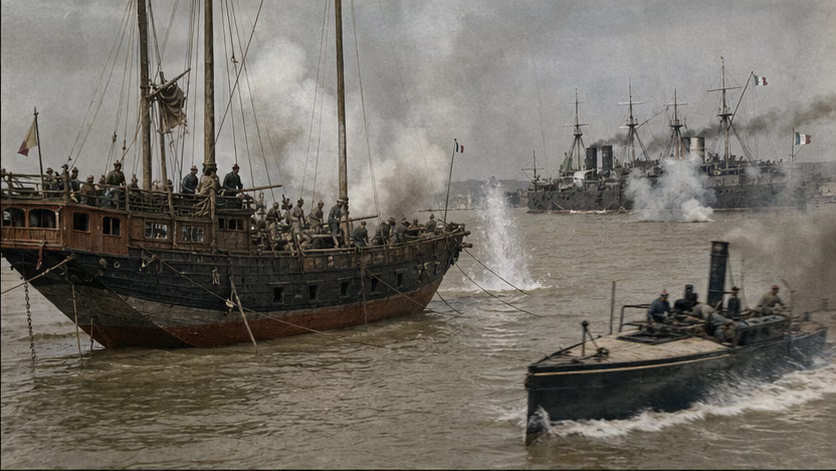
| Opening moment | 8.23 afternoon | The French ships launched a surprise attack, using the advantage of the turn at ebb tide. Common accounts give the opening time as 1:56 p.m. (figure disputed); torpedo boats and ship guns fired together, and the flagship Yangwu was hit first |
| Half an hour | 8.23 afternoon | The Qing ships had not had time to weigh anchor, took the enemy at their sterns, and returned fire in haste. Yangwu, Fuxing, Zhenwei, Feiyun, Ji'an, Fusheng, Jiansheng, and others were sunk or destroyed one after another; within half an hour, nine of eleven ships had been sunk or destroyed (figures for sunk and destroyed vessels vary by basis). Fubo and Yixin, after being damaged, steamed upstream to Linpu to preserve themselves (details of their route await verification) |
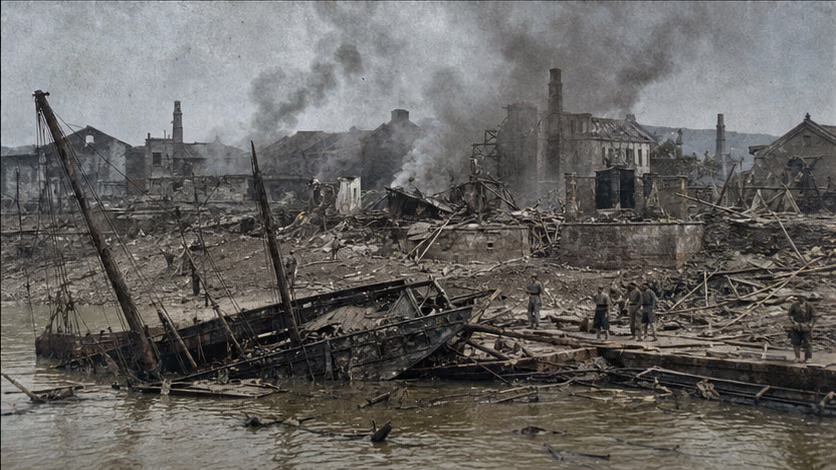
| Shelling the Shipyard | 8.23 evening-from 8.24 | French ships turned their guns on the Mawei Shipyard. The shipyard, docks, and workshops were bombarded for days, and more than ten years of Self-Strengthening foundations were mostly reduced to rubble (damage details await verification) |
| Sweeping the river and putting to sea | 8.24-8.29 | The French squadron moved downriver, shelling and destroying the batteries on both banks at the Min River mouth, including Jinpai and Changmen, section by section (sequence in which each battery fell awaits verification), then calmly put to sea and joined the main squadron |
Casualties and Losses
- Fujian Fleet: more than 700 officers and men were killed; the common basis gives 796 people (Qing memorials and the Zhaozhong Shrine register differ in their bases). Nine of eleven ships were sunk or destroyed, and the fleet ceased to exist as a fleet.
- French side: self-reported six killed and twenty-seven wounded (French-report basis, unverified), for more than thirty killed and wounded in all; not one ship was sunk.
- Mawei Shipyard: workshops, docks, and machinery were destroyed by shelling; more than ten years of material accumulation in shipbuilding and training was lost in one battle. This item has no casualty figure, but it is the heaviest stroke.
- Two sets of figures are placed side by side here: whichever side's numbers are taken, the result of the engagement was one-sided. The numerical dispute lies in the details, not in the nature of the outcome.
Aftermath
- Three days after the Battle of Fuzhou, on 1884.8.26, the Qing court issued an edict declaring war on France (original edict text awaits verification) -- before this, the fighting had already been open for several months, while the court still had not had the name of a declaration of war.
- Zhang Peilun fled when he heard the guns during the battle (route of flight and circumstances at the time await verification); after the battle he was dismissed and sent to frontier exile at a military station (place of exile and term await verification). Later he entered Li Hongzhang's staff and became Li Hongzhang's son-in-law -- that is a later matter, passed over in one line.
- He Ruzhang was dismissed and sent to frontier exile (punishment details await verification); the minister of the Shipyard and other high officials were likewise punished.
- The Mawei Shipyard was repaired after the battle and continued operating, but never recovered its vitality; the Fujian Fleet thereafter existed in name only, while the pattern of Nanyang and Beiyang each fighting for itself did not change. The causes of Majiang's defeat were never settled at the institutional level.
- The officers and men who died were buried at the foot of Maxian Hill, and the Zhaozhong Shrine was later built; today's Mawei Zhaozhong Shrine still exists, with the register inside (year of shrine construction and number of names in the register await verification).
Accounts of Those Present
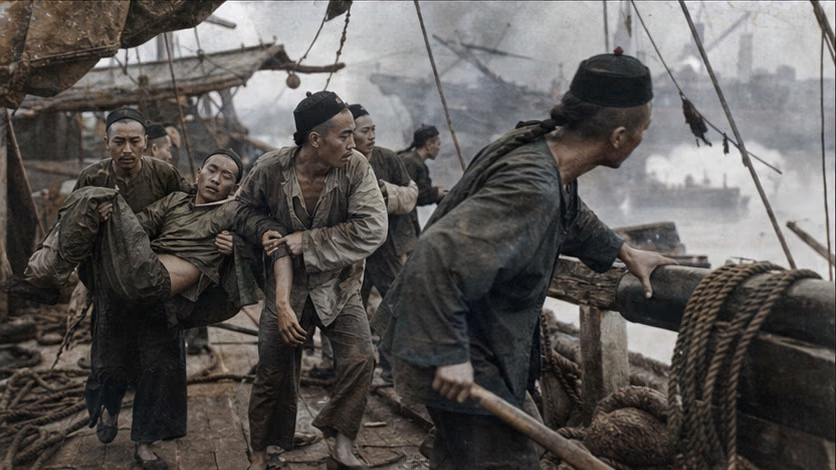
- The ship was lost, but the flag remained: at the last moment before Yangwu sank, a sailor climbed the mainmast and raised the dragon flag, sinking with ship and flag together. This detail circulated very widely; the earliest record in which it appears awaits verification. Even if disputed, it shows which moment later generations wanted to remember.
- "Executed even if they win": before the battle, the rank and file of the fleet were not unwilling to fight. Some accounts say that officers and men on the ships all asked to fight, but were held down by "without an edict, do not open fire first" (details of the calls to fight await verification). The four words "military orders are like mountains" were literal at Majiang.
- Fuxing: Captain Chen Ying (name awaits verification) led his ship straight into the enemy formation, and ship and men were lost together (circumstances of his death await verification). Many of the ships' captains had come from the Shipyard School: students trained by the Chinese themselves died aboard ships built by the Chinese themselves.
- Ebb tide: the trigger of the battle was not an order, but a tide table. Once the afternoon ebb tide arrived, the sterns of the upstream ships automatically turned toward the French guns. The other side had calculated the tide before opening fire; this side did not even have time to weigh anchor.
- Onlookers outside the harbor: at the time, British, American, and other foreign warships were also watching the battle on the waters of Majiang (countries and ship counts disputed). The defeat was fought under observation, and the news reached the outer seas that very night.
The Ground
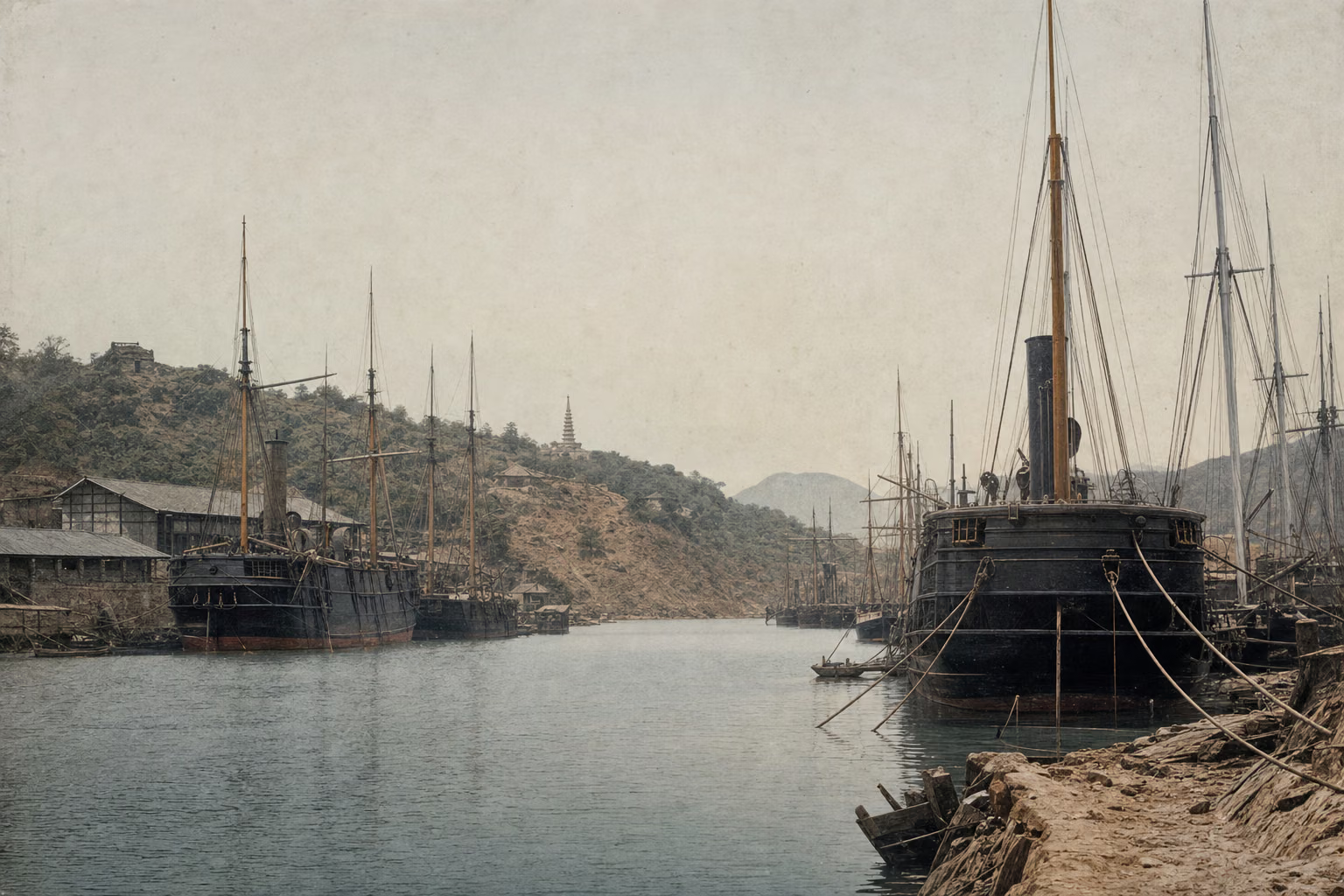
- The battlefield was a stretch of inland river: the lower Min River, with hills on both banks enclosing a harbor and Luoxing Pagoda as its landmark. The scale was measured in hundreds of meters. This was not an ocean battle, but a close-range artillery fight.
- Tide was part of the grammar of space: at flood tide the bows of the Qing ships faced the enemy; at ebb tide their sterns faced the enemy. Within a single day, the quality of the position rotated twice, and the French side chose the most favorable afternoon.
- Anchorage was fate: Qing ships upstream, French ships downstream, shipyard and batteries along the bank -- all three lay within direct gunfire range. Before the battle began, space had already arranged the result.
- There were not many vertical elements, but there were some: the batteries on both banks looked down from higher ground, yet because their gun positions were old-fashioned and their fields of fire fixed, they were swept away section by section. Maxian Hill and Luoxing Pagoda were the viewing points of the whole harbor.
- There was only one exit: the mouth of the Min River. After the fighting, the French ships did not linger. They moved down the river, dismantling the batteries section by section, and calmly put to sea: on one waterway, they entered as guests and left as winners.
How Each Side Records It
- Chinese side: in the narrative of national humiliation, this is one of the emblematic scenes of "backwardness invites beating," with an added layer of pain beyond ordinary defeat: the ships were built by China, the harbor was China's own, and the defeat came under "do not move first." The Battle of Fuzhou and the great victory at Zhennan Pass are often placed side by side as the two faces of the Sino-French War: land fighting could be won; the navy was lost cleanly.
- French side: the proud stroke of Courbet and the Far East Squadron, a textbook case of quick victory in a Far Eastern expedition. In France, the war itself remained highly controversial (the Ferry cabinet's Tonkin policy was repeatedly attacked in parliament), and victory at Majiang could not change the war's bad name in France (details of French public opinion await verification).
- Popular and local memory: Mawei remembers it most concretely. Zhaozhong Shrine, the martyrs' graves on Maxian Hill, and the Shipyard site all remain in their original places, with annual rites; the stretch of river below Luoxing Pagoda can still be reached today.
Disputes and Sensitivities
- Responsibility for "if they do not move, we do not fire": on whose head should this blame be placed -- the court center, the Grand Council, or Zhang Peilun himself -- has long been disputed. Zhang Peilun was a leading figure of the Qingliu faction, known in ordinary times for daring speech and advocacy of war, yet during the battle he fled. The contrast in judgments of the man is extreme, and he became the foremost case in late-Qing arguments that "pure criticism harmed the state" (firsthand telegrams and edicts await item-by-item checking).
- Number of ships sunk and destroyed, and number killed: nine ships sunk or destroyed and 796 killed is the common basis, but Qing memorials, French reports, and the Zhaozhong Shrine register differ. Any citation must mark its source.
- "Could firing first have won?": historical discussion after the fact often assumes that the outcome might have differed had the fleet struck first. Such assumptions cannot be falsified. At the factual level: in tonnage, artillery, position, and training, it was comprehensively inferior; first move could at most have changed the process.
- The Qing court ordered the fleet not to fire first, and the Mawei Shipyard Fleet "waited" for the order to open fire while trapped in the position of "do not move"; after the French struck first, they formed overwhelming firepower.
Sources and Open Questions
Known main sources:
- *Sino-French War* source collection (compiled by the Chinese Historical Society; memorial and telegram compilations)
- Zhang Peilun, *Jianyu Ji*, and related telegrams and memorials (firsthand documents by a participant, to be read alongside the apologetic nature of his own account)
- French archives and Courbet's reports (French Naval Ministry archives, cited through studies of Sino-French War history; original archives await checking)
- Local materials and stele/register records related to Mawei Shipyard and Zhaozhong Shrine
Open questions: number of French ships moored in harbor and the ship-by-ship names; whether ironclads were inside the harbor; the Qing side's eleven-ship roster and each ship's attributes; original sources and chain of responsibility for "if they do not move, we do not fire" and "executed even if they win"; delivery process and wording of the French notice on 8.23; exact opening-fire time; basis for the figure of nine ships sunk or destroyed; the three bases for number killed in Qing memorials / French reports / the Zhaozhong Shrine register; report source for French casualties of 6 killed and 27 wounded; itemized damage to the Shipyard; sequence in which batteries such as Jinpai and Changmen fell; original text of the declaration-of-war edict of 1884.8.26; Zhang Peilun's route of flight, place of frontier exile, and term; details of He Ruzhang's punishment; year of construction of Zhaozhong Shrine and number of names in the register; earliest source for the detail of Yangwu raising the flag; name of Fuxing's captain and circumstances of his death; countries and ship counts of foreign vessels watching the battle; total number of vessels built by the Shipyard over the years; details of French domestic public opinion; full course of Beiyang and Nanyang ships being sent to aid Fujian, and the destinations of each ship; timeline from Paris's authorization to open war to Courbet, and the degree to which the Qing side knew of it; time limit, delivery time, and He Ruzhang's handling of the 8.23 war-opening notice; details of the division of responsibilities among the Fuzhou governor-general, general, governor, minister of the Shipyard, and minister-associate.
All images on this site are AI-generated depictions. They are not historical photographs, not primary sources, and do not depict any real individual.