Engagement Archive · Zhennan Pass and Lạng Sơn
In March 1885, Feng Zicai, nearly seventy years old, held the French Tonkin Expeditionary Corps' Second Brigade before a long wall at Zhennan Pass, then pursued the advantage and recovered Văn Uyên and Lạng Sơn; the French cabinet fell because of it, yet the Qing court immediately stopped the war and negotiated peace, leaving the dispute over "stopping once victory was gained" to argue on for more than a century.
Engagement Data
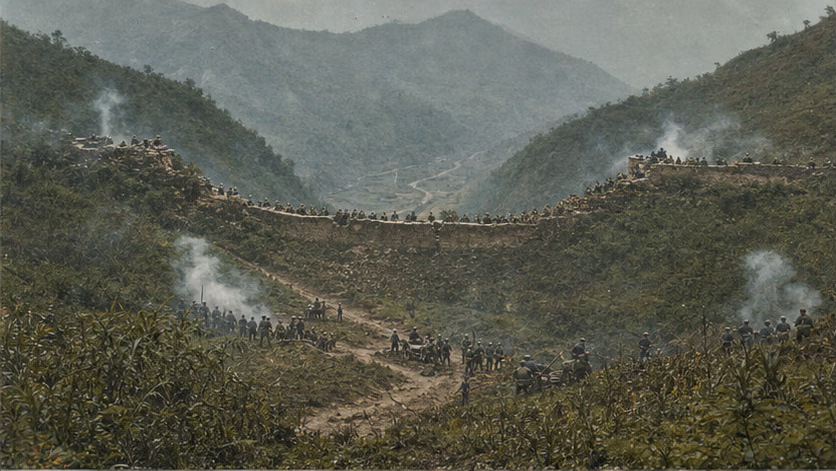
| Item | Details |
|---|---|
| Time | 1885.2.23 – 3.29 (from the French occupation of the pass to the Qing recovery of Lạng Sơn; the decisive battle at the long wall was on 3.23–24) |
| Place | Zhennan Pass, Guangxi (today Friendship Pass) — Văn Uyên (today Đồng Đăng, Vietnam) — Lạng Sơn line |
| Belongs to | Sino-French War · eastern route on the Guangxi-Vietnam border in the Tonkin theater |
| Defending side | Qing armies on the Guangxi front: Feng Zicai's Cui Army under his command as assistant administrator of Guangxi military affairs beyond the pass, together with the forces of Wang Xiaoqi, Wang Debang, Su Yuanchun, Fang Yousheng, and others; Pan Dingxin, governor of Guangxi, was the forward commander-in-chief (actual front-line command belonged to Feng Zicai; division of responsibilities unverified) |
| Attacking side | Second Brigade of the French Tonkin Expeditionary Corps (brigade commander de Négrier, François de Négrier) |
| Result | On 3.24 the French assault on the pass failed and retreated; on 3.28–29 Qing forces took Văn Uyên and Lạng Sơn, de Négrier was badly wounded, and the French remnants withdrew south; on 3.30 the Ferry cabinet fell |
Belligerents
| Item | Defending side | Attacking side |
|---|---|---|
| Strength | About 20,000 men on the front before Guanqian'ai, an assemblage of routed troops from different routes and newly recruited forces (bases vary; figure disputed) | A little over 2,000 men of the Second Brigade committed to the assault on the pass (French records; details unverified) |
| Infantry firearms | A mixture of old-style bird guns, heavy matchlocks, and some breech-loading rifles; close combat relied mostly on swords and spears | Standard breech-loading rifles (model unverified), with superior firepower |
| Artillery | Batteries built on the eastern and western ridges flanking the long wall, with old-style artillery | Mountain guns and field guns accompanying the infantry (details unverified) |
| Works | An earth-and-stone long wall spanning the mouth of the valley, with a deep ditch and "plum-blossom pits" outside the wall (called the "Long Trench" by the French) | No works to rely on; the whole assault was uphill |
| Supply | Rear base at Longzhou, several dozen li from the front | Cross-border operations from Lạng Sơn; manpower and ammunition were both difficult to sustain -- the main reason the French occupied the pass in February and immediately withdrew was insufficient strength |
Terrain and Conditions
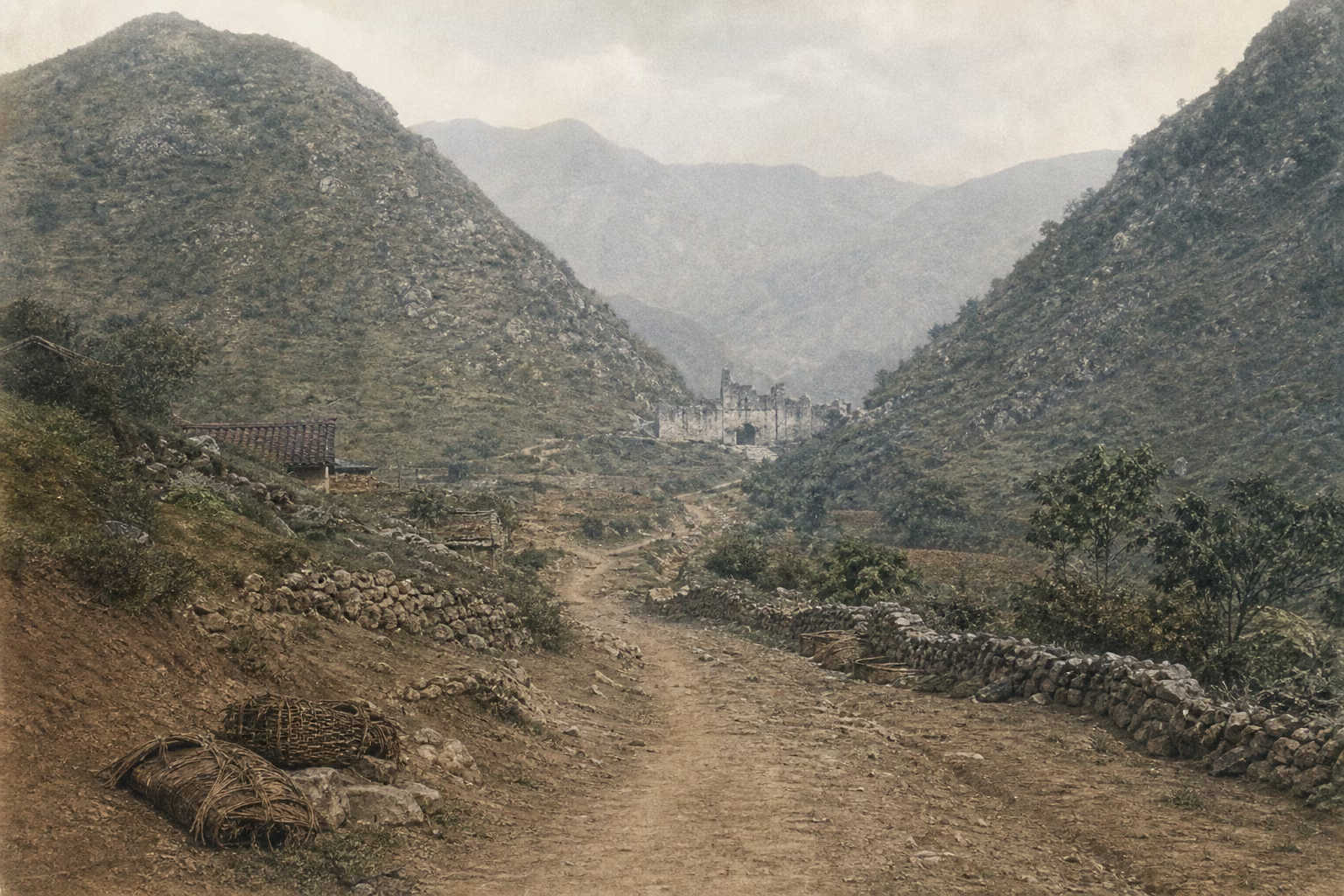
(For the larger situation of 1884–85 -- France's designs on Vietnam and Yunnan-Guangxi, the Qing declaration of war after Mawei, and setbacks on both the Yunnan and Guangxi routes in Tonkin -- see *Sino-French War: Overview*.)
Guangxi: retreat all the way to the national gate. In early 1885, Qing forces in Tonkin suffered repeated setbacks; in February Lạng Sơn fell, the Guangxi Army routed back across the border, and in the Battle of Văn Uyên on 2.23 the defending commander Yang Yuke was killed. The French army then occupied Zhennan Pass. Border prefectures and counties were shaken, and residents around Longzhou fled inland with old and young family members in tow (French records; details unverified). Feng Zicai was recommended by Zhang Zhidong, governor-general of Liangguang, and ordered to assist with Guangxi military affairs beyond the pass under this situation.
This ground: Zhennan Pass controlled the Nanning-Lạng Sơn route and was the only major road corridor between Guangxi and Vietnam; beyond the pass lay the mountains of northern Vietnam, where merchants and border residents lived across the border in mixed communities. French exactions and occupation in northern Vietnam had long since drawn resentment, and the records of Vietnamese civilians helping Qing forces transport grain and fight during the battle at Guanqian'ai come from this context (record unverified).
Why It Was Fought
The fuse for this battle had been lit in the previous article, *Battle of Fuzhou (Majiang)*. In 1884, on 8.23, the Fujian Fleet was destroyed in half an hour at Mawei; 3 days later, the Qing court issued an edict declaring war, ending the swing between war and peace and setting policy toward a land counteroffensive in Tonkin. But the counteroffensive did not come; successive defeats did. In early 1885, Qing forces in Tonkin suffered repeated setbacks; in February Lạng Sơn fell, the Guangxi Army routed across the border, Zhennan Pass fell on February 23, the defending commander Yang Yuke was killed, and the French army pursued all the way into Guangxi. From Mawei to Zhennan Pass, in half a year, the flames of war had burned from someone else's country to the national gate.
Why this pass? Zhennan Pass controlled the Nanning-Lạng Sơn route and was the only major road corridor between Guangxi and Vietnam; several dozen li behind the pass was Longzhou, and beyond it lay the interior of Guangxi. Border prefectures and counties were shaken, and Longzhou residents fled inland with old and young family members in tow (French records; details unverified). Feng Zicai was recommended by Zhang Zhidong, governor-general of Liangguang, and appointed to assist with Guangxi military affairs beyond the pass under precisely this situation. The thing he did at the front was only one: gather about 20,000 routed troops and newly recruited men beyond the pass (bases vary; figure disputed), build a long wall across the mouth of the valley at Guanqian'ai, dig a deep ditch and lay plum-blossom pits outside the wall, set batteries on the ridges on both wings, and take up a posture of defending the national gate to the death.
This resolve was pressed down from Beijing. After Lạng Sơn fell, the court repeatedly issued stern edicts ordering its recovery, and Pan Dingxin was dismissed because of the successive defeats beyond the pass (date and wording of the dismissal edict unverified). But edicts could not keep pace with the military situation: battle reports took ten-day intervals to reach the capital, and replies took another ten days. How the battle before Zhennan Pass was to be defended was in practice decided by the front itself. Zhang Zhidong did two things for the front: he recommended Feng Zicai, and he supplied pay and arms. Beyond treasury silver, foreign loans were raised from Hong Kong merchants and foreign firms for military expenses (figures vary by account, unverified); pay and arms were carried upriver from Guangzhou to Longzhou, then moved beyond the pass by shoulder and pack transport. Most of the 20,000 men were newly recruited troops with uneven firearms. The long wall and the ditchworks were the works that flattened out this unevenness.
The disagreement was not whether to defend, but who would defend. Feng Zicai, nearly seventy, was restored to service, and many officers looked coldly on him (record unverified); the rift between him and Wang Debang's force later became the century-old public case of "holding troops back and not rescuing" (details unverified). These cracks were leveled by the battle of 3.24.
The French side was in a different kind of strait. The Second Brigade was thinly manned. In February it occupied the pass but could not hold it, burned the pass gate, withdrew to Văn Uyên, and left behind a wooden sign inscribed "The gate of Guangxi no longer exists" (circulating phrase in Chinese records; original wording and authenticity unverified; the story that Chinese soldiers wrote in reply, "We will rebuild our gate with the heads of Frenchmen," is likewise unverified). De Négrier's calculation was to use offense as defense: rather than sit and wait as Qing forces gathered in greater numbers, it was better to strike before the long wall had been made firm and make a surprise attack compensate for insufficient strength (French operational motive; details unverified).
On the night of March 22, part of Feng's force attacked a French outpost at Văn Uyên (French records; whether this was intended to draw the enemy out is unverified). De Négrier judged that the Qing main camp was not yet solid and decided to lead the main force of the Second Brigade across the border in a direct attack on Guanqian'ai. In this battle, the attacker delivered himself to the gate.
Could it have been avoided? Yes. Occupying the pass and not holding it had already shown that strength was insufficient, and pulling back to Văn Uyên to await reinforcements was the steadiest move. But after the night when the Văn Uyên outpost was attacked, waiting in place seemed to de Négrier like being trapped where he stood. He chose that long wall. Whether authorization from Paris included a cross-border assault on the pass is ambiguous in French records (authorization unverified).
Course of the Engagement
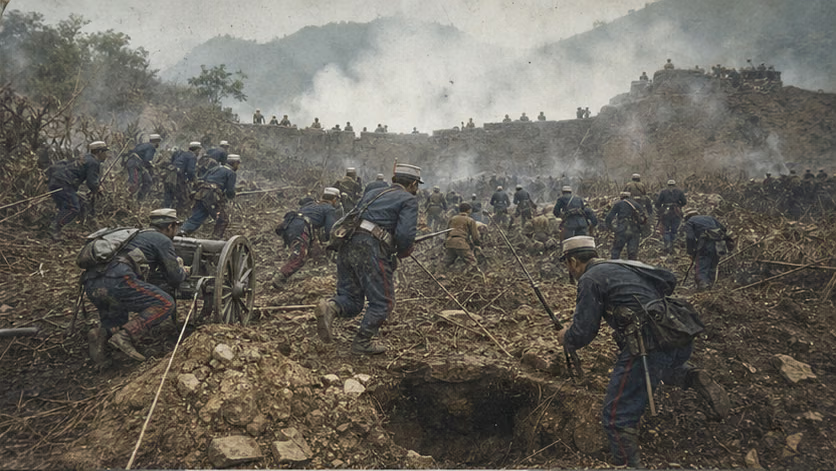
| Stage | Time | Key points |
|---|---|---|
| French occupation and abandonment of the pass | 2.23–25 | Yang Yuke was killed in the Battle of Văn Uyên, and the French army occupied Zhennan Pass; because its strength was insufficient, it burned the pass gate, withdrew to Văn Uyên, and set up a wooden sign with an inscription (Western-language records say the gate buildings were blown up on 2.25; dates vary by account) |
| Qing preparations | Late February–mid-March | Feng Zicai integrated the forces of Wang Xiaoqi, Wang Debang, Su Yuanchun, Fang Yousheng, and others, chose Guanqian'ai, built a long wall and deep ditch across the mouth of the valley, set batteries on the ridges on both wings, and fixed a date to meet the enemy |
| Outpost clash | 3.22 | Feng's force made a night attack on the French outpost at Văn Uyên (French records), and de Négrier then decided to take the offensive |
| French assault on the pass | 3.23 | De Négrier led the Second Brigade in divided uphill assaults (two-route and three-route accounts differ, unverified), first bombarding with artillery, then taking several batteries outside the long wall; Guanqian'ai was for a time in danger |
| Decisive battle at the long wall | 3.24 | The French pressed close to the long wall; Feng Zicai, with his two sons Xiangrong and Xianghua (names unverified), took a spear and leapt outside the wall in a bayonet-and-blade charge, and all the armies came out together, with Vietnamese civilians helping carry supplies and support the fight (record unverified); the French army broke, then retreated hungrily back to Văn Uyên that night |
| Pursuit and recovery | 3.26–29 | Qing forces crossed the border in pursuit and took Văn Uyên on 3.28; on the same day, in the fighting outside Lạng Sơn, de Négrier was badly wounded (place of wound unverified), and his successor Herbinger ordered the abandonment of Lạng Sơn and a withdrawal south; on 3.29 Qing forces recovered Lạng Sơn |
Casualties and Losses
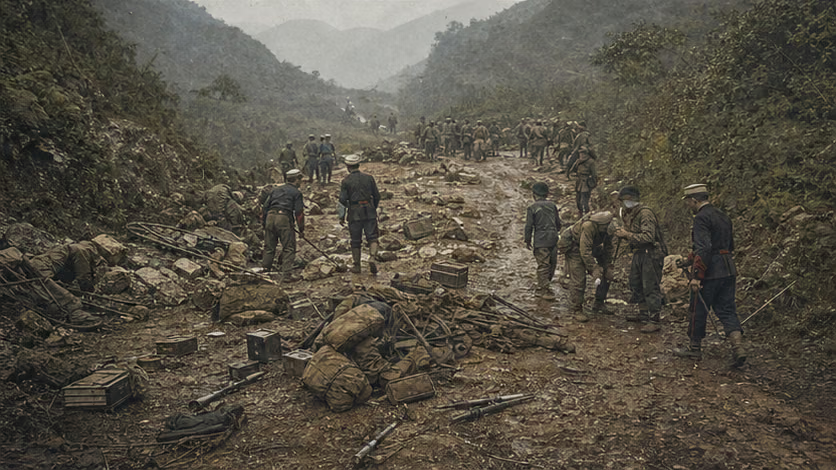
- Attacking side (French army): the French side reported 74 killed and 213 wounded in the Battle of Guanqian'ai (French basis, including several officers); Chinese battle reports claimed more than 1,000 French killed and wounded, and nearly another 1,000 in the pursuit (Chinese basis, unverified). The two bases differ greatly, and each side's statistical boundary (whether the pursuit phase and the fighting outside Lạng Sơn are included) remains unverified pending article-by-article checking.
- Defending side (Qing forces): casualties were higher than those of the attacker (French records; exact figures unverified); zongbing Yang Yuke was killed in the Battle of Văn Uyên.
- De Négrier was badly wounded on 3.28 (wound location unverified), and the Second Brigade in effect lost its commander, one of the direct reasons the French side abandoned Lạng Sơn.
Aftermath
- News of defeat reached Paris, and on 3.30 the Ferry cabinet fell amid a refusal of confidence in parliament and street protests (the "Tonkin Affair"; see also *Sino-French War: Overview*). But the new cabinet did not stop the war, and France soon added military funding. The fall of the cabinet was not an admission of defeat.
- The Qing court, however, stopped at this moment: on 4.4 James Duncan Campbell, a British employee of the Maritime Customs, represented the Qing court in signing a truce protocol with the French side in Paris, and Qing forces withdrew from Vietnam; on 6.9 the *New Sino-French Treaty* was concluded (for the full process, see *Sino-French War: Overview*). The saying that "China lost without defeat, and France won without victory" comes from this.
- Zhennan Pass is now called Friendship Pass, and the site of the long wall still remains (present condition unverified).
Accounts of Those Present
- Wooden sign: before withdrawing, the French army set up a wooden sign in the ruins of the pass tower, inscribed "The gate of Guangxi no longer exists"; Chinese circulation says the defenders wrote in reply, "We will rebuild our gate with the heads of Frenchmen" (the original wording and authenticity of both sentences are unverified).
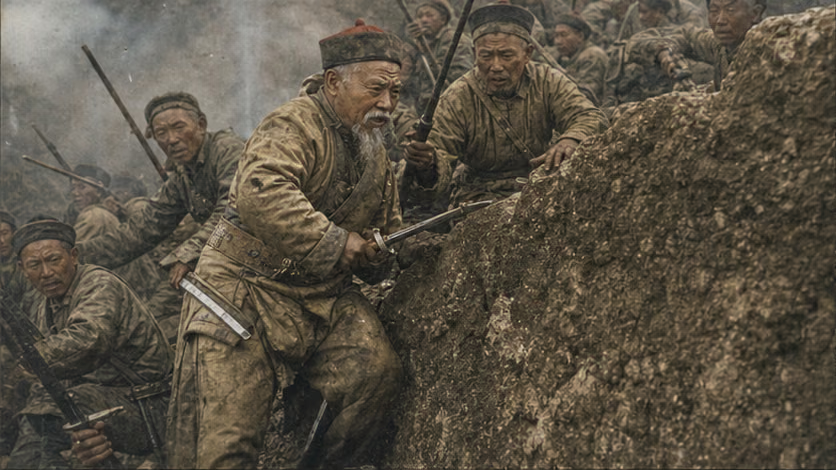
- The old general leaps the wall: when the long wall was under greatest pressure on 3.24, Feng Zicai, nearly seventy, took a spear and leapt outside the wall first, with his two sons following, and the whole army rushed down after him into hand-to-hand fighting. An old general from the ranks fought in the style of the Taiping battlefield.
- Yang Yuke: the zongbing killed in hard fighting at the Battle of Văn Uyên on 2.23 -- the earlier battle rarely mentioned in the narrative of the great victory.
- The night on the other side: French soldiers' memoirs describe the night of 3.24 after the defeated troops retreated back to Văn Uyên: they had eaten nothing all day, had drunk only one cup of coffee, and lay trembling in the aid-station shed, unable to sleep, quietly counting in the dark who had not come back (French reminiscence; translation unverified). Desperation belonged to more than one side.
- Vietnamese civilians: records of grain transport and battlefield assistance are scattered through Chinese materials (record unverified). In northern Vietnam, the French army was the occupier, and one aspect of the Qing army being treated instead as "our own people" is often missing from the narrative.
The Ground
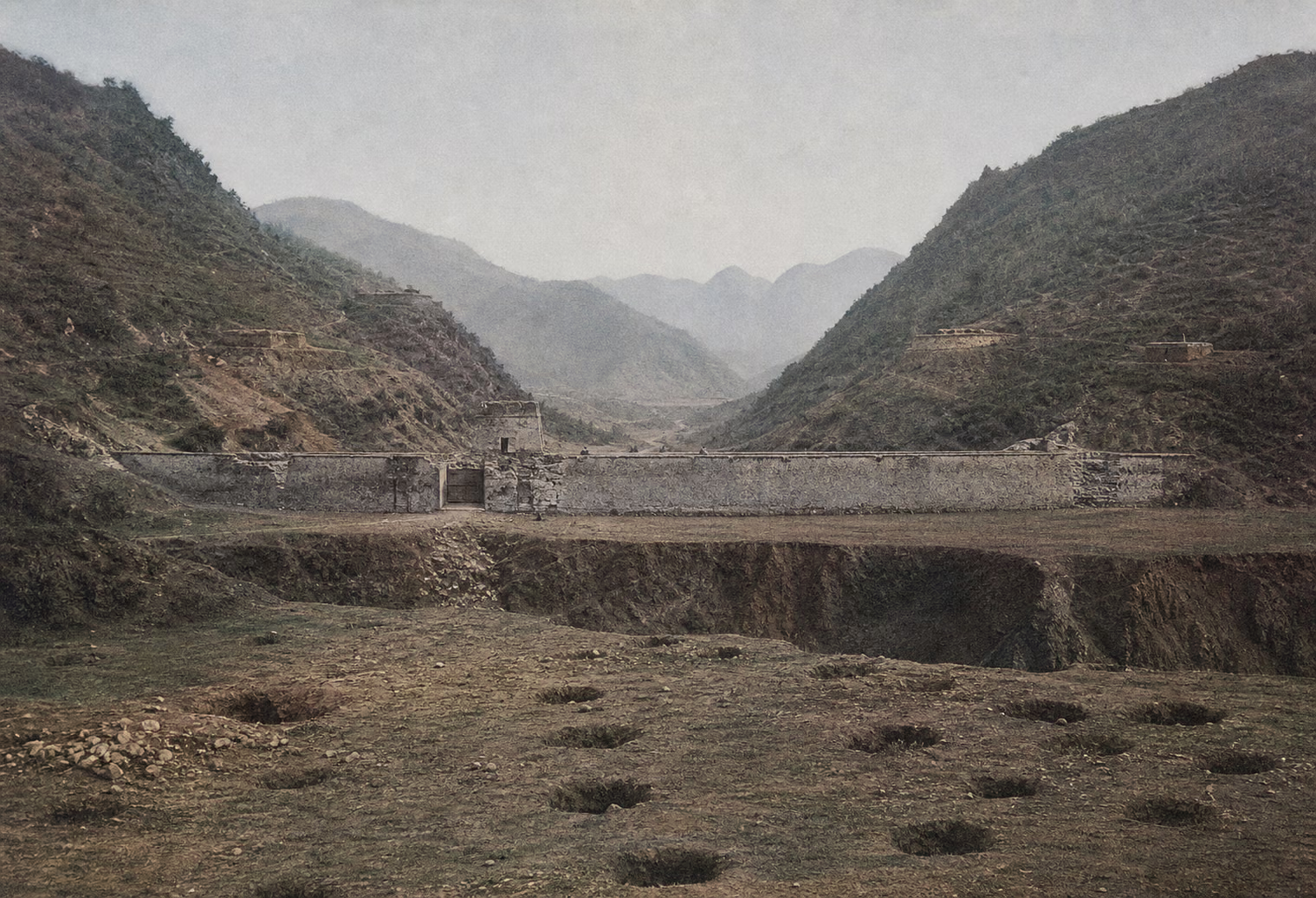
- Zhennan Pass is a pass with two mountains squeezing one road: a road in the valley, the eastern and western ridges of Guanqian'ai facing each other, and the long wall locking the valley mouth crosswise. Within the valley mouth, terrain leveled out differences in numbers.
- Long wall + deep ditch + plum-blossom pits + batteries on both wings: a grammar of static defense. The defending side's leap over the wall into hand-to-hand charge was an asymmetric choice that converted a firepower disadvantage into a near-combat parity.
- From the pass to Lạng Sơn was a single corridor: Zhennan Pass — Văn Uyên (Đồng Đăng) — Lạng Sơn, a mountain single-track route of several dozen li. Pursuit and rout were both squeezed onto this line, a naturally segmented structure of advance.
How Each Side Records It
- Chinese side: the Great Victory at Zhennan Pass, a rare victory in modern foreign wars, placed Feng Zicai in the roster of national heroes. Set beside it is the resentment of "losing without defeat": victory narrative and anger over lost ground grew on the same battle.
- French side: called the Battle of Bang Bo (Zhennan Pass), it is usually recorded in official narratives as a tactical setback rather than a rout. Public opinion and historians focus on whether Herbinger's abandonment of Lạng Sơn was an overreaction, a point already disputed within the French army (record unverified). The shock of the cabinet's fall was far greater than the battlefield losses themselves.
- Vietnamese side: to be filled in (how the Vietnamese side records the change of hands at Lạng Sơn and civilian assistance in the fighting; no material is currently available to write from).
Disputes and Sensitivities
- The century-long dispute over "stopping once victory was gained": Li Hongzhang argued that "we should use the prestige of one victory at Lạng Sơn to conclude a peace treaty, and then the French will certainly make no further reckless demands" (original telegram text unverified); the Qingliu faction and war-favoring officials such as Zhang Zhidong strongly opposed withdrawal, leaving behind the resentment of "losing without defeat." The victory was limited to the single Guangxi-Vietnam border route, while in Taiwan and the Fujian seas the French army still held the initiative; the newly installed French cabinet added military funding. What the "victory" in "using the victory" could be exchanged for was constrained by these facts.
- Authenticity of the wooden-sign inscriptions: both inscriptions are found only in Chinese circulation; French records show only the fact of "setting up a wooden sign," with no corroboration for the wording.
- Large gap in casualty bases: French self-reports and Chinese battle reports differ by nearly an order of magnitude, and the numerical gap between the two sides is very large.
- Layering of Feng Zicai's image: details such as leaping the wall, the two sons, and the inscriptions were accumulated layer by layer in later narratives; battle reports, memoirs, and late-life reputation are not the same kind of source.
Sources and Open Questions
Known main sources:
- Shao Xunzheng, *The Beginning and End of Sino-French-Vietnamese Relations* (Chinese-side research, with a relatively detailed account of the fighting at the pass and Lạng Sơn)
- Zhongguo Shixuehui, ed., *Sino-French War* source series (collection of battle reports and telegram drafts)
- French histories of the Tonkin Expeditionary Corps and memoirs of participants (accounts by de Négrier, Herbinger, and soldiers' reminiscences; specific titles unverified)
Open questions: Feng Zicai's year of birth and actual age in 1885; the names of his two sons Xiangrong and Xianghua; the original wording and source of the two wooden-sign inscriptions; detailed French strength and artillery in the assault on the pass; number of routes in the 3.23 assault; de Négrier's wound location and details of the fighting on 3.28; statistical boundaries for the two casualty bases; bases for total Qing front-line strength; original records of Vietnamese civilian assistance in the fighting; French literature on the dispute over Herbinger's abandonment of Lạng Sơn; original text of Li Hongzhang's telegram on "using the prestige of one victory at Lạng Sơn"; exact date of the fall of Lạng Sơn in February; present condition of the long-wall site; date and wording of the edict dismissing Pan Dingxin; number and total amount of Zhang Zhidong's foreign loans; original records of front-line criticism when Feng Zicai was restored to service; literature on Wang Debang's public case of "holding troops back and not rescuing"; scope of Paris authorization for the cross-border assault on the pass; courier distance and time lag for Guangxi front battle reports.
All images on this site are AI-generated depictions. They are not historical photographs, not primary sources, and do not depict any real individual.