Engagement Archive · Battle of Nanjing (1911)
Six days after Hanyang fell, the Jiangsu-Zhejiang Allied Army took Nanjing: the center of gravity lost at Wuhan was raised again in the southeast, and two months later this city became the seat of the Provisional Government of the Republic of China.
Engagement Data
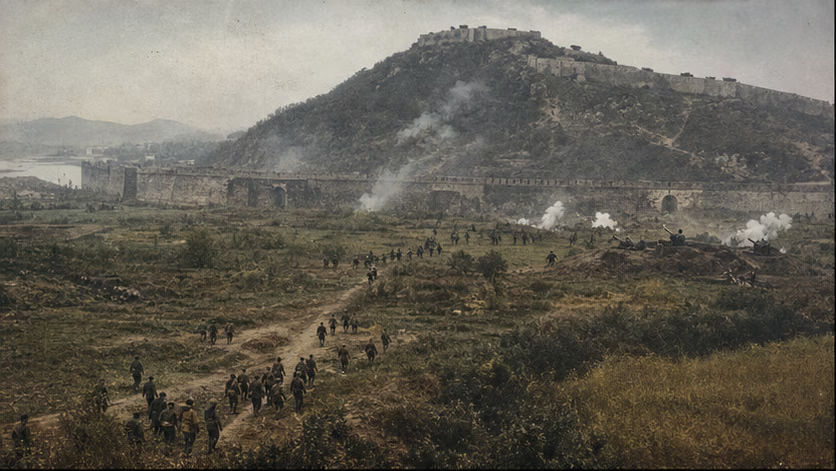
| Item | Details |
|---|---|
| Time | Late 1911.11 – 12.2 (including the prelude of the failed first assault at Molingguan on 11.8) |
| Place | Jiangning Prefecture, Jiangsu (Nanjing): Zijinshan, Yuhuatai, and the city-wall line |
| Belongs to | Xinhai Revolution · Southeastern theater |
| Attacking side | People's Army (Revolutionary Army): Jiangsu-Zhejiang Allied Army, commander-in-chief Xu Shaozhen (formerly commanding officer of the New Army's Ninth Division) |
| Defending side | Qing forces: chiefly the River Defense Army under Zhang Xun, the Jiangnan provincial commander-in-chief; Zhang Renjun, governor-general of Liangjiang, and Tieliang, general of Jiangning, were inside the city |
| Result | Tianbao Fortress was taken on the night of 12.1; Zhang Renjun, Tieliang, and Zhang Xun fled; Nanjing was recovered on 12.2 |
Belligerents
| Item | Attacking side (People's Army · Jiangsu-Zhejiang Allied Army) | Defending side (Qing forces) |
|---|---|---|
| Strength | Forces from Jiangsu, Zhejiang, Shanghai, Zhenjiang, Wusong, and others combined, roughly more than 10,000 to 20,000 (figures vary by basis) | Zhang Xun's River Defense Army, several dozen battalions, plus Banner battalions and patrol-defense battalions, roughly around 20,000 (figures vary by basis) |
| Equipment | Equipment varied sharply among the different forces; artillery firepower was limited, and supply depended on military depots (details unrecorded) | The River Defense Army had long been stationed there and was relatively well supplied with pay and weapons; Tianbao Fortress on Zijinshan, Yuhuatai, and the various batteries had fortress guns |
| Command | The allied army was assembled from multiple commands; Xu Shaozhen became commander-in-chief on the strength of his New Army standing, and coordination was the greatest problem | Zhang Xun could command troops that still fought, but the governor-general, the general, and the provincial commander-in-chief would not yield to one another |
| Situation | After the failed first attack, it withdrew to Zhenjiang to reorganize; the second offensive benefited from the momentum of provincial recoveries | Isolated city: upstream, the Qing forces at Wuhan had no attention to spare, while surrounding Jiangsu, Zhejiang, and Shanghai had all declared independence |
Terrain and Conditions
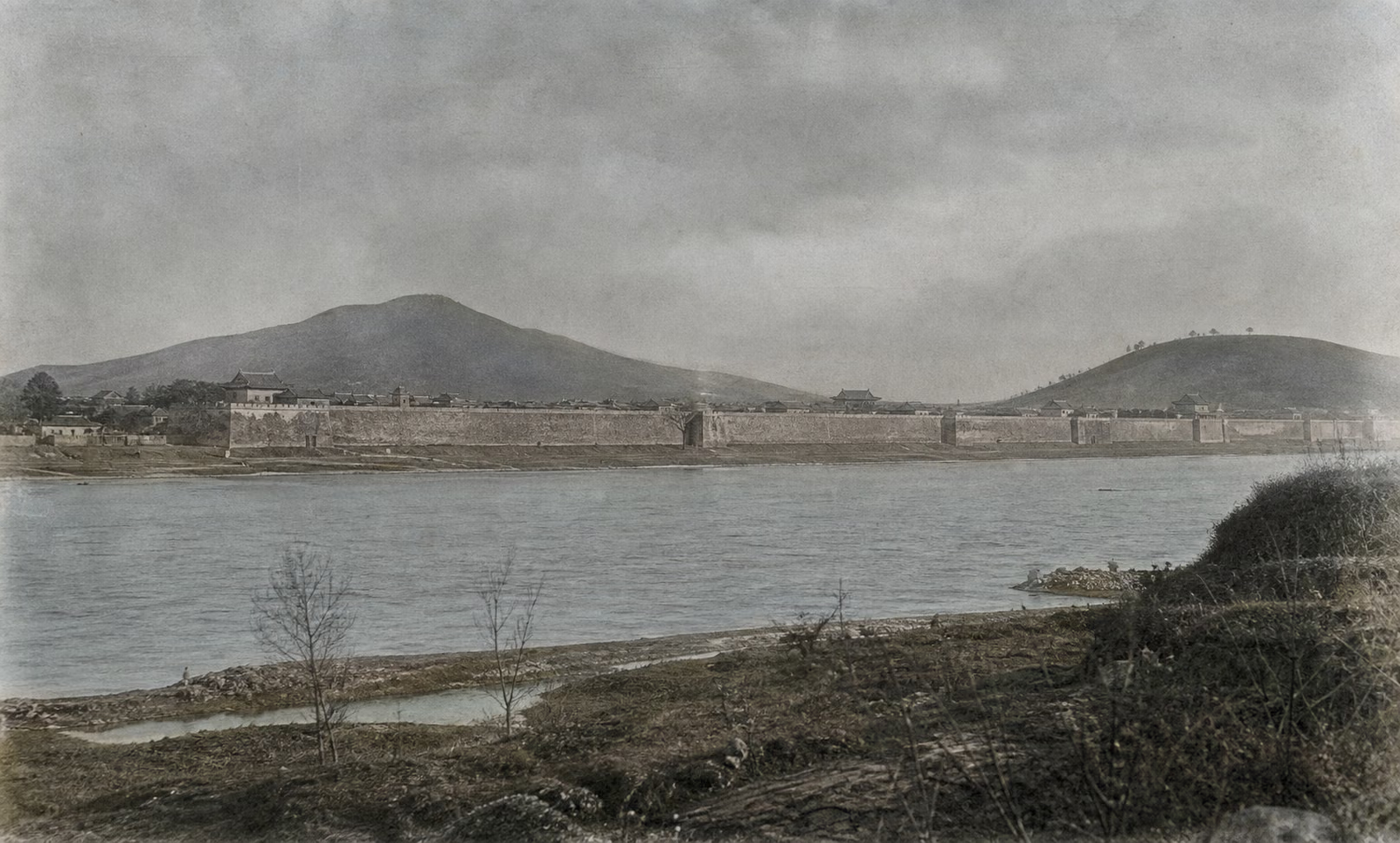
(For the larger situation--the wave of provincial independence after the Wuchang Uprising and the incubation of North-South peace talks--see Xinhai Revolution: Overview. This article treats only Nanjing, Jiangsu, and Zhejiang.)
The city of Nanjing: A strategic stronghold in the southeast and the seat of the governor-general of Liangjiang, Nanjing had city walls several dozen li in circumference, with Zijinshan and Yuhuatai guarding it outside, and had long been considered difficult to attack. Heavy River Defense troops were stationed inside the city, and Zhang Xun was known as obstinate and capable in battle. In early 11 (November), Jiangsu, Zhejiang, and Shanghai declared independence one after another; Nanjing became a Qing nail driven into the southeastern zone of independence--unless it was taken, the independent provinces of the southeast could not link into one continuous area.
The prelude at Molingguan: On 11.8 Xu Shaozhen led the New Army's Ninth Division in an uprising from Molingguan and attacked Yuhuatai, but was defeated for lack of ammunition and withdrew to Zhenjiang--the first attack on Nanjing failed because the forces had not yet combined, and this was why the later Jiangsu-Zhejiang Allied Army came into being.
Why It Was Fought
The news from Wuhan grew worse all the way downstream: Hankou fell on November 1, Hanyang fell again on the 27th, the forty-one-day Defense of Yangxia ended in repeated defeats, Huang Xing went to Shanghai, and Wuchang faced the enemy across the river. Yet in that same November, the lower Yangtze turned over--Jiangsu, Zhejiang, and Shanghai declared independence one after another, most of the southeast linked together, and in the middle one nail remained: Nanjing.
This city was the seat of the governor-general of Liangjiang. Its walls ran several dozen li, Zijinshan supported it to the east and Yuhuatai to the south, and it had long been known as hard to attack; inside were several dozen battalions of Zhang Xun's River Defense Army, plus Banner battalions and patrol-defense battalions, and the commander was known for obstinacy and an ability to fight. After Jiangsu, Zhejiang, and Shanghai became independent, if Nanjing did not fall, the hinterlands of all three independent regimes faced an enemy, and the revolutionary situation in the southeast risked being cut at the waist; remove it, and the independent provinces could finally link into one continuous area.
The first offensive had already failed. On November 8, Xu Shaozhen, formerly commanding officer of the New Army's Ninth Division, raised troops from Molingguan and attacked Yuhuatai; short of ammunition, he withdrew to Zhenjiang--one division alone could not move this city, and the defeat lay in the failure to combine forces. When news of Hanyang's fall reached the downstream cities, Shanghai urgently telegraphed Jiangsu and Zhejiang to call for a joint attack on Nanjing (telegrams and correspondence unverified); the forces of Jiangsu, Zhejiang, Shanghai, Zhenjiang, Wusong, and others then assembled at Zhenjiang, formed the Jiangsu-Zhejiang Allied Army, and publicly chose Xu Shaozhen as commander-in-chief.
The allied army's plan was clear: first take the heights outside the city, then force the city to terms--Zijinshan and Yuhuatai were Nanjing's two locks; if either was seized, the city would be hard to hold. Ammunition and provisions came through the Shanghai Arsenal and the Shanghai-Nanjing Railway depots (details unverified); compared with the defenders, the attackers had more rear area and less heavy artillery. The defending side, by contrast, was one isolated city: the Qing forces upstream at Wuhan had no attention to spare, the four neighboring sides had all changed flags, no reinforcements could arrive, and though pay and weapons were said to be sufficient, they were ultimately being consumed in place; inside the city Zhang Renjun, governor-general of Liangjiang, Tieliang, general of Jiangning, and Zhang Xun, provincial commander-in-chief, would not yield to one another--to hold meant waiting for reinforcements that would not come; to leave meant abandoning territory. Zhang Xun argued forcefully for defending to the death, relying on the fortress guns and the city walls that ran for several dozen li.
The defending side was not without other voices: Zhang Renjun and Tieliang intended to withdraw or avoid the danger, and remained at odds with Zhang Xun's insistence on defense; none of the three high officials could move the others (details of the split unverified). Nor was the allied army a sheet of iron: Lin Shuqing, who had first occupied Zhenjiang, relied on his own credit and would not yield to Xu Shaozhen (seen only in memoir accounts; unverified)--before the general assault began, there were cracks on both command tables.
In late November, the allied army advanced from the direction of Zhenjiang to encircle Nanjing, first sweeping the outlying riverside batteries; several days after the encirclement began, news of Hanyang's fall came from upstream. The Wuhan front had suffered defeat after defeat, and the revolutionary camp urgently needed a major victory in the southeast to steady the overall situation. Moreover, North-South negotiations were already taking shape, and the revolutionary side's weight at the negotiating table would depend on whose hands held Nanjing. What Wuhan had dropped had to be recovered by this city.
Course of the Engagement
| Phase | Time | Key Points |
|---|---|---|
| First assault at Molingguan | 11.8 | The Ninth Division rose and attacked Yuhuatai; with ammunition exhausted, it was defeated and withdrew to Zhenjiang (date and details unrecorded) |
| Allied army formed | Mid-11 | Forces from Jiangsu, Zhejiang, Shanghai, Zhenjiang, Wusong, and others assembled at Zhenjiang and chose Xu Shaozhen as commander-in-chief |
| Outworks cleared | Around 11.24 | The allied army attacked along multiple routes and seized outlying batteries such as Wulongshan and Mufushan (dates for each point vary by account) |
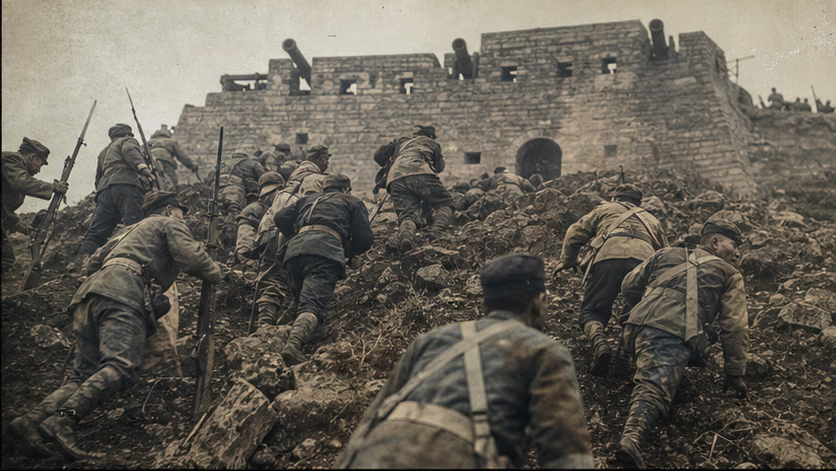
| Assault on Zijinshan | End of 11 – 12.1 | Zhejiang forces made the main attack on Zijinshan, assaulting uphill against Tianbao Fortress and suffering heavy casualties; Tianbao Fortress was taken on the night of 12.1 (details of the night assault by the dare-to-die unit unrecorded) |
| Yuhuatai direction | End of 11 – 12.1 | Shanghai forces and other units attacked toward Yuhuatai and Jubao Gate (Zhonghua Gate), pinning down the south of the city |
| Defending army collapses | 12.1–2 | Once Tianbao Fortress was lost, the whole city lay exposed to artillery fire; Zhang Renjun and Tieliang fled by night (route out of the city unverified), and Zhang Xun led the remnants across the river in a northward withdrawal toward Xuzhou; on 12.2 the allied army entered the city and Nanjing was recovered |
Casualties and Losses
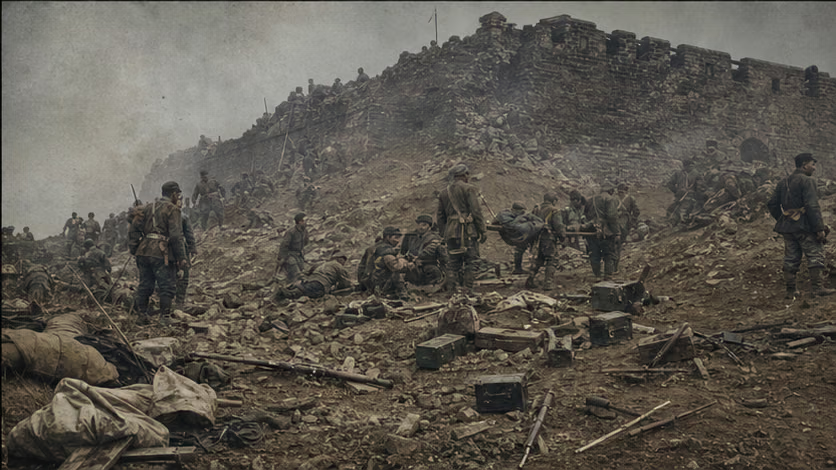
- Attacking side: casualties were heaviest in the assault on Tianbao Fortress at Zijinshan, and many in the Zhejiang dare-to-die unit were killed; total allied casualties were roughly around one thousand (figures vary by basis).
- Defending side: killed, wounded, captured, and scattered forces each numbered in the thousands (exact figures unrecorded); after Zhang Xun's remnants withdrew north, they still retained part of their strength.
- ※ Civilians and Banner battalions: records exist of the assault on and killings within the Manchu city Banner garrison during Nanjing's recovery; the scale was far smaller than in Xi'an, but it cannot be omitted (details unrecorded). Before the battle, Zhang Xun's army searched out and killed queue-cutters and suspected revolutionaries inside the city, leaving people inside and outside the walls in fear (details of severity unrecorded)--atrocities by both sides are recorded together.
Aftermath
- The southeast was secured: Jiangsu, Zhejiang, and Shanghai linked into one area, and the independent provinces gained a stable rear area and center.
- The center of gravity moved east: the fall of Hanyang (11.27) and the recovery of Nanjing (12.2) were six days apart--what Wuhan lost, Nanjing recovered. Representatives from the provinces soon gathered in Nanjing, elected Sun Yat-sen provisional president at the end of 12 (December), and on 1912.1.1 the Provisional Government of the Republic of China was established here (see Xinhai Revolution: Overview).
- Zhang Xun fled north to Xuzhou, and his troops became the base stock of the later "Queue Army" of the restoration--the defeated general of this battle came back six years later to make trouble again.
- The structure of North-South peace talks was thereby fixed: the revolutionary side held the southeast's land of finance and taxation and a strategically commanding capital, changing its bargaining weight at the table.
Accounts of Those Present
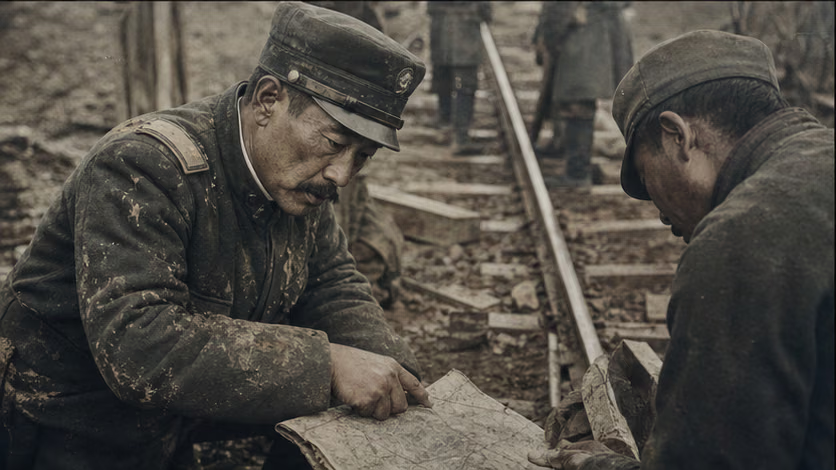
- Xu Shaozhen: Born from the post of commanding officer of the Ninth Division and not a revolutionary party member, he was pushed by circumstance into the position of first-rising leader because his subordinates leaned toward revolution; defeated at Molingguan, he rose again as commander-in-chief of the allied army--a typical path by which an old officer turned toward revolution.
- Night assault on Tianbao Fortress: The fortress on Zijinshan could not be taken after several days of uphill assault; on the night of 12.1 the Zhejiang dare-to-die unit climbed up and succeeded in a surprise attack (members' names and course of events unrecorded)--solid walls mattered less than morale collapsing first; once Tianbao Fortress fell, the defenders fled that same night.
- Zhang Xun: Commander of the River Defense Army, obstinate and skilled in battle, still arguing forcefully for defending to the death before the city fell; as his remnants moved north, they looted along the way (figure disputed)--this man would later be the protagonist of the 1917 restoration.
- The flight of the three high officials: Governor-general Zhang Renjun and General Tieliang left first, while Provincial Commander-in-Chief Zhang Xun withdrew later--none of the three defending authorities was willing to cover the rear for another (route and manner of flight unverified).
- People in the Manchu city: During the siege of the Banner garrison, the situation of Banner civilians, women, and children was one of the most miserable passages in contemporary writing (specific records unverified)--※ the revolutionary recovery and the calamity of the Banner people are two memories of the same day.
The Ground
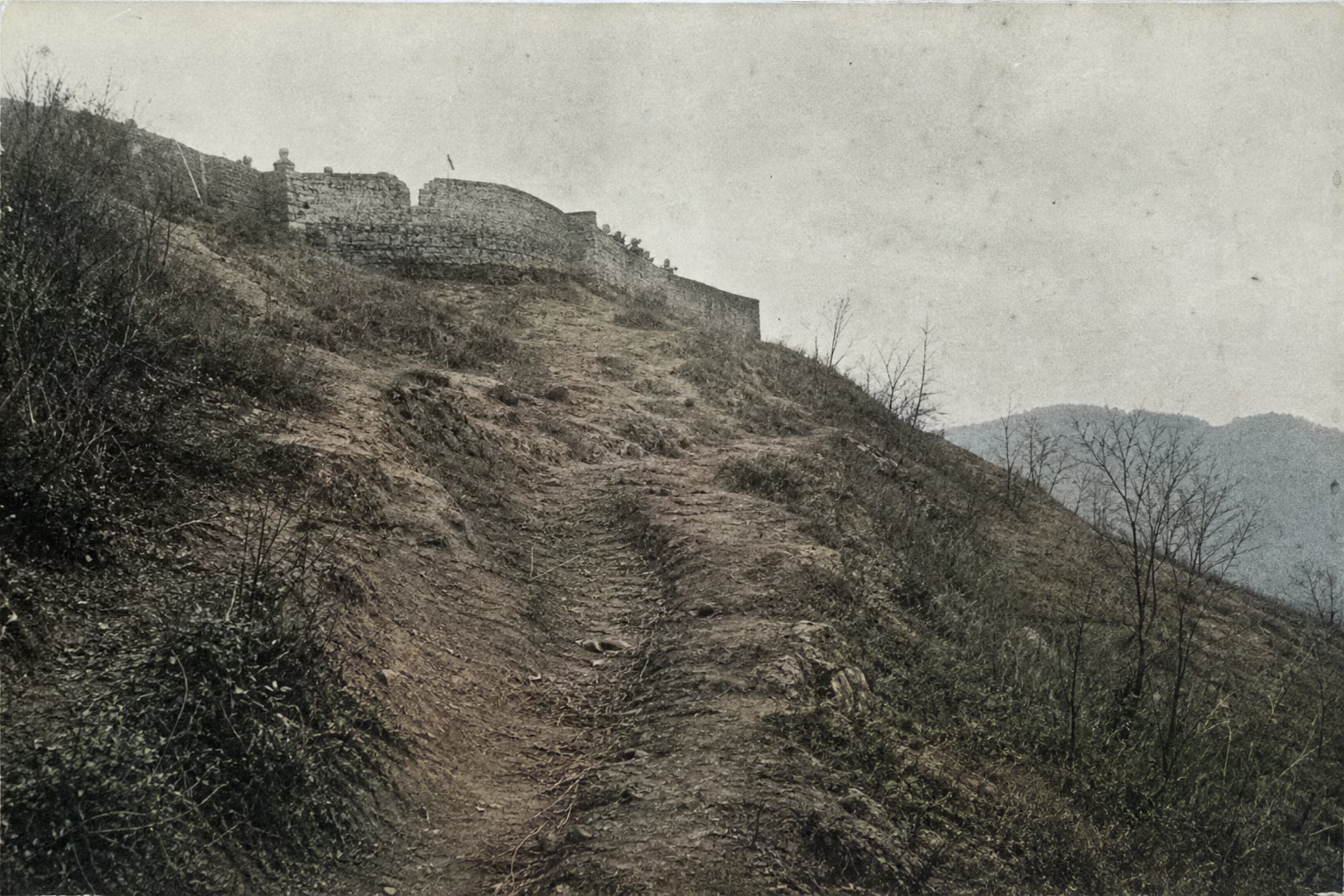
- Nanjing's outer approaches: Zijinshan (east, Tianbao Fortress) and Yuhuatai (south) were the two locks; take either first, and the city could not be held--a typical case in which breaking the high ground shattered the whole situation.
- The city wall ran several dozen li; when 20,000 defenders were spread across it, they were thin everywhere. The allied army attacked at multiple points, and the defenders had no way to judge the main direction of attack.
- Wulongshan and Mufushan riverside batteries: nodes controlling the supply line on the river.
- Jubao Gate (Zhonghua Gate) barbican: a symbolic space of city-wall assault and entry ceremony.
- The Manchu city (around the former Ming Palace): an isolated island space inside the city, and the center of violence on the day of recovery.
How Each Side Records It
- Revolutionary narrative: the closing battle of southeastern recovery, with the word "allied army" symbolizing cooperation among the provinces; the Tianbao Fortress dare-to-die unit is the highlight of heroic narrative; Nanjing soon became the capital, and this battle was remembered as a founding battle of the Republic.
- Qing court and loyalist narrative: Zhang Renjun and Tieliang were blamed for losing territory; Zhang Xun alone defended himself with "bitter fighting until strength was exhausted," and loyalist writings mostly forgave his defeat while praising his loyalty--the loss of Nanjing was recorded as the turning point at which the southeastern situation collapsed and the court had no bargaining chips left.
- Later changes: in Republican-era histories, this battle was long attached to the founding narrative and given limited space; in recent decades, urban history and research on the Eight Banner garrisons have added the experience of the Manchu city Banner people, and the single narrative of recovery has gradually become polyphonic.
Disputes and Sensitivities
- ※ Killings in the Banner garrison: during recoveries in different places, killings of Banner garrisons and Banner civilians occurred (the massacre in Xi'an's Manchu city was the gravest), and details of the siege and killings in Nanjing's Manchu city remain unrecorded; at the same time, the severe searches and killings carried out inside the city by Zhang Xun's army are recorded together--atrocities by both sides are written side by side, and merit does not cancel guilt.
- Troop figures: the figures given in different books for the allied army and the defending army vary widely, and multiple accounts coexist.
- Whose credit: Zhejiang forces attacked Tianbao Fortress, Shanghai forces attacked Yuhuatai, and Zhenjiang forces were first into the city (figure disputed)--disputes over the "first credit" of each allied unit already appear in memoir writing from the time, and the viewpoints of each side coexist.
- The experience and command-authority entanglements of allied commanders such as Xu Shaozhen and Lin Shuqing are sensitive points in studying coordination within the allied army.
Sources and Open Questions
Known main sources:
- Memoirs of personnel from the participating units of the Jiangsu-Zhejiang Allied Army (scattered through various collections of Xinhai Revolution memoirs)
- Contemporary narrative works such as Mao Naideng et al., *Record of the Jiangsu-Zhejiang Allied Army's Recovery of Nanjing* (edition unverified)
- Wartime reporting in *Shenbao* and *Minli Bao*
- Qing side: memorials and telegrams related to Zhang Renjun and Zhang Xun (archives to be checked)
Open questions: the various troop-strength figures for the allied army and the defending army; the date and course of the first assault at Molingguan; the sequence in which outlying batteries such as Wulongshan and Mufushan were taken; the course of the Tianbao Fortress night assault and the roster of the dare-to-die unit; exact total allied casualties; the manner and route of flight of Zhang Renjun, Tieliang, and Zhang Xun; details of Zhang Xun's army searching out and killing people inside the city; the siege of Nanjing's Manchu city and the scale of Banner civilian deaths and injuries; the unit number of the troops first entering the city; the specific deployments and commanders of the Zhejiang, Shanghai, and Zhenjiang forces; the telegrams and correspondence by which Shanghai called for a joint attack on Nanjing; details of the allied army's ammunition and provisions coming from the Shanghai Arsenal and Shanghai-Nanjing Railway depots; records of the split between Zhang Renjun and Tieliang's preference to withdraw and Zhang Xun's insistence on fighting; source records for the command-authority entanglement between Lin Shuqing and Xu Shaozhen.
All images on this site are AI-generated depictions. They are not historical photographs, not primary sources, and do not depict any real individual.