Engagement Archive · Wuchang Uprising
A hurried rising after an office was exposed and a roster seized -- with no Tongmenghui leader present, New Army soldiers and junior officers made a revolution overnight, and two days later Qing rule in Huguang collapsed.
Engagement Data
| Item | Details |
|---|---|
| Time | Evening of 1911.10.10 – 10.12 (the first uprising and the recovery of the three towns of Wuhan) |
| Place | Wuchang, Hubei (on 10.11–12 extending to Hanyang and Hankou) |
| Affiliation | Xinhai Revolution · Battle of the First Uprising |
| Rising side | Revolutionary party members in the Hubei New Army (soldiers and junior officers organized by the Literary Society and the Progressive Association) |
| Suppression side | Loyalist troops under Ruicheng, Qing governor-general of Huguang, and Zhang Biao, commander of the Eighth Division of the Hubei New Army |
| Result | On the morning of 10.11 all of Wuchang was recovered and the Hubei Military Government was established; on 10.11–12 Hanyang and Hankou were recovered in succession |
Belligerents
| Item | Rising side | Suppression side |
|---|---|---|
| Troop strength | Revolutionary party members across organizations in the Hubei New Army numbered several thousand in all (figures vary by basis); the number who actually joined the rising on the night of 10.10 was about two to three thousand (figure disputed) | New Army units left to defend Wuchang, the governor-general's yamen guard, patrol-defense battalions, and others; most did not resist or stood aside (details unrecorded) |
| Equipment | After the rising began, they seized the Chuwangtai arsenal and obtained large quantities of rifles and ammunition; the Eighth Artillery Regiment brought its guns up Snake Hill | Equipment of the same pattern (also within the Hubei New Army system), but command collapsed |
| Organization | Two revolutionary organizations had merged; command depended on ad hoc selection on the scene | The governor-general and division commander were in the city, but their orders did not leave the yamen |
Terrain and Conditions
(For the larger situation -- railway nationalization and the Railway Protection Movement, the failure of constitutionalism, and the revolutionary party's repeated falls and returns -- see "Xinhai Revolution: Overview"; here the account is limited to Hubei and Wuchang.)
Hubei: the revolutionary party inside the New Army. The Hubei New Army (the Eighth Division and the Twenty-First Mixed Brigade) was among the best-trained New Army forces in the south, and also the one most deeply penetrated by revolutionary party members. The Literary Society (Jiang Yiwu and others) and the Progressive Association (Sun Wu and others) developed their organizations separately among the soldiers; in the autumn of 1911 they merged, and the New Army soldiers already won over numbered in the thousands (membership-roster figures vary by basis).
Wuchang's opening: As the Sichuan Railway Protection Movement widened, Duanfang led part of the Hubei New Army into Sichuan for suppression, leaving Wuchang's defenses hollow -- this was the time window for the uprising. On 10.9, in the Baoshanli office in the Russian concession at Hankou, a bomb being prepared exploded; Sun Wu was wounded, and rosters and proclamations were seized by concession police and handed over to the Qing side. The Qing side arrested people according to the roster, and the rising had become a matter of life or death. On the morning of 10.10, Peng Chufan, Liu Fuji, and Yang Hongsheng were executed (the three martyrs "Peng-Liu-Yang").
Why It Was Fought
Less than half a year had passed since the Huanghuagang uprising. In that action, the Tongmenghui had committed the strength of the whole party to attacking Guangzhou from outside the city; Huang Xing led the chosen vanguard straight at the governor-general's yamen, fought through a day and night of street fighting, and was defeated and scattered. The road of fighting inward from outside had been tried to its end. What remained was another road: the New Army line, by which revolutionary party members had been developed among Qing soldiers after 1907. The place where this road went deepest was not Guangdong and Guangxi, but Hubei -- the Literary Society and the Progressive Association worked separately in the battalions of the Hubei New Army, and in the autumn of 1911 the two merged. All that was missing was a spark.
That Wuchang moved in this year came from a window pushed open by the court itself. In May, the Imperial Clan Cabinet appeared, and the constitutionalists' last layer of hope fell away; in the same month, the main railway lines were taken into state ownership, and the Sichuan Railway Protection Movement erupted. On September 7, in the Chengdu Bloodshed, Governor-General Zhao Erfeng lured the railway-protection leaders into detention and let troops fire on petitioning crowds; the Sichuan situation decayed. The court transferred Duanfang with part of the Hubei New Army into Sichuan for suppression -- a portion of the army most deeply penetrated by revolutionaries was pulled away, and a hole opened in Wuchang's defenses.
The spark was not lit by the revolutionary party itself. On October 9, at Baoshanli in the Russian concession at Hankou, the Progressive Association's office accidentally exploded while preparing bombs; Sun Wu was wounded, and rosters and proclamations were seized by concession police and handed over to the Qing side. Huguang Governor-General Ruicheng spent the night arresting people by name; on the morning of the 10th, Peng Chufan, Liu Fuji, and Yang Hongsheng were executed.
The suppression side's calculation was that, with the roster in hand, it could work down the list name by name, kill three men to warn the whole army, and strangle the rising before it began. What these killings actually told the revolutionary soldiers throughout the city was something else: those whose names were on the list no longer had a road of retreat. If they did not rise, they could only wait to be arrested and executed one by one. The rising side had also lost its method: the original uprising plan collapsed after repeated changes and blocked communications (links between headquarters and the units were cut; Jiang Yiwu fled the city that day; details unrecorded), and not one Tongmenghui leader was present -- Sun Yat-sen was far away in the United States, and Huang Xing was still in Hong Kong.
The rising side had originally had a plan. In late September, a joint meeting of the Literary Society and the Progressive Association set the uprising for the Mid-Autumn Festival, then postponed it for lack of preparation (details vary by account). On October 9, the day the Baoshanli affair was exposed, Jiang Yiwu, in the name of provisional commander-in-chief, ordered the rising to begin that night, using the artillery report from the Nanhu artillery unit as the signal -- those carrying the orders were either arrested or blocked, and the guns never sounded (the course of the interrupted order transmission is unverified). The party members in the regiments and battalions were left with only two roads: rise, or sit and wait to be bound.
The material boundary was simple on both sides. In ordinary times, the New Army kept rifles and ammunition separate, with cartridges stored in arsenals; the first task of the rising was to seize the Chuwangtai arsenal. If the arsenal was taken, rifles and ammunition would be complete; if not, the rising would collapse within the night. On the Qing side, what Duanfang had taken into Sichuan was part of the Eighth Division, and the troops left to defend Wuchang still outnumbered the insurgents several times over, but orders were divided. What Ruicheng lacked was not soldiers, but soldiers willing to fire for him.
There had been dissent on both sides. Within the revolutionary party, the dispute over the timing of the uprising ran through the whole year (details unverified). On the Qing side, one aide advised Ruicheng to burn the roster in order to calm the army, but Ruicheng rejected the advice and insisted on arresting and killing by name (this advice appears only in memoir accounts, source unverified). As for whether anyone in the camps opposed rising immediately, existing memoirs do not show it -- once the roster appeared, there was no time left for dissent.
Thus it became a spontaneous rising by the soldiers of the various regiments and battalions. No one issued an overall command; revolutionary soldiers across the city each made the same judgment: if they did not move now, it was over. As night fell on October 10, the rifles of the Eighth Engineer Battalion sounded first.
Course of the Engagement
| Stage | Time | Main points |
|---|---|---|
| Office exposed | 10.9 | The Baoshanli explosion in Hankou wounded Sun Wu, and rosters and proclamations were seized; the Qing side arrested people by name |
| Three martyrs executed | Morning of 10.10 | Peng Chufan, Liu Fuji, and Yang Hongsheng were executed |
| First-uprising gunfire | Evening of 10.10 | The Eighth Engineer Battalion fired the first shot (the two accounts of Cheng Zhengying's first shot and Xiong Bingkun's merit in organizing the first uprising are listed side by side; see "Disputes and Sensitivities") and seized the Chuwangtai arsenal |
| Camps rising in succession | Night of 10.10 | Revolutionary soldiers in the various regiments and battalions responded, and Wu Zhaolin was put forward as provisional commander-in-chief; the artillery unit went up Snake Hill and shelled the Huguang governor-general's yamen |
| Ruicheng flees | Night of 10.10 | Huguang Governor-General Ruicheng escaped by breaking through the rear wall of the yamen (one account says by opening a gate) and boarded the Chuyu warship; Zhang Biao, commander of the Eighth Division, led the remnants out of Wuchang |
| Wuchang recovered | Morning of 10.11 | The whole city was recovered; the provincial consultative assembly met and put forward Li Yuanhong, a New Army brigade commander, as military governor of the military government (for the tale of the "military governor under the bed," see "Disputes and Sensitivities"), while Tang Hualong and other constitutionalists joined the administration |
| Three towns recovered | 10.11–12 | Hanyang and Hankou were recovered in succession; the military government issued proclamations, changed the state name to "Republic of China," and used the Iron-Blood Eighteen-Star Flag |
Casualties and Losses
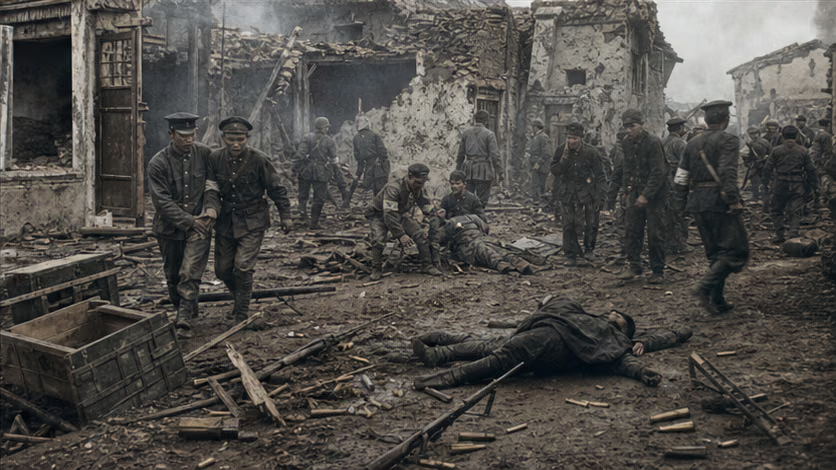
- The fighting in the recovery of the three towns of Wuhan on 10.10–12 was itself not large in scale, and each side's dead numbered in the hundreds (figures vary by basis) -- the "cheapness" of this uprising was precisely what came from troops being transferred for railway-protection suppression and from the hollowing of the city's defenses.
- The three martyrs (Peng-Liu-Yang) and those arrested and killed after the office was exposed were the price paid on the eve of the first uprising.
- ※ Records exist of revenge killings in the recovery of Wuchang against Bannermen and people suspected of being Bannermen inside the city (scale and details unrecorded) -- among killings of this type during recoveries across the country, the massacre of the Xi'an Manchu city was the gravest. This is retained here for checking; see "Disputes and Sensitivities."
Aftermath
- The Hubei Military Government was established, and Li Yuanhong became military governor -- a man pushed forward provided the revolution with legitimacy and a respectable signboard.
- The Qing court immediately transferred troops for a counterattack: the Defense of Yangxia (Hanyang–Hankou) (1911.10.18–11.27) followed at once; see "Defense of Yangxia (Hanyang–Hankou)."
- The chain reaction of the first uprising: within just over a month, more than ten provinces declared independence in succession, and the foundations of Qing rule collapsed by whole sections -- for details of provincial responses, see "Xinhai Revolution: Overview."
Accounts of Those Present
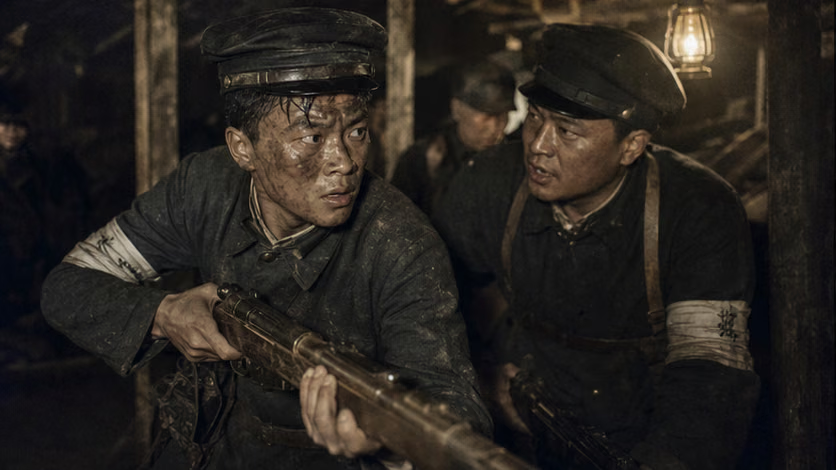
- The first shot: On the evening of 10.10, in the Eighth Engineer Battalion, squad leader Xiong Bingkun began the action and organized the rising as the party-member representative; the actual first shot was fired by the soldier Cheng Zhengying (wounding an officer who was trying to obstruct the rising) -- the narrative of "Xiong's shot" circulated extremely widely, but after critical checking most accounts hold that the organizing merit belonged to Xiong and the act of firing to Cheng. The two accounts are listed side by side.
- Wu Zhaolin: When he was put forward as provisional commander-in-chief, he was only a platoon officer (company-level); the direction of that night's citywide shelling of the yamen came from a junior officer.
- Li Yuanhong: On the night of the first uprising he was not a revolutionary party member, and he had even killed revolutionary liaison soldiers (figure disputed); on 10.11 he was found in hiding and pushed into the military governor's seat -- the tale of the "military governor under the bed" circulated very widely (dragged out from under an aide's bed), but critical checking often doubts its truth. Legend and critical finding coexist as two layers.
- Peng-Liu-Yang: The three men executed on the morning of 10.10 were only a dozen or so hours away from that night's first uprising -- had the Qing side acted one day more slowly, history would have been written another way.
- The artillery unit up Snake Hill: taking arms at Chuwangtai, emplacing guns on Snake Hill, and bombarding the yamen -- the decisive move in the rising was the collective joining of the Eighth Artillery Regiment. Without artillery, the yamen could not be taken.
The Ground
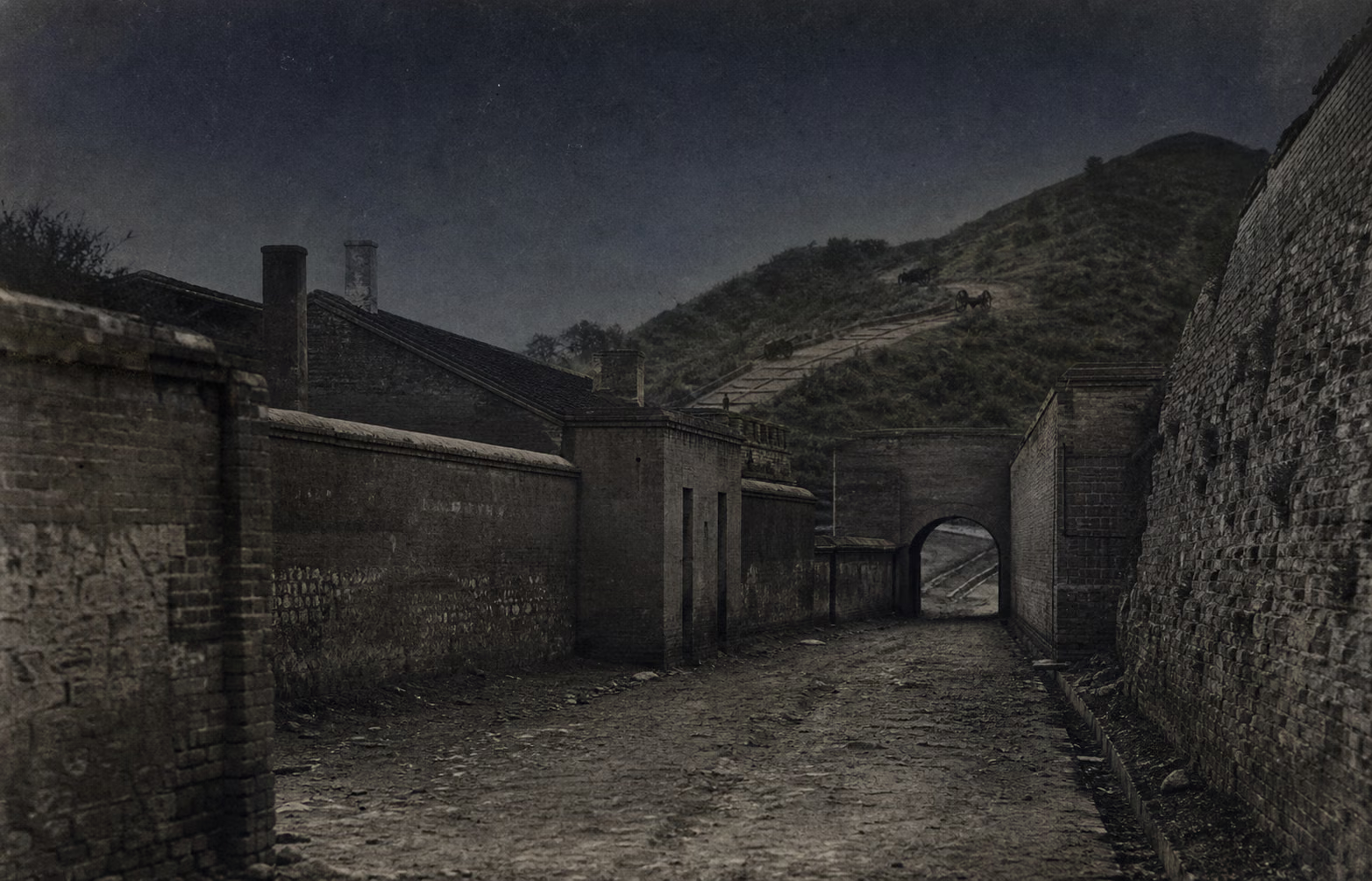
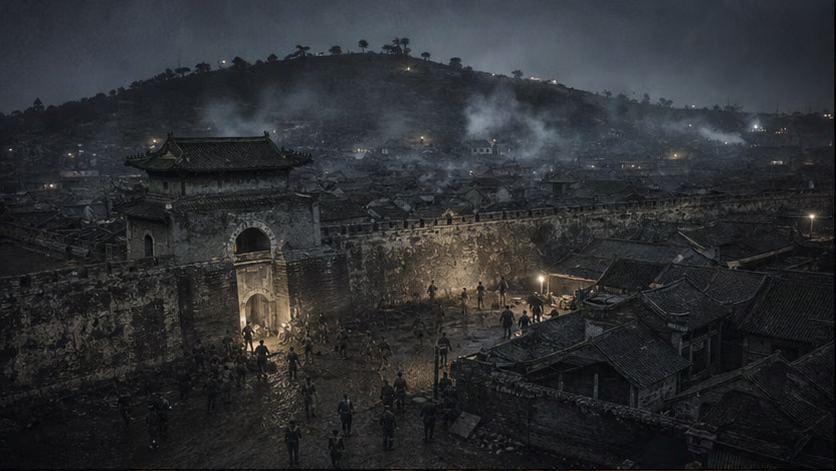
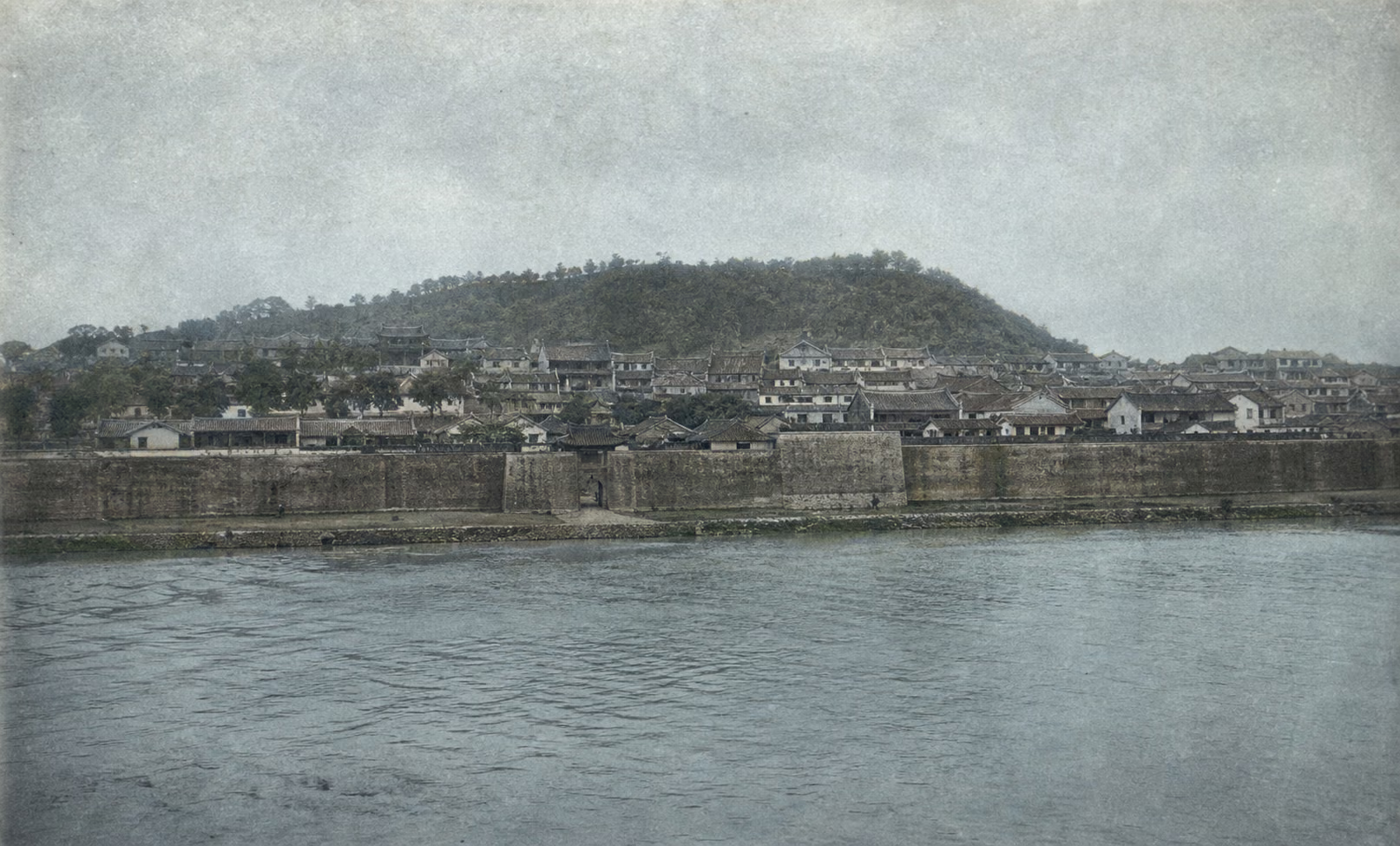
- Wuchang was an old walled city: the Chuwangtai arsenal stood inside Zhonghe Gate (later renamed Uprising Gate), the governor-general's yamen was in the south of the city, and Snake Hill ran across the city as a natural artillery position -- an axis of "seize the arsenal -- climb the hill -- shell the yamen."
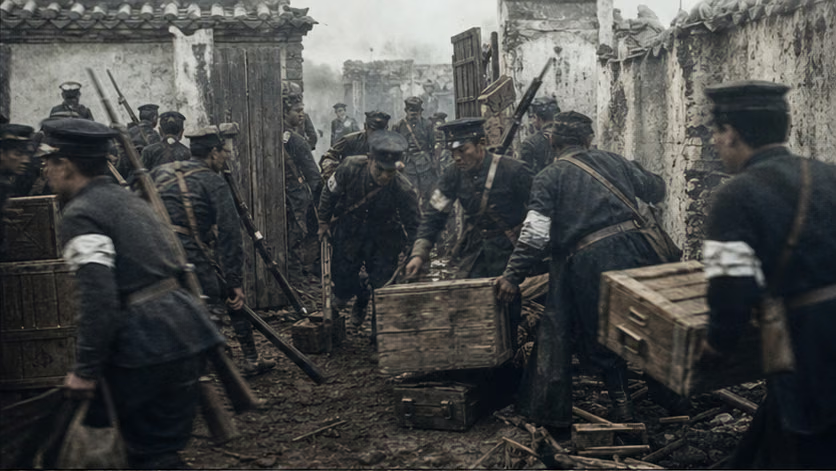
- Night fighting and streets and alleys inside the city meant that friend and enemy were identified by password and armband (white cloth wrapped around the arm, unverified).
- The three-town pattern: Wuchang faced Hanyang and Hankou across the river, and the river surface and bridges formed the whole space of the fighting that followed (see "Defense of Yangxia (Hanyang–Hankou)").
- Banner-camp space: the Wuchang Manchu city and Bannermen's residential areas became targets of violence during the recovery; ※ the spatial narrative related to this has to be handled together with the history of killing.
How Each Side Records It
- Revolutionary narrative: the point of origin for Xinhai narratives, with the two characters for "first uprising" carrying their own sanctity; the Republic set Wuchang Uprising Memorial Day as National Day (Double Ten Day). For a long time, the first shot and the roster of first-uprising heroes were dominated by the line of narration associated with Xiong Bingkun, and only after later critical checking did the account gradually become more plural.
- Qing court and loyalist narrative: Ruicheng and Zhang Biao were punished for abandoning the city and losing territory; Qing official writings called the insurgents "bandits" and "mutinous soldiers," while in loyalist writing it was the "Hubei disorder," the beginning of a two-hundred-year foundation collapsing overnight.
- Later changes: after 1949, mainland narratives stressed Tongmenghui leadership and the mass base, and the standing of Jiang Yiwu, Liu Fuji, and others rose; Taiwan continued the "Wuchang First Uprising" Double Ten narrative. In recent decades, scholarship has restored the actual situation of "soldiers rising, leaders absent," and the two readings of "accidental success" and "the outcome of conditions coming ripe" coexist.
Disputes and Sensitivities
- The level of "Xiong's shot": Critical checking of Cheng Zhengying's first shot and Xiong Bingkun's merit in organizing the first uprising has reached a general scholarly tendency, but popular narratives still center on "Xiong's shot" -- the two accounts coexist, at different levels.
- The "military governor under the bed": The tale circulated very widely, while critical checking often doubts its truth. Legend and critical finding coexist as two layers.
- A revolution without leaders: Not one Tongmenghui leader was present (Sun Yat-sen was in the United States, and Huang Xing was en route from Hong Kong) -- the two readings of "accidental success" and "the outcome of conditions coming ripe" are listed side by side.
- ※ Recovery killings: The killings of Banner camps and Banner civilians during recoveries in various places (the massacre of the Xi'an Manchu city was the gravest) and the severity of Qing military suppression are recorded together on the same ledger. Details of the killings in Wuchang itself are unrecorded; they are neither avoided nor enlarged.
- Revolutionary-organization accounts: the relationship among the Literary Society, the Progressive Association, and the Tongmenghui (levels of affiliation and leadership) has long been disputed, and affects the characterization of "who led the first uprising."
Sources and Open Questions
Known main sources:
- Xiong Bingkun, "Overview of the First-Uprising Action by the Engineer Battalion," and other memoirs by participants in the first uprising (collected in Memoirs of the Xinhai First Uprising)
- Cao Yabo, True History of the Wuchang Revolution
- Zhang Nanxian, Record of What I Know of the Hubei Revolution
- Zhang Kaiyuan and Lin Zengping, eds., History of the Xinhai Revolution (general-history reference)
Open questions: membership-roster figures for the two organizations; the number who actually rose on the night of 10.10; exact numbers of Qing troops left on defense; casualty figures for both sides in the fighting that recovered the three towns; Jiang Yiwu's whereabouts on 10.10; the matter of Li Yuanhong killing revolutionary liaison soldiers; the original source of the "military governor under the bed"; the scale of Bannermen killed in the recovery of Wuchang; details of the identification sign used in the rising (white cloth wrapped around the arm); the original sources for the two accounts of Ruicheng's escape by "breaking through a wall/opening a gate"; details of the Literary Society and Progressive Association joint meeting and postponement; the course by which the October 9 uprising order transmission was interrupted; the original source for the advice that Ruicheng burn the roster; exact numbers of troops Duanfang took into Sichuan; records of the dispute within the revolutionary party over the timing of the uprising.
All images on this site are AI-generated depictions. They are not historical photographs, not primary sources, and do not depict any real individual.