Engagement Archive · Defense of Yangxia (Hanyang–Hankou)
For forty-one days, the People's Army lost battle after battle at Hankou and Hanyang, yet pinned the Beiyang main force fast at the three towns of Wuhan: a military defeat in every immediate sense, but one that won time for the independence of more than ten provinces across the country.
Engagement Data
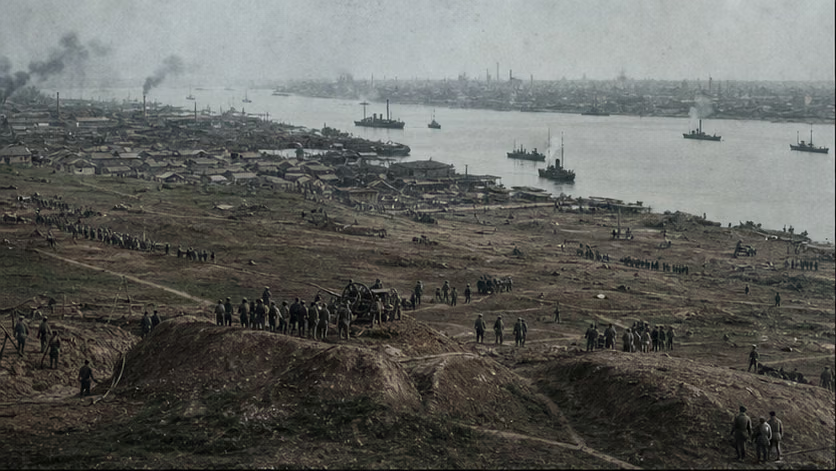
| Item | Details |
|---|---|
| Time | 1911.10.18 – 11.27, 41 days in all (from 12.1, ceasefire and peace talks) |
| Place | Hankou (Xiakou), Hubei; Hanyang; and the line facing Wuchang across the river |
| Part of | Xinhai Revolution · Wuhan front |
| People's Army (Revolutionary Army) | Hubei Military Government forces (command changed repeatedly in the early stage; Huang Xing arrived in Hankou on 10.28, and on 11.3 was appointed wartime commander-in-chief at Baijiangtai) |
| Qing forces | Yinchang commanded the campaign -> Yuan Shikai came out of retirement; Feng Guozhang's First Army (Beiyang main force) at the front |
| Result | Hankou fell on 11.1, Hanyang on 11.27; Wuchang faced Qing forces across the river, and from 12.1 a ceasefire began. Though the People's Army was defeated, the momentum of provincial independence had already formed |
Belligerents
| Item | People's Army (Revolutionary Army) | Qing forces |
|---|---|---|
| Strength | Several thousand to more than ten thousand Hubei People's Army troops, later reinforced by Hunan troops and others (total participants vary by statistical basis) | Mainly the Beiyang First Army, with total commitment from roughly more than ten thousand to several tens of thousands (figures vary by statistical basis) |
| Equipment | Supplied with rifles, artillery, and ammunition from the Hanyang Arsenal, but lacking training and coordination | Standard equipment of the six Beiyang divisions, with superiority in heavy artillery and machine guns, plus Sa Zhenbing's naval gunfire on the river for a time before the fleet departed |
| Command | Command changed repeatedly in the early stage; only after Huang Xing arrived in Hankou on 10.28 was there a unified headquarters in the rear. Many soldiers had never fought before | Yinchang's campaign command was ineffective; in late October Yuan Shikai came out of retirement and Feng Guozhang commanded troops at the front, giving Qing forces a complete command system |
| Morale | High after the initial victory, then badly shaken by consecutive defeats and the Hankou fire | A long-trained force, yet weariness of war, avoidance of battle, and a mentality of "for Yuan, not for the Qing" coexisted (details unrecorded) |
Terrain and Conditions
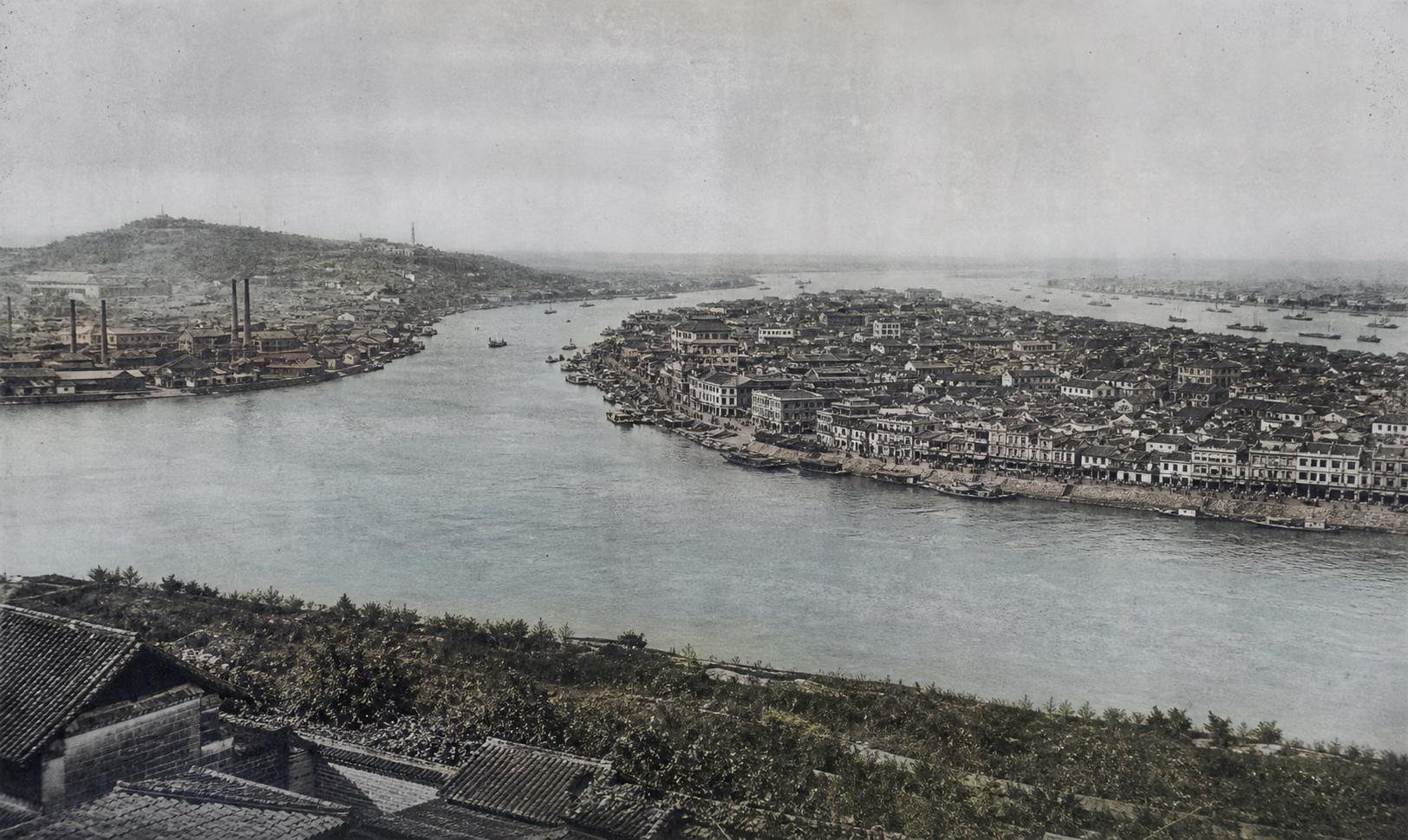
(For the wider setting -- the Railway Protection Movement, the wave of provincial independence, and the struggle between Yuan Shikai and the Qing court -- see "Xinhai Revolution · Overview"; here, only the three towns of Wuhan are treated.)
The three towns: Wuchang, Hankou, and Hanyang stood across the rivers from one another. Hankou was the largest commercial port on the middle Yangtze, with dense streets and rows of shops; Hanyang held what were then China's most important arsenal and ironworks. Whoever controlled Hanyang had guns and ammunition. After the Wuchang Uprising, the Military Government held the three towns and set the factories to producing arms; this was the material foundation that allowed the People's Army to hold for forty-one days.
On the river: Sa Zhenbing led the navy fleet at anchor on the Wuhan river surface, the Qing forces' greatest weight of firepower. After shelling the People's Army, the fleet wavered in its attitude and eventually departed (motives behind the departure remain unverified); from then on, the river surface was no longer monopolized by Qing forces.
Why It Was Fought
Within two days of the Wuchang Uprising, the three towns had been recovered, and the Hubei Military Government was established. Once the news reached Beijing, the court had no second choice: if the place of the first uprising was not extinguished at once, the provinces would follow its example. Army Minister Yinchang was ordered to command the campaign, and Beiyang troops were loaded southward along the Beijing-Hankou Railway.
The order did not travel smoothly. On October 12, Yinchang was ordered to command the campaign and Sa Zhenbing to lead the fleet to Hubei to "suppress" the rising; but Yinchang could not command the Beiyang troops -- their officers knew only Yuan. On October 14, Yuan was again appointed governor-general of Huguang, but he declined on grounds of a foot ailment. After repeated defeats at the front, Yinchang was recalled on October 27, and Yuan was appointed imperial commissioner. It took half a month for an exiled official "recuperating at home" to become the commander at the front. Three years earlier, the regent had stripped him of military power; now the military seal was handed back because Beiyang would obey no one else's orders. When Beijing made these decisions, it could not see the provinces: it calculated how many days it would take to extinguish one province, but not that before one province was pacified, more than ten would already rise.
Wuhan was worth fighting to the death over because three things were layered in one place. Hankou was the largest commercial port on the middle Yangtze; Hanyang held the arsenal and ironworks -- whoever controlled Hanyang had guns and ammunition, and the Military Government's use of the factories to make arms was the material foundation for the People's Army's willingness to fight; Wuchang was the signboard of the first uprising. For the court, this was the source that had to be strangled; for the Military Government, if Wuhan was lost, the revolution lost its base. Neither side could retreat.
Time was pressed just as tightly. For the first ten days or so after the first uprising, Hubei was almost an island: Changsha and Xi'an would not raise their flags until October 22. If Qing forces moved quickly, the revolution might be crushed inside one province; if the People's Army could hold them off, the provinces would have time to rise. The same Beijing-Hankou Railway gave the court one calculation -- how many days it would take to arrive -- and the Military Government another -- how many days it could block it.
On paper, Qing forces held every advantage: the long-trained six Beiyang divisions, superiority in heavy artillery and machine guns, and Sa Zhenbing's fleet anchored on the river. Their shortcoming was at the top: Yinchang could not coordinate effectively, and the Beiyang Army was a force Yuan Shikai had trained with his own hands. The court then used Yuan Shikai to put out the fire, but did not calculate that once he took back military power, he would fire in both directions. From this point on, the gunfire at Wuhan carried an additional layer of calculation outside the battlefield. The People's Army numbered several thousand, many of its soldiers had never fought, and command changed repeatedly; it held on through the energy of its initial victory and the ammunition of Hanyang. Its calculation was to strike before the Beiyang main force had fully assembled, keeping the battle on the railway line outside the city.
Material conditions drew equally clear boundaries for both sides. The People's Army relied on three ready resources: the rifles and ammunition of the Hanyang works, silver reserves from the provincial treasury and official money bureau, and arms captured in the first uprising. But the factories could make rifles, not heavy artillery, and silver could pay wages, not train soldiers. The several brigades of newly expanded New Army troops were made up largely of workers, townspeople, and students who had put down their tools only a few weeks earlier. Qing forces had sufficient weapons and pay, but were constrained by finance: the Ministry of Revenue's treasury was empty, military expenses depended on loans from foreign banking consortia, and the negotiations dragged on into the peace talks (the course of wartime borrowing remains unverified).
Dissent is recorded on both sides. Within the People's Army headquarters, crossing the river to counterattack Hankou was not without opposing views: the new troops had not yet become an army, enemy artillery was superior, and some advocated holding firm to await reinforcements. Huang Xing resolved to try and was defeated (this debate appears only in memoirs; source unverified). On the court's side, the suspicion of Yuan among princes and nobles had not disappeared; it was simply outweighed by reports of defeat. As for whether the People's Army ever discussed abandoning the three towns and seeking another way out, no surviving record has been seen.
The throat by which the railway entered Hankou lay at Liujiamiao north of the city. On October 18, the People's Army struck first, taking the offensive. Only eight days had passed since the night of the first uprising; the Battle of Yangxia began there.
Course of the Engagement
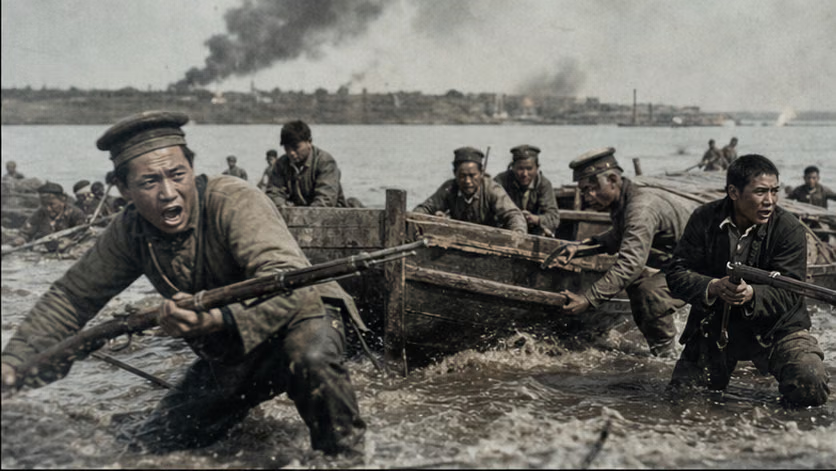
| Phase | Time | Key Points |
|---|---|---|
| Initial victory at Liujiamiao | From 10.18 | The People's Army took the offensive north of Hankou, won the first fighting around Liujiamiao, and captured military supplies (victory reports vary by statistical basis) |
| Qing counteroffensive | Late October | The Beiyang main force pressed down along the Beijing-Hankou line, and the People's Army retreated step by step into Hankou's urban districts |
| Street fighting in Hankou | Late October | Street fighting contested block after block; ※ Feng Guozhang ordered Hankou's streets set on fire. The blaze burned for three days, turning prosperous districts to scorched earth and leaving civilians dead, wounded, and displaced beyond count (details of burning and looting unrecorded) |
| Fall of Hankou | 11.1 | The People's Army retreated to Hanyang and Wuchang |
| Huang Xing's appointment | 10.28–11.3 | Huang Xing arrived in Hankou on 10.28 (the story of a great "Huang Xing has arrived" banner entering the city remains unverified), and on 11.3 was appointed wartime commander-in-chief at Baijiangtai |
| Counterattack on Hankou | Mid-November | The People's Army crossed the river to counterattack Hankou and failed (specific date and course unverified) |
| Defense of Hanyang | Late November | Qing forces attacked Hanyang and the People's Army defense line collapsed; Hanyang fell on 11.27, and Huang Xing left for Shanghai |
| Standoff across the river | After 11.27 | Wuchang and Qing forces faced each other across the river; Sa Zhenbing's fleet departed after shelling; from 12.1, ceasefire and peace talks began |
Casualties and Losses
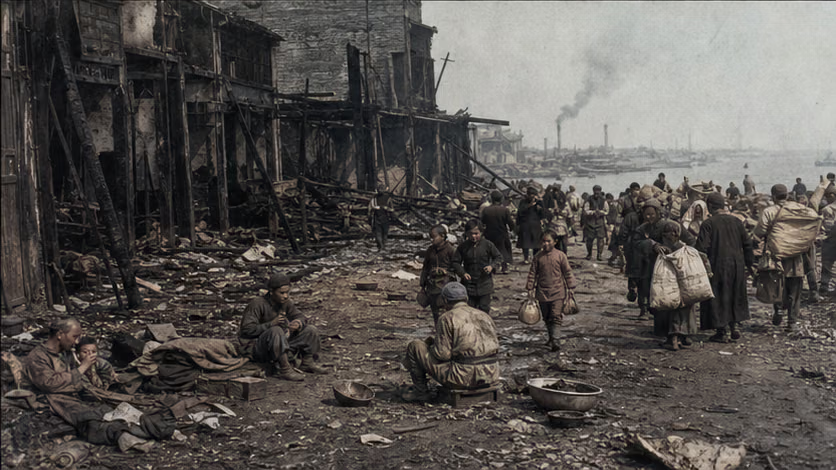
- People's Army: several thousand casualties (figures vary by statistical basis), with losses concentrated in the counterattack on Hankou and the fighting for Hanyang.
- Qing forces: also heavy casualties (exact figures unrecorded); for the three towns of Wuhan, the Beiyang Army paid its largest price in the entire Xinhai Revolution.
- ※ Civilians: the Hankou fire burned prosperous districts, destroyed homes by the tens of thousands, and left civilians dead, wounded, and displaced beyond count -- one of the severest single harms to civilians in the Xinhai fighting (details of records on burning and looting unrecorded).
Aftermath
- Even as the People's Army suffered consecutive defeats, the national situation had already turned: during Yangxia's forty-one days, more than ten provinces declared independence in succession (for details see "Xinhai Revolution · Overview"). "A defeated battle completing a strategic task" is the key to this engagement.
- After Hanyang fell, the Wuhan front shifted into ceasefire and peace talks, opening the North-South negotiations (see "Xinhai Revolution · Overview").
- Huang Xing left for Shanghai, and the center of gravity shifted east; the Jiangsu-Zhejiang allied forces soon captured Nanjing (see "Battle of Nanjing (1911)"), settling the southeastern situation.
- Yuan Shikai used the uncompleted victory in Wuhan to gain bargaining position with the revolutionaries: in practice, the gunfire at Yangxia was the opening drumbeat of the North-South peace talks.
Accounts of Those Present
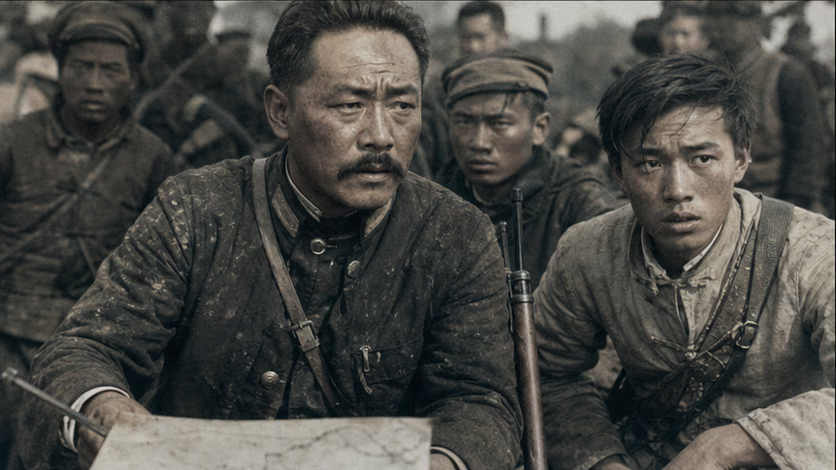
- "Huang Xing has arrived": Huang Xing arrived in Hankou on 10.28, and morale rose with him. There is a transmitted story that he entered the city on horseback under a great "Huang Xing has arrived" banner to calm the people (figure disputed); on 11.3, his appointment at Baijiangtai gave the revolutionary camp its first "wartime commander-in-chief."
- The Hankou fire: ※ To clear street barricades and cut off the People's Army's positions, Feng Guozhang set the city streets on fire, and the flames did not go out for three days. Merchants and townspeople fled toward the river with the old and young in tow, and prosperity was emptied in a single sweep. This was scorched earth under the Beiyang Army's stated mission of "suppressing bandits," and Chinese and foreign newspapers both reported it at the time (specific reports unverified).
- The navy's balance: Sa Zhenbing's fleet first shelled the People's Army, but many of his subordinates later sympathized with the revolution, and the fleet eventually departed. The Qing forces' strongest weight of firepower removed itself from the table (Sa's own motives in leaving or staying remain unverified).
- Student troops and dare-to-die units: Among the provincial forces sent to aid Hubei were many volunteers from student and secret-society backgrounds. They went to the front without training and suffered very heavy casualties (specific units and numbers vary by statistical basis).
- The weight of a defeated general: Huang Xing lost repeatedly at Yangxia, yet his prestige in the revolutionary camp did not fall. In the context of that year, the four characters for "fighting on after repeated defeats" were a positive judgment.
The Ground
- The three towns faced one another across the rivers: Hankou on the north bank, Hanyang on the west bank, and Wuchang on the southeast bank, at the confluence of the Yangtze and Han rivers. Water routes, pontoon bridges, and counterattacks across the river formed the entire grammar of movement.
- The Beijing-Hankou Railway entered from the north; Liujiamiao -> Dazhimen -> Hankou's urban districts formed a one-way corridor of attack and defense.
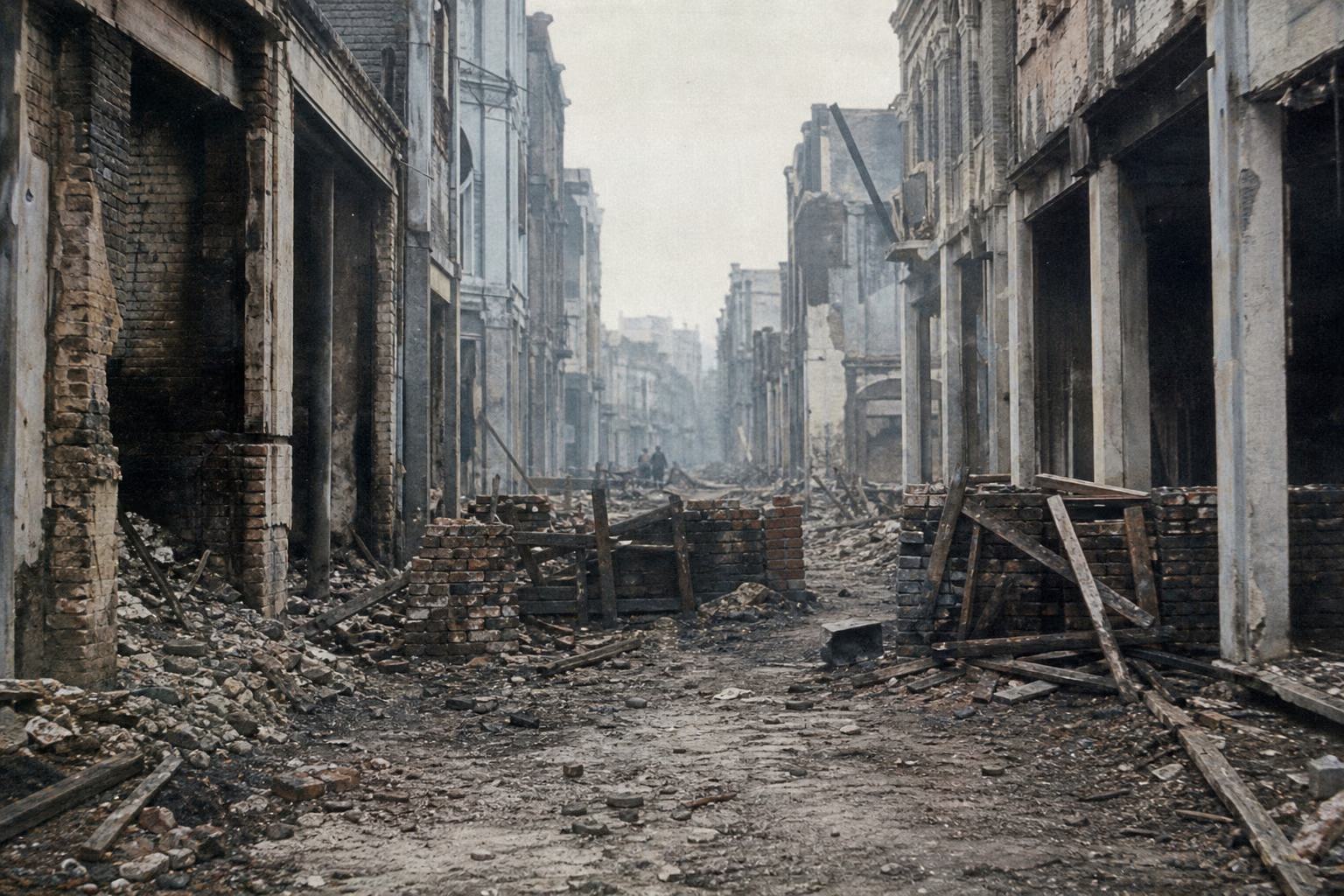
- Hankou streets: dense shop-lined lanes plus the scorched earth of the fire, with the space of street fighting rewritten day by day by the fireground.
- Guishan and the arsenal in Hanyang: high ground and supply source in one, the core space of Hanyang's defense.
- The river surface: warship gun positions versus shore guns, with the vertical firepower gap coming from the water.
How Each Side Records It
- Revolutionary narrative: the Battle of Yangxia is a positive archetype of "exchanging space for time" -- Huang Xing's appointment, soldiers and civilians holding to the death, defeat without collapse, and endurance until the provinces became independent. The two characters "Yangxia" held an exalted place in Republican commemorative language.
- Qing court and loyalist narrative: official books recorded the "recapture of Hankou and Hanyang" as a victory, but acknowledged that Wuchang remained "held by bandits" and that the broader situation was lost. In loyalist writing, Feng Guozhang's victory was an "afterglow"; the Hankou fire was often avoided or blamed on disorderly troops (details unrecorded).
- Later changes: mainland historiography long evaluated the defeat at Yangxia and Huang Xing's departure for Shanghai through the framework of "bourgeois weakness," while in recent decades it has shifted toward affirming the engagement's strategic containment function. The civilian perspective on the Hankou fire has reemerged in recent studies of urban history and newspaper history.
Disputes and Sensitivities
- ※ The Hankou fire: the level of the arson order -- whether Feng Guozhang acted alone or Yuan Shikai tacitly permitted it -- and the details of burning and looting differ across historical records. This is a stain in the history of the Beiyang Army and a core scene in civilian narrative.
- The judgment of "complete victory through defeat": the strategic effect of containment is clear, but the People's Army's command errors and hurried counterattack also coexist with it. This engagement is not a simple reversal essay.
- The causal strength between provincial independence and Yangxia's containment: the containment argument is mainstream, but some historians also emphasize that provincial independence had its own internal causes. Both weightings coexist.
- Evaluation of Huang Xing's command: responsibility for the successive defeats after his appointment has long been read in two ways, as "no fault of the general" and as "faulty command."
Sources and Open Questions
Known main sources:
- Li Shucheng, "The Revolutionary Activities of Mr. Huang Keqiang Before and After the Xinhai Revolution," and other memoirs by people close to Huang Xing
- The collected Memoirs of the Xinhai First Uprising (participants from the People's Army)
- Chinese and foreign newspapers of the time (Shenbao, Minli Bao, and English-language newspapers' reports on the Hankou fire)
- Feng Guozhang and Beiyang-side telegrams and memorials (Qing-side archives)
Open questions: statistical bases for the cumulative strength committed by both sides; exact People's Army casualties; exact Qing casualties; statistical basis of the first victory reports at Liujiamiao; specific date and course of the counterattack on Hankou; original source for the "Huang Xing has arrived" great-banner story; the course and motives of Sa Zhenbing's fleet's departure or stay; the Hankou fire's order level, date of ignition, burn area, and estimates of civilian deaths and injuries; unit designations and numbers of student troops and dare-to-die units sent to aid Hubei; specific dates in the transfer of command authority among Yinchang, Yuan Shikai, and Feng Guozhang; checking the dates and original texts of the three edicts ordering Yinchang to command the campaign, appointing Yuan governor-general of Huguang, and appointing him imperial commissioner; the course of Qing wartime borrowing from foreign banking consortia; the memoir source for dissent within the People's Army headquarters over the counterattack on Hankou; whether the People's Army ever discussed abandoning the three towns (no surviving record yet seen).
All images on this site are AI-generated depictions. They are not historical photographs, not primary sources, and do not depict any real individual.