Engagement Archive · Battle of Mukden
Six hundred thousand Japanese and Russian troops fought for eighteen days on both banks of the Hun River, in what was then the largest land battle in human history: the battlefield was the villages and towns of Mukden, beside imperial tombs, while the "neutral" Qing authorities inside the city could only watch.
Engagement Data
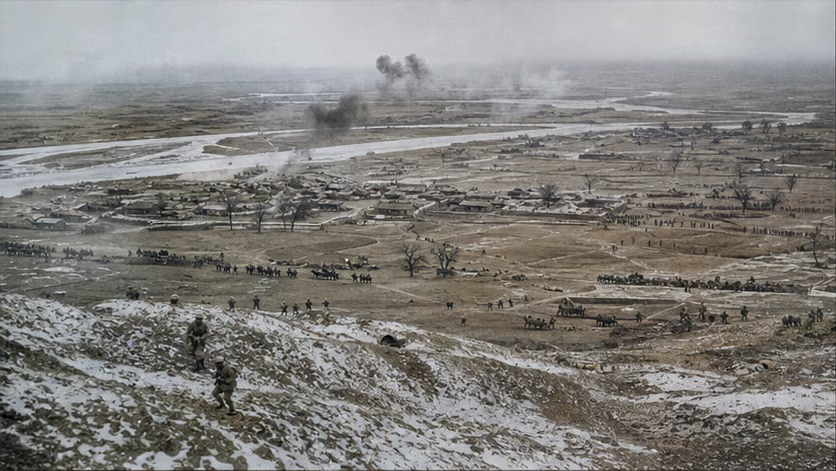
| Item | Details |
|---|---|
| Time | 1905.2.21 – 3.10 |
| Place | South of Fengtian in China (present-day Shenyang), along both banks of the Hun River and on a front extending several dozen kilometers farther south |
| Part of | Russo-Japanese War (foreign war on Chinese soil) · final decisive battle on the land front |
| Japanese forces | General Headquarters of the Manchurian Army (Commander-in-Chief Oyama Iwao, Chief of Staff Kodama Gentaro): First Army (Kuroki Tamemoto), Second Army (Oku Yasukata), Third Army (Nogi Maresuke), Fourth Army (Nozu Michitsura) |
| Russian forces | Commander-in-Chief of the Manchurian Army Kuropatkin |
| Result | Japanese forces enveloped both wings; after a mistaken judgment, Russian forces made a general retreat toward Siping; Japanese forces entered Mukden city on 3.10. The land war was thereby decided |
Belligerents
| Item | Japanese forces | Russian forces |
|---|---|---|
| Strength | About 250,000 (Japanese and later research statistical basis; unverified) | About 310,000–370,000 (figures vary sharply by statistical basis, with varying accounts) |
| Artillery | More than 1,000 guns in the combined army artillery (figure disputed); part of the Port Arthur siege artillery was moved north | Numerical superiority (figure disputed), but dispersed across a broad front |
| Machine guns | Limited allotment to each division | Allotted in large numbers and used from trenches |
| Supply | Sea transport and rail relay; after Port Arthur was freed, the Third Army and siege artillery were transferred north | Long single-track supply over the Trans-Siberian Railway; sequential reinforcement was already near its limit |
| Command | Unified General Headquarters; each army executed an enveloping movement according to the battle plan | Coordination among corps repeatedly failed; use of reserves was hesitant (details remain unverified) |
Terrain and Conditions
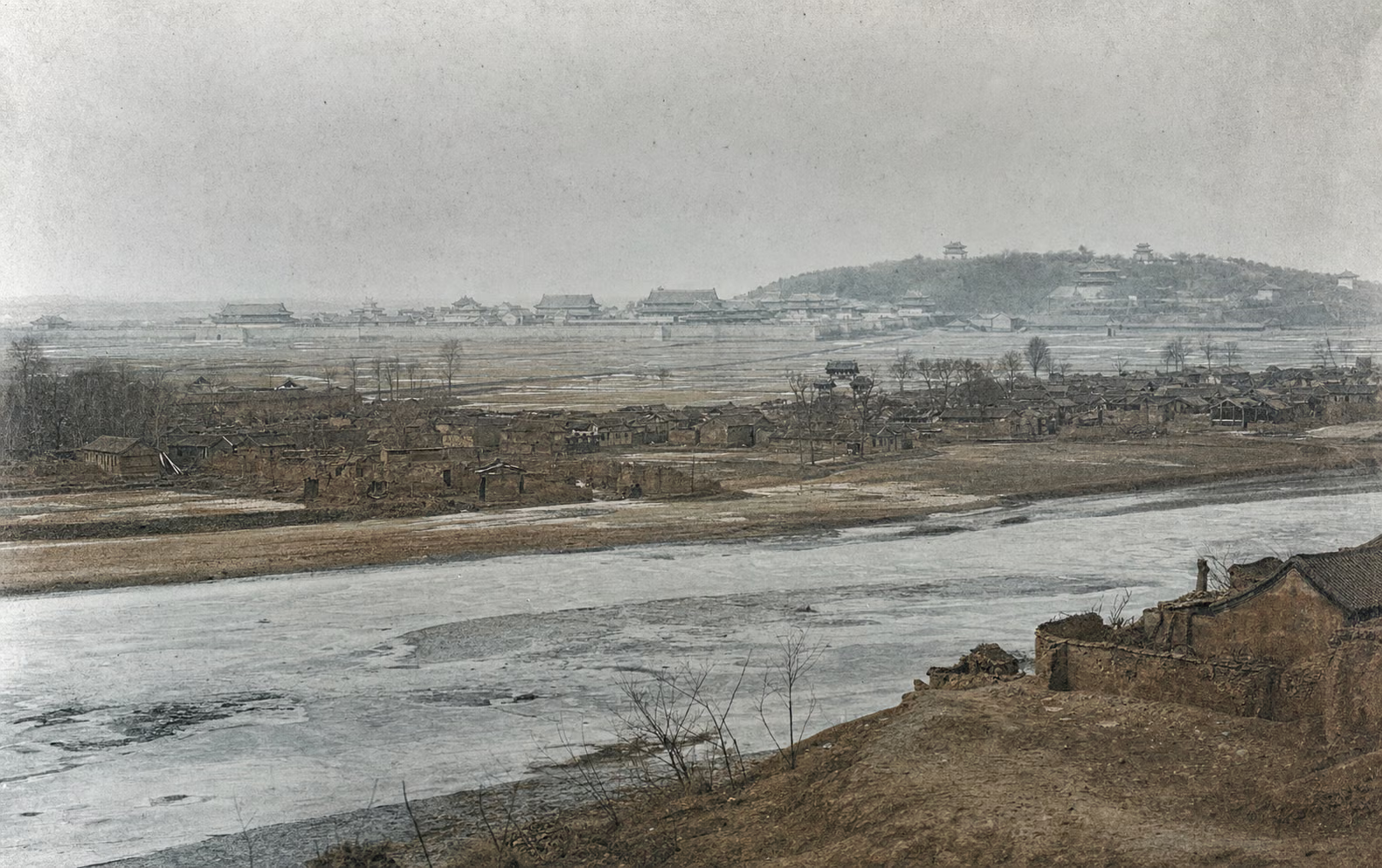
(For the broader Russo-Japanese War setting: the collapse of the Manchuria-Korea exchange, Russia's occupation of the Northeast without withdrawal, and the Qing court's non-belligerent neutrality, see "Russo-Japanese War · Overview.")
Mukden was the Qing dynasty's secondary capital, where the Shengjing General held office. Zhaoling north of the city (Huang Taiji) and Fuling east of the city (Nurhaci) were ancestral tombs of the Qing imperial house. Russian forces had occupied the city since 1900. After the Qing court declared non-belligerent neutrality in 1904, Qing authorities inside Mukden city nominally continued to serve, but in reality could only watch as the armies of two countries assembled for a decisive battle on the ground of imperial tombs: when a battle of 600,000 men was fought before the ancestral tombs, all the court could do was issue diplomatic notes of protest (the protest and details of the Russian handling remain unverified). Villages and towns were dense on both banks of the Hun River. Wherever the battlefront passed, villages were burned under the artillery fire of both sides, and civilians were displaced; specific village lists and records of harm remain unverified.※
Why It Was Fought
On January 2, 1905, Port Arthur opened its gates (see "Siege of Port Arthur (1904–05)"), and the last knife hanging behind the Japanese army on the Manchurian battlefield was removed. For the previous half year, the front had already hardened into a dead line south of Mukden: Liaoyang, Shaho, and Heikoutai had brought three clashes, with each side suffering casualties counted in the tens of thousands, and neither side had been able to break the other. Winter froze the two armies on both banks of the Hun River, and also froze into place the timetable for the decisive battle.
Why Mukden? Because Russian forces had retreated again and again, and behind them there was no second major city that could be defended: Mukden was the Qing dynasty's secondary capital, the seat of the Shengjing General, with Zhaoling north of the city and Fuling east of it as ancestral tombs of the Qing imperial house. If Mukden were lost again, southern Manchuria would collapse across the whole line. Why now? The timetable on both sides had reached its limit: after a winter of reinforcements, Russian forces already held the advantage in manpower and firepower and were only waiting for warmer weather to take the offensive; the Japanese army had to seek a land decision before Russian concentration was complete and before the Baltic Fleet finished sailing halfway around the globe to arrive. Port Arthur had fallen in January, allowing the Third Army and siege artillery to move north, and the Japanese army had gathered its last bargaining chip. The Japanese army therefore struck first, seeking to settle the war through this battle.
Both sides calculated on deciding victory and defeat in a single battle, and both misread the board. Oyama Iwao and Kodama Gentaro's General Headquarters of the Manchurian Army used about 250,000 men (Japanese and later research statistical basis; unverified) against about 310,000–370,000 (figures vary sharply by statistical basis, with varying accounts). The method was a feint on the eastern wing and a wide envelopment on the western wing; the wager was that Kuropatkin would commit his reserves in the wrong direction. Kuropatkin relied on numerical superiority for frontal attrition. What he did not calculate was that in late February he would shift the general reserve eastward to meet a feint (details of the decision-making process remain unverified), while Nogi Maresuke's Third Army was moving from beyond the western edge of the map toward his line of retreat.
Each side's resolve took concrete form. Soon after Port Arthur opened its gates, Imperial General Headquarters decided to seek a general land battle before Russian concentration was complete. Japanese intelligence came from a Manchurian intelligence network built over many years, while the date when Russian concentration would be complete still depended on calculation (details of the decision remain unverified). Kuropatkin originally intended to hold firm and wait for an opportunity, but Petersburg pressed urgently for battle (the levels of the pro-war telegrams remain unverified), and he never obtained definite intelligence that the Third Army had moved north. The material lines were clear: most of Japan's war costs depended on British and American bond issues, and conscription had reached the bottom of rural reserves; if this battle could not settle the matter, Japan could not sustain the war (financial conditions and peace-talk trends remain unverified). Russia's line was the single-track Siberian Railway; after a winter of reinforcement it was already near its limit, and the longer the war dragged on, the more Russian troops would arrive. This was the fundamental reason the Japanese army moved in February.
On February 21, the Japanese First Army opened fire first in the mountains on the eastern wing. The battle of 600,000 men and eighteen days began there.
The owner of this city was not in either side's order of battle: Russian forces had occupied Mukden since 1900, and after "non-belligerent neutrality" in 1904, the Qing authorities in the city nominally continued to serve, but in reality could only watch as the armies of two countries assembled for a decisive battle beside the ancestral tombs. All the court could do was issue diplomatic notes of protest (the protest and details of the Russian handling remain unverified). "Non-belligerent neutrality" had been decreed at the beginning of hostilities (edict date remains unverified): the banner and Green Standard forces of the Three Eastern Provinces were unfit for battle, pay and arms were both deficient, Russia could not be resisted, and there was no basis for joining Japan. Neutrality was not chosen; it was the only remaining path. Dissent did exist: proposals to ally with Japan against Russia ran from student armies to confidential memorials by provincial officials (memorial records remain unverified), but the court refused all of them. The Chinese people living among those 600,000 men were, from beginning to end, only the battlefield.
Course of the Engagement
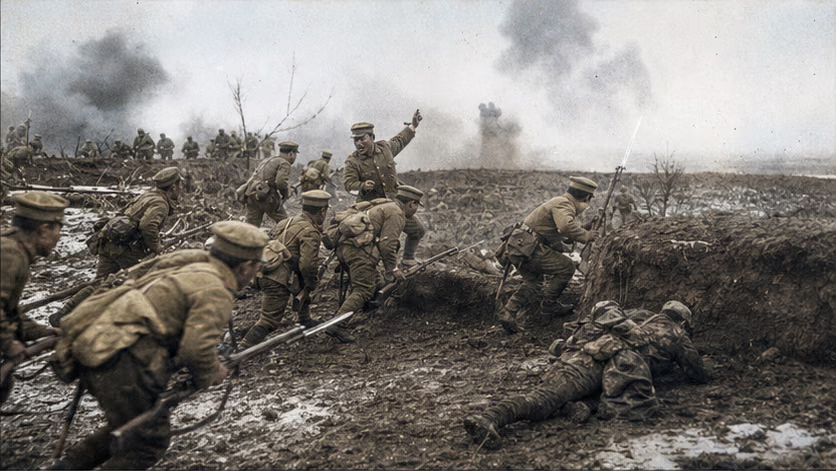
| Phase | Time | Key Points |
|---|---|---|
| Left-wing contact | From 2.21 | The Japanese First Army attacked first in the mountains on the eastern wing of the front, drawing Russian attention |
| Russian reserves shifted east | Late February | Kuropatkin judged the Japanese main attack to be in the east, and the general reserve shifted east accordingly; this was the key mistaken judgment of the battle (details of the decision-making process remain unverified) |
| Third Army's wide western envelopment | Late February–early March | After moving north from Port Arthur, Nogi Maresuke's Third Army emerged around the western wing, aiming northwest of Mukden and threatening the Russian line of retreat |
| Full-line fighting | Early March | The central Second and Fourth Armies held the front; Russian forces were threatened from east and west, and their line of retreat was in danger |
| General retreat | 3.8–10 | Kuropatkin ordered a general retreat toward Siping; formations became disordered during the retreat (details of river crossings and collection of stragglers remain unverified); on 3.10 Japanese forces entered Mukden city |
Casualties and Losses
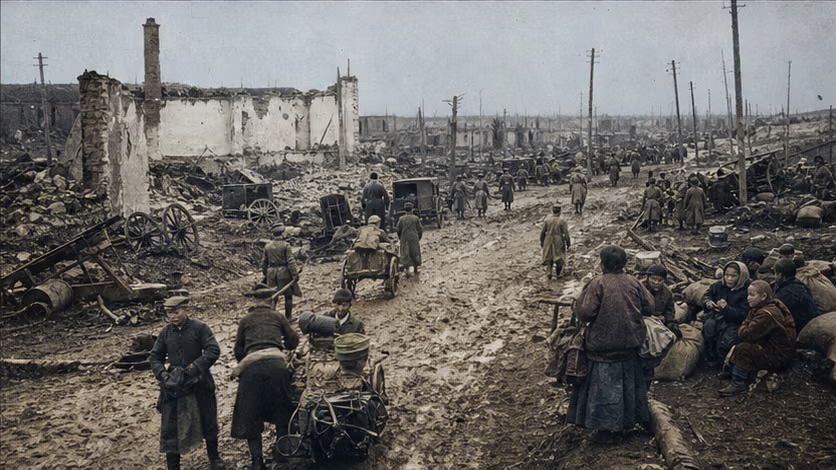
- Japanese forces: about 70,000 casualties (Japanese and later research statistical basis; unverified).
- Russian forces: casualties and prisoners combined at about 90,000 (figures vary sharply by statistical basis, with varying accounts).
- Chinese civilians: villages in the war zone on both banks of the Hun River were burned, fields yielded no harvest, and civilians were displaced, killed, and wounded, with no statistics.※
Aftermath
- The land war was decided. After this, neither side fought another major land battle, and both waited for the results of the Battle of Tsushima and the Portsmouth peace talks.
- Kuropatkin was removed from office (the sequence of his removal and the succession arrangements remain unverified). After the war he wrote memoirs defending each of his decisions, and their statistical basis and interpretation clashed for a long time with the Russian official war history.
- After Japanese forces entered Mukden city, this Qing secondary capital was under Japanese occupation until it was returned according to the postwar agreement (return sequence remains unverified).
- South of Mukden, the war zone was devastated; relief, compensation, and indemnification were done for no Chinese people (records of Chinese compensation negotiations remain unverified).
Accounts of Those Present
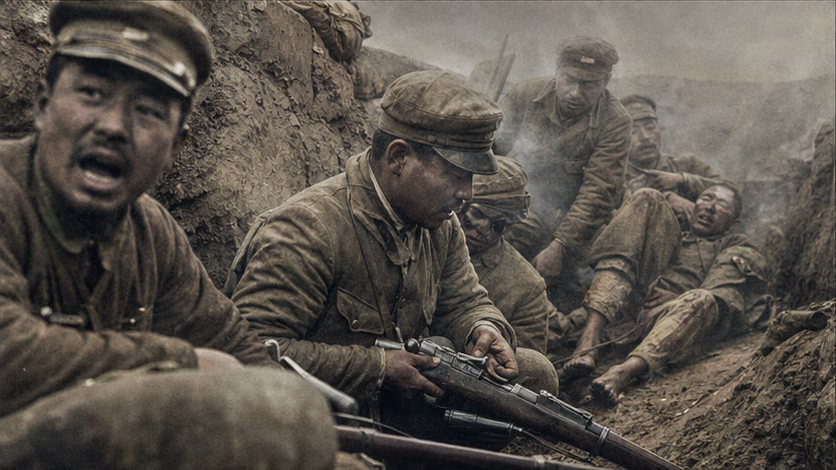
- Cannon fire before the ancestral tombs: Zhaoling and Fuling stood near the northern edge of the battlefield. Whether shells fell within the tomb precincts, and how the officials and soldiers guarding the tombs handled themselves, remain to be checked. But the fact itself, that "two foreign countries fought beside the ancestral tombs," was repeatedly written by Qing upright-official opinion at the time (literature remains unverified).
- The authorities inside the city: the daily business of the Shengjing General's office under the name of "neutrality": whether supplying grain to either side counted as breaking neutrality, and whether troops from either side entering the city could be stopped. Such concrete official documents and dispositions were absurd specimens of "non-belligerent neutrality" after it touched the ground (archives remain to be checked).
- People among the 600,000: farmers in the villages and towns crossed by the front were, in some cases, conscripted as laborers; in others, they fled with their whole households; in still others, after serving as guides for one side, they were punished by the other※. Oral accounts and local-gazetteer records are scattered and remain to be checked.
- In the observers' seats: military attaches from various countries observed from behind the front. The casualties inflicted by machine guns and infantry charges against trenches were written item by item into reports and carried back to Europe (lists of military attaches and the locations of their reports remain unverified). Ten years later, the readers of those reports practiced the same methods on the Somme and at Verdun.
The Ground
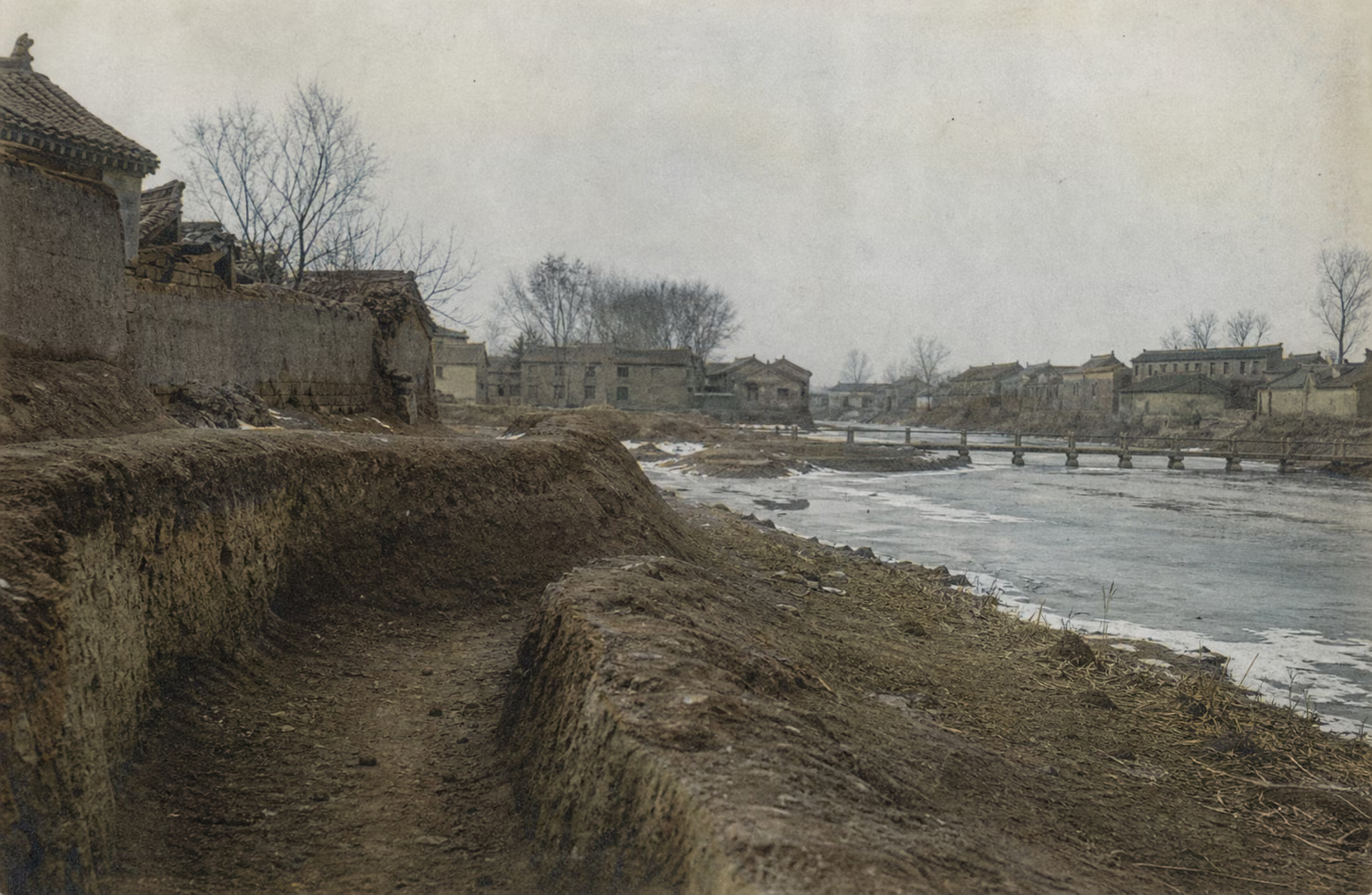
- The battlefront was several dozen kilometers wide and several dozen kilometers deep: in previous chapters, the "battlefield" was a city or a stretch of mountains; here it was a territorial space on the scale of half a prefecture.
- The Hun River was a natural coordinate: crossing points, bridges, and the time windows of freezing and thawing were all battle-level geographical variables (Hun River water conditions in March 1905 remain unverified).
- The spatial grammar of envelopment: an eastern-wing feint pinned the reserves, while the western-wing Third Army emerged from beyond the map toward the line of retreat. If the front could not be broken, the rear would be struck: the macro-geometry of a 600,000-man battle.
- The battlefield was villages and towns: fortified hamlets, settlements, and river flats. There was no such thing as an "uninhabited zone of field operations"; people lived in every square of the map.※
How Each Side Records It
- Japanese side: the peak of the Russo-Japanese War on land. The "Battle of Mukden" and Port Arthur stood together as the paired jewels of Meiji military history; the command of Oyama Iwao and Kodama Gentaro was entered among exemplary battle cases. Praise from observing military attaches was then widely used in national-image propaganda.
- Russian side: Kuropatkin's "mistaken judgment–general retreat" became the settled narrative, followed for decades by memoirs from all sides attacking one another. Soviet historiography folded this battle into the frame of the "inevitable failure of the tsarist system" (wording in different periods remains unverified).
- Chinese side: general histories pass over it in a single stroke. In the folk memory of the Northeast, this was one of the peaks of "fleeing disorder": whole villages and fortified hamlets south of Mukden fled as refugees (oral accounts and local literature remain to be checked). The fighting beside the ancestral tombs was a painful line in the notebooks of gentry at the time (literature remains unverified).
- Its place in world history: trenches, machine guns, heavy artillery, night fighting, a 600,000-man battle, a broad front, and deep envelopment: a full rehearsal for the First World War. Military attaches from many countries gathered there, and the battle reports went directly into the teaching materials of European general staffs (the military-observer system and the locations of reports remain unverified). The Western Front of 1914 was Mukden enlarged.
Disputes and Sensitivities
- Statistical bases for strength and casualties: Russian strength appears in both 310,000 and 370,000 figures, and the various casualty figures for both sides differ sharply according to source.
- The "mistaken judgment" narrative: whether Kuropatkin's eastward shift of reserves was entirely a mistaken judgment, or was instead constrained by intelligence and communications conditions, has been challenged by later research (literature remains unverified). Both accounts coexist.
- Six hundred thousand men and a front several dozen kilometers wide: the scale far exceeded the battles described earlier. The tension between the "battle level" and the "human scale" fell on the Chinese villages, towns, and civilians within the war zone.
Sources and Open Questions
Known main sources:
- The Battle of Mukden volume in the Japanese Defense Agency War History Office's Senshi Sosho (Japanese official history)
- Kuropatkin's memoirs and relevant volumes of the Russian official war history (versions remain unverified)
- Reports by observing military attaches from various countries (Britain, Germany, the United States, France, and others; locations remain to be checked)
- Records of war-zone harm in Fengtian local gazetteers, gentry notebooks, church reports, and consular reports (to be checked)
Open questions: each side's several strength figures and their boundaries; Japanese artillery and machine-gun figures; the decision-making process behind Kuropatkin's eastward shift of reserves; details of river crossings and collection of stragglers during the Russian general retreat; sources for the various statistical bases of about 70,000 Japanese casualties and about 90,000 Russian casualties; Hun River water conditions in March 1905; whether Zhaoling and Fuling were damaged in the battle; wartime official documents of the Shengjing General's office; lists of villages and towns harmed in the war zone and oral materials; the sequence of Japanese occupation of Mukden and its return; records of Chinese postwar compensation negotiations; lists of foreign military attaches and the locations of their reports; details of Imperial General Headquarters and Manchurian Army battle-decision conferences; levels of Petersburg's pro-war telegrams; Japan's financial situation and early peace-talk trends; the original text and date of the non-belligerent neutrality edict; memorial records of proposals to ally with Japan against Russia.
All images on this site are AI-generated depictions. They are not historical photographs, not primary sources, and do not depict any real individual.