Engagement Archive · Kinmen Artillery Battles (August 23 Bombardment)
At dusk on August 23, 1958, several hundred guns drove tens of thousands of shells into Kinmen in two hours, and three deputy commanders of the Kinmen Defense Command were killed that day; for the next twenty years, the two shores of the strait fired on odd-numbered days and rested on even-numbered days, until artillery fire became a political language.
Engagement Data
| Item | Content |
|---|---|
| Time | 1958.8.23 – 10.25 period of large-scale bombardment and blockade; thereafter, "shell on odd days, do not shell on even days" continued until 1979.1.1 |
| Place | Xiamen–Quanzhou, Fujian (Weitou, Lianhe, Dadeng) artillery line / Kinmen islands (Greater Kinmen, Lesser Kinmen, Dadan, Erdan), Liaoluo Bay |
| War | Taiwan Strait Crises · Second Taiwan Strait Crisis (1958) |
| Bombarding side | Fujian-front forces (Fuzhou Military Region; Ye Fei and other command levels unverified): mainly artillery groups, with naval and air forces supporting the blockade |
| Bombarded side | ROC Kinmen Defense Command (commander Hu Lien), with roughly 85,000–96,000 defenders (bases vary by account); the U.S. Seventh Fleet escorted supply runs |
| Result | The blockade was not completed, and no landing was launched; on 10.25, the rule of "shell on odd days, do not shell on even days" was set, shifting into twenty years of symbolic shelling; Kinmen and Matsu remained under Taiwan-side control -- the Chinese-side line defined it as a "political battle and diplomatic battle" |
Belligerents
| Item | Bombarding side | Bombarded side |
|---|---|---|
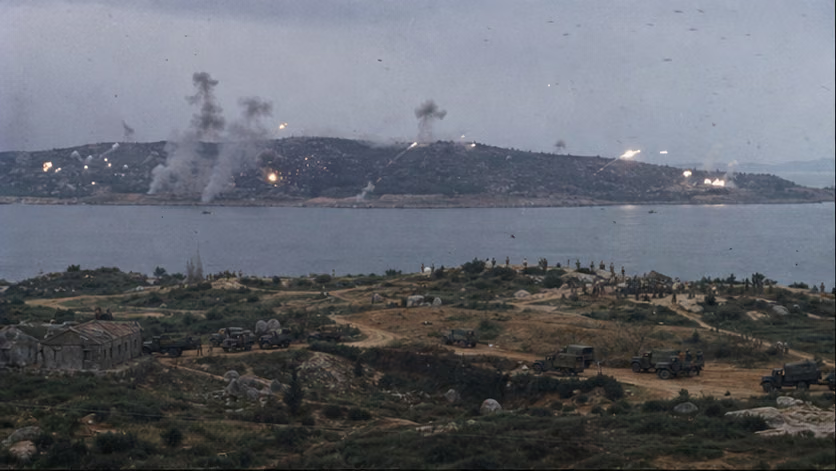
| Ground firepower | Several hundred guns (459 pieces is a common caliber-count figure, figure disputed); in the first sudden bombardment on 8.23, more than 57,000 shells fell in two hours (figures vary by account) | Kinmen artillery group and fortress works; tunnel system on the reverse slope of Mount Taiwu |
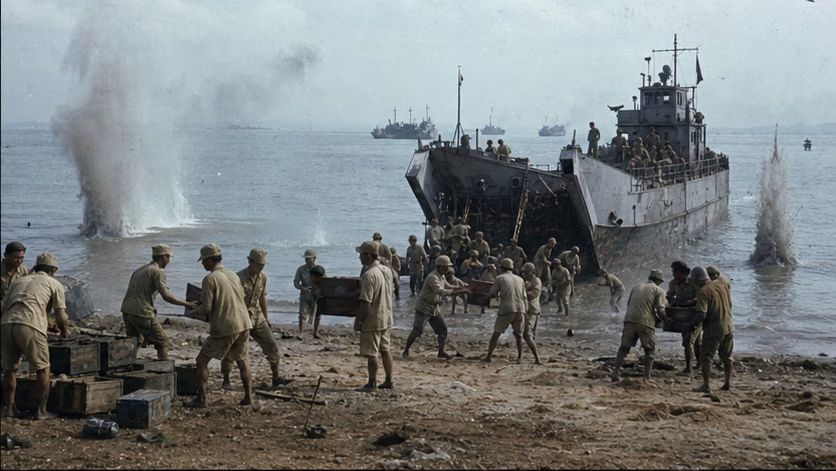
| Navy | Torpedo boats and patrol craft blockading Liaoluo Bay | Transport convoys ran supplies onto the beach; from 9.7, the U.S. Seventh Fleet escorted them as far as the three-nautical-mile line |
| Air force | MiG formations entered Fujian to contest air control over the strait | F-86 Sabres; from 9.24, equipped with AIM-9B Sidewinder air-to-air missiles -- the world's first combat use of air-to-air missiles |
| Garrison | Fujian front shifted into wartime footing | Kinmen garrison peaked at roughly 90,000 (figures vary by account), with more than 100,000 islanders under the same bombardment ※ |
| Political constraints | "Firing without landing, blockading without killing off"; toward U.S. naval escort, "strike Chiang's ships, not American ships" (wording of the original order unverified) | U.S. escort stopped at the three-nautical-mile line -- no entry into territorial waters, no exchange of fire |
Terrain and Conditions
(For the larger situation of the Cold War moving south, the U.S.-Taiwan treaty, and Sino-U.S. talks after Bandung, see *Taiwan Strait Crises · Overview*; here the account stays with Kinmen.)
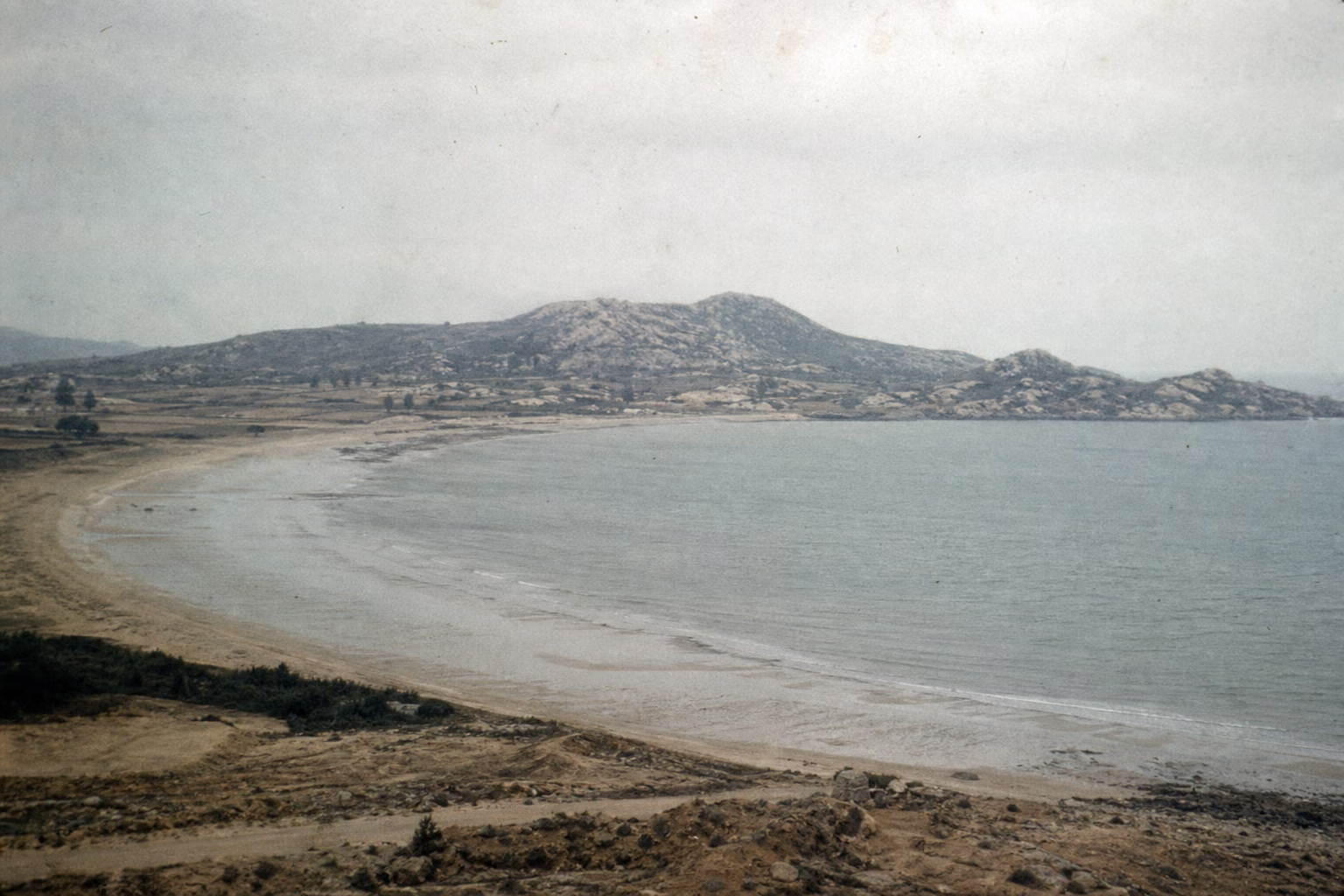
This island: Greater Kinmen lies less than ten kilometers from Xiamen at the closest point, and more than two hundred kilometers from Taiwan proper -- a nail set into the edge of the mainland shore. Nearly 100,000 troops were stationed on the island, and all supply depended on sea transport. Liaoluo Bay was the only beachhead unloading site with major throughput; the island's vital point was not its walls, but its beach.
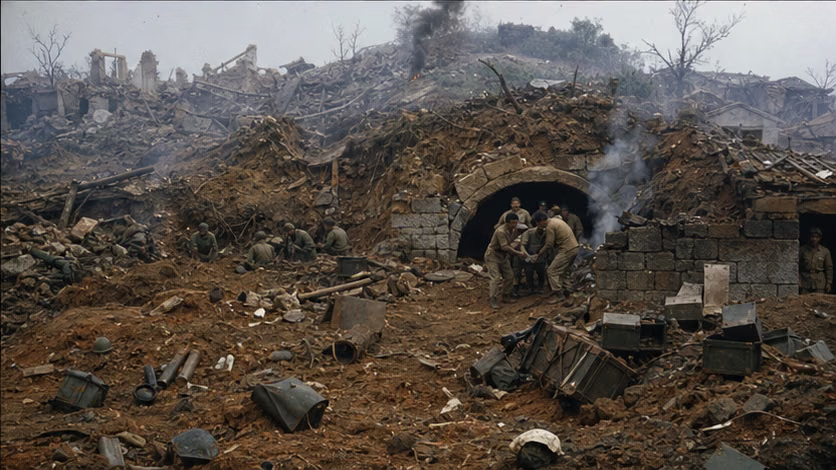
Fortification system: eight years of fortress-building: the tunnel network under Mount Taiwu's granite, and reverse-slope positions hidden on the side facing away from the mainland, lay in the blind zone of high-angle artillery fire -- bombardment could plow the surface, but it could not plow into the mountain.
Why It Was Fought
The previous battle had been Yijiangshan three and a half years earlier: when that battle ended, Dachen was evacuated, eastern Zhejiang changed hands, and the First Crisis closed with the opening of Sino-U.S. ambassadorial talks. But the talks ran for two years and achieved almost nothing beyond the exchange of nationals; at the end of 1957 they were downgraded and interrupted (unverified) -- the table went cold, and the strait heated again. In July 1958, the Middle East crisis broke out, and U.S. troops landed in Lebanon; that same month, the Taiwan side announced that Kinmen, Matsu, Taiwan, and Penghu had entered emergency combat readiness, while the frequency of raids and harassment rose. Beijing wrote the two matters into a single decision: striking Kinmen would both "support the Middle Eastern people's anti-American struggle" (public line) and pull the world's attention back from Beirut to the strait.
Why Kinmen: it was the largest blank space left by the U.S.-ROC Mutual Defense Treaty -- the treaty's black-letter text named only Taiwan and Penghu, while Kinmen and Matsu were covered by a congressional authorization from the United States. To strike Kinmen was to strike the seam in the U.S.-Taiwan alliance: escort, would it enter the three-nautical-mile line? Joint defense, did it include the offshore islands? Every shell was asking Washington for an answer on Beijing's behalf.
Each side had its own accounting. Mao Zedong later stated his clearly: Kinmen and Matsu were two nooses around America's neck, and keeping them there was more useful than taking them (for the "noose" formulation, see the September speech at the Supreme State Conference; original text unverified). Chiang Kai-shek's accounting ran the other way: the harder Kinmen and Matsu were to defend, the harder it would be for Washington to withdraw, and there the tinder of "counterattack" would remain. Chiang wagered that the bombardment could pull the United States into joint defense; Mao wagered that the United States would not cross those three nautical miles for the offshore islands -- the latter wager was right.
At 17:30 on August 23, the artillery groups on the Xiamen front opened fire. One account says this timing was chosen around the opposing side's defense minister's schedule (Yu Ta-wei was on Kinmen that day; see below); another says it was chosen for tide and working convenience -- the accounts coexist, unverified.
In fact, the battle did not have to be fought: although the ambassadorial talks had broken off, the channel had not been welded shut. But Beijing judged that without this opening shot, the Kinmen-Matsu question would be dragged into an accomplished fact of "division and rule across the strait"; once the shot was fired, at least no one could pretend nothing was happening in the strait.
Course of the Engagement
| Phase | Time | Main Points |
|---|---|---|
| First sudden bombardment | 8.23 17:30 | Several hundred guns dropped more than 57,000 shells in two hours (figures vary by account); deputy commanders Zhao Jiaxiang, Ji Xingwen, and Zhang Jie were hit and killed, while commander Hu Lien and defense minister Yu Ta-wei survived (see details below) |
| Continued bombardment and blockade | 8.24–early September | Blockade and counter-blockade at Liaoluo Bay; naval engagements on 8.24 and 9.2, with Taiwan-side losses of the transport *Taisheng* and the warship *Tuojiang* (battle-result figures from both sides unverified); supplies to Kinmen neared interruption for a time |
| U.S. naval escort | From 9.7 | The Seventh Fleet escorted as far as the three-nautical-mile line and stopped there; when Chiang's ships were shelled, U.S. ships withdrew outward (details unrecorded) -- the boundary of the U.S.-Taiwan alliance was drawn at sea on the spot |
| Contest in the air | September | MiGs and F-86s fought repeated air battles; on 9.24, Taiwan-side aircraft first used Sidewinder missiles in combat, claiming to have shot down multiple MiGs (Taiwan-side figures vary by account; Chinese-side acknowledged-loss figures vary by account) -- the first such case in the history of air combat |
| Political closure | 10.6 | Defense Minister Peng Dehuai issued the *Message to Compatriots in Taiwan*, announcing a one-week ceasefire in the name of "humanitarianism" and permitting supply runs |
| Resumption and fixed form | 10.13–10.25 | On 10.13, another two-week ceasefire was announced; on 10.20, shelling resumed on the eve of Dulles's visit to Taiwan; on 10.25, the *Second Message to Compatriots in Taiwan* set the rule of "do not shell on even-numbered days, shell on odd-numbered days" -- "shell on odd days, do not shell on even days" continued for twenty years |
Casualties and Losses
- On 8.23: three deputy commanders were killed that day, the heaviest one-day loss of senior officers for the Taiwan-side armed forces (figures vary by account).
- Casualties during the blockade period: Chinese-side battle-result figures differ sharply from Taiwan-side published military and civilian casualties, and each side's statistical boundary remains unverified.
- Chinese side: the artillery groups and naval and air forces also suffered losses (details of air and naval fighting unrecorded).
- ※ Kinmen islanders: full statistics for military and civilian casualties and damage to houses during the shelling period remain unverified; for the next twenty years, "odd-day shelling days" were the metronome of island life.
Aftermath
- On 9.15, the Sino-U.S. ambassadorial talks resumed in Warsaw -- the bombardment fired the negotiating table back into place.
- On 10.23, Dulles and Chiang Kai-shek issued a joint communique in which the Taiwan side pledged that it would not achieve the objective of returning to the mainland "by the use of force" (wording and level unverified) -- Kinmen and Matsu were left in place, and the fuse of "counterattack" was pulled.
- "Shell on odd days, do not shell on even days": shelling on odd-numbered days and ceasefire on even-numbered days, with propaganda shells gradually taking the leading role; the "welcome-and-sendoff shelling" around Eisenhower's 1960 visit to Taiwan (scale unverified) was the extreme form of this political grammar.
- On 1979.1.1, the day China and the United States established diplomatic relations, Defense Minister Xu Xiangqian declared that the shelling would stop -- twenty years of artillery fire ended there (for the arc of the figure, see the overview).
Accounts of Those Present
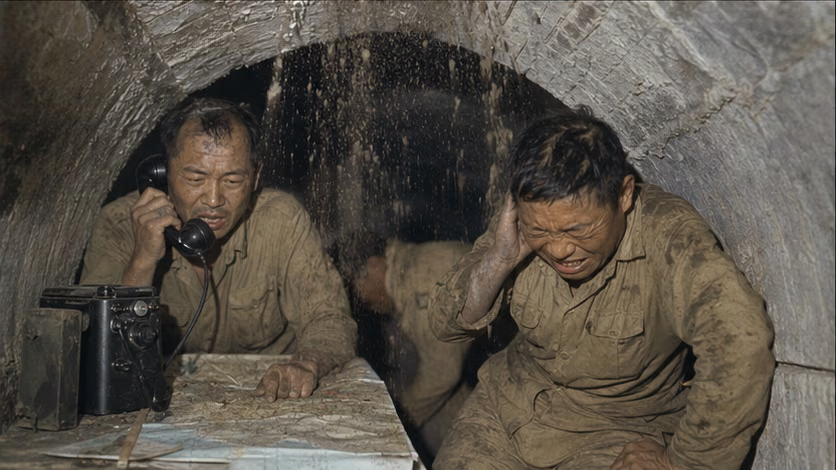
- Ji Xingwen: on July 7, 1937, at Marco Polo Bridge, he was regimental commander of the 219th Regiment, 37th Division, 29th Army, and gave the order to fire the first return shot of the full-scale War of Resistance; twenty-one years later, on August 23, 1958, while serving as deputy commander of the Kinmen Defense Command, he was hit on Kinmen and died of his wounds (sequence of death varies by account).
- Zhao Jiaxiang and Zhang Jie: the two other deputy commanders killed the same day. Zhao Jiaxiang was a noted general from the Expeditionary Force background (biographical details unrecorded); Zhang Jie came from the air force (details unrecorded).
- Hu Lien and Yu Ta-wei: Yu Ta-wei was inspecting Kinmen when the bombardment began, and the two men passed close to the impact points around Cuigu (circulating versions such as "the telephone saved lives" vary, unverified).
- Supply convoys: during the blockade period at Liaoluo Bay, the Taiwan side forced unloading under a beaching plan (plan codename unverified) -- every box of supplies on the beach passed from hand to hand between points of impact; U.S. ships watched from three nautical miles away.
- Artillery-shell steel knives: shell fragments that fell on Kinmen over twenty years were later forged by islanders into kitchen knives sold on both sides of the strait -- the hardest object this battle left in popular memory.
The Ground
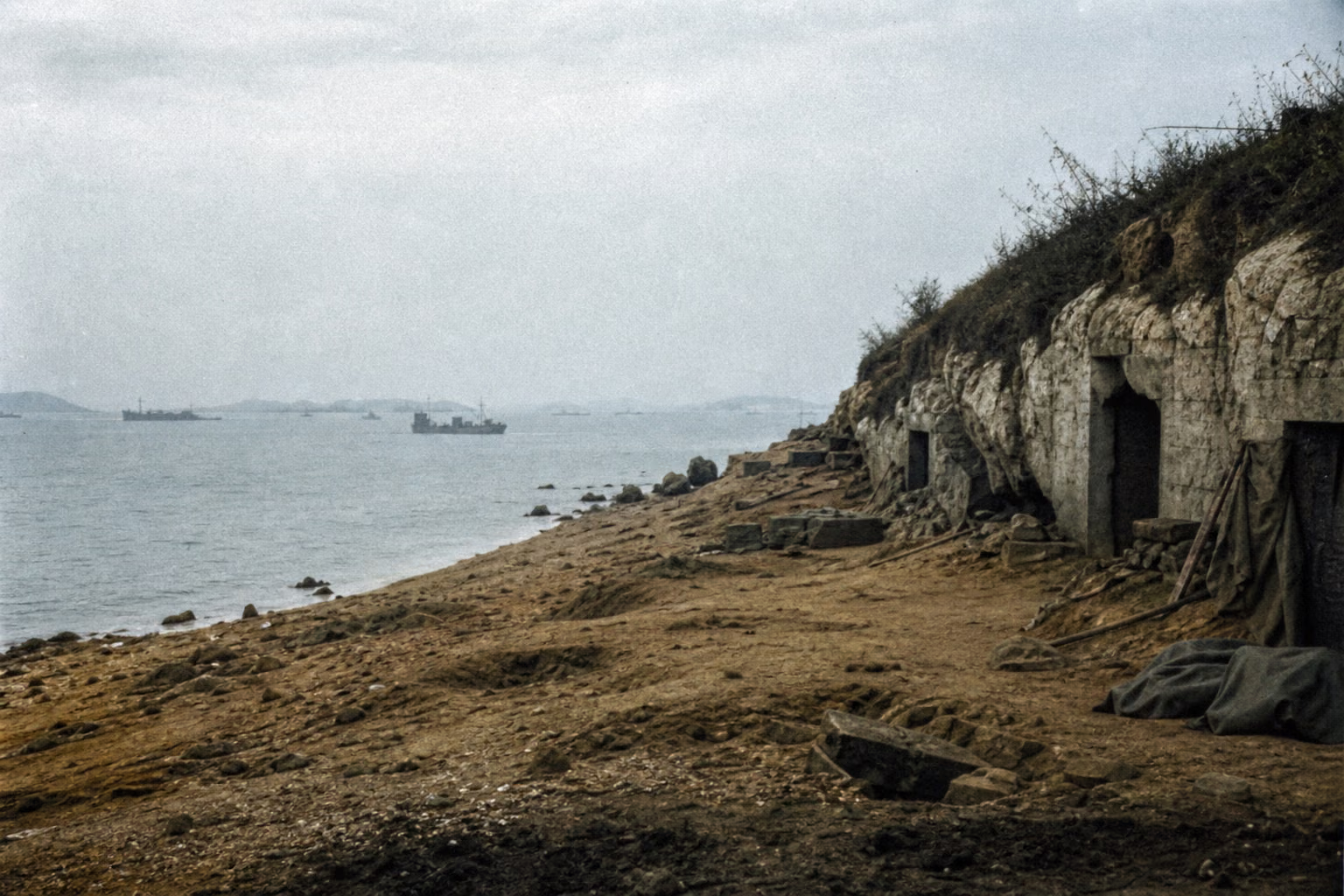
- The geometry of Xiamen and Kinmen: less than ten kilometers at the closest point, and Dadan and Erdan still closer -- the artillery battle was fought at a distance from which the two sides could see each other.
- Liaoluo Bay: the beachhead on the southern shore of Greater Kinmen, the only major supply mouth; the entire focus of blockade and counter-blockade.
- Reverse slope of Mount Taiwu: the granite tunnel system greatly reduced the killing effect of a bombardment meant to "plow the courtyard and sweep the lair" -- space determined that this artillery battle could only be a political battle.
- The three-nautical-mile line: the stopping point for U.S. naval escort, and the most famous invisible line in this crisis.
How Each Side Records It
- Taiwan: the "August 23 Battle" is at the center of the homeland-defense narrative, commemorated every year, with the Kinmen battlefield parks and martyrs' shrines continuously tended; the three deputy commanders were enshrined.
- Mainland: "Shelling Kinmen" entered military textbooks and was defined as a "political battle, diplomatic battle, and propaganda battle"; the "noose" formulation and "firing without landing, blockading without killing off" are standard expressions (original documents unverified).
- United States: a classic case in crisis decision-making and nuclear-brink studies -- in 1958, U.S. internal discussions included the possible use of nuclear weapons against airfields on the Chinese mainland (declassified-file level unverified), with disagreements placed side by side.
- Kinmen itself: from battlefield to memorial site, and then to a port of cross-strait exchange -- the starting point of the "Mini Three Links" (from 2001) was precisely the direction of the old gun muzzles.
Disputes and Sensitivities
- Present boundaries: this section concerns historical facts and the records of both sides at the time; it does not read them backward through present-day terminology.
- Decision intent has multiple interpretations: support for the Middle East, probing the U.S.-Taiwan alliance, preventing "division and rule across the strait," coordination with domestic mobilization, and other accounts coexist.
- Sidewinder battle results and air-combat losses differ sharply between the two sides' figures, and are placed side by side.
- The original context and later interpretations of the "noose" formulation: original text unverified.
- U.S. nuclear-option discussions: declassified files state the discussions directly, but they are distinct in level from "intention to use."
- Civilian casualties and the circumstances of islanders under twenty years of shelling ※, statistical basis unverified.
Sources and Open Questions
Known main sources:
- Ye Fei's memoirs (decision and command levels for the shelling of Kinmen)
- Xu Yan, *The Battle of Kinmen* (Chinese-side war-history line, to be checked item by item)
- Taiwan-side *War History of the National Revolutionary Army*, chapter on the August 23 Battle, and memoirs related to Hu Lien and Yu Ta-wei (original books to be checked)
- U.S. FRUS 1958–1960 China volume; Eisenhower Library crisis files
Open questions: total number of guns in the artillery groups and the bases for 8.23 shell counts; front-line command levels and original orders; peak figure for the Kinmen-Matsu garrison; sequence of death for the three deputy commanders; two sets of figures for naval battle results; two sets of figures for the 9.24 air battle results; full text of the two *Messages to Compatriots in Taiwan*; starting point and execution details for "shell on odd days, do not shell on even days"; itemized files on U.S. nuclear options; scale of the 1960 "welcome-and-sendoff shelling"; civilian casualty statistics; variant details on Hu Lien and Yu Ta-wei's survival; supply plan codename; basis for the selection of the 8.23 opening-fire time.
All images on this site are AI-generated depictions. They are not historical photographs, not primary sources, and do not depict any real individual.